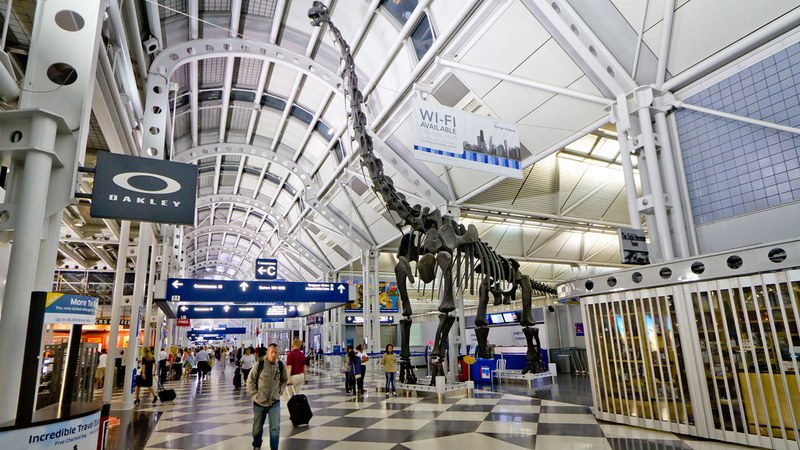
The Federal Aviation Administration (FAA) imposed a ground stop at Chicago O’Hare International Airport starting at 3:06 p.m. CST on November 24, 2026, due to a radar equipment outage. The ground stop was lifted at 4:02 p.m. CST the same day and replaced by a ground delay program that lasted from 4 p.m. to 11:59 p.m. CST to manage arrivals and keep O’Hare traffic manageable.
As a result of the disruption, FlightAware reported 245 delayed flights and one cancellation at O’Hare by 5 p.m. ET. Nationwide, the system recorded 3,306 flight delays and 71 cancellations across the United States, reflecting
widespread travel pressures. The average wait time for flights experiencing the ground delay program at O’Hare was about 47 minutes as of 5 p.m. ET.
The outage affected radar equipment used to track aircraft and ground vehicles on the airport surface, specific to Chicago O’Hare, without impacting other FAA systems or airports, according to FAA statements. This follows a separate ground stop on November 23 caused by staffing constraints at Chicago Terminal Radar Approach Control, unrelated to the radar equipment failure.
Flights arriving at O’Hare on November 24 faced delayed departures from their origins, including cities such as Minneapolis, Milwaukee,
and Des Moines, due to the ground delay program. The disruption occurred amid the busiest Thanksgiving travel period in 16 years, with O’Hare expecting nearly 1.67 million passengers during the week, a 7% increase compared to the previous year.
FAA Administrator Bryan Bedford said controllers and safety professionals are working around the clock to address the issue and linked increased traffic demand to the need for air traffic control modernization. Transportation Secretary Sean Duffy remarked that safety remains the administration’s top priority and noted that initiatives like the Tiger Team and a congestion-prediction platform have helped limit delays and cancellations
during the busy travel period.
The Department of Transportation forecasted more than 417,000 flights over the nine-day Thanksgiving holiday period beginning November 24. AAA projected 5.96 million domestic air travelers during the holiday, slightly down from the previous year. Weather conditions including low ceilings on the West Coast and potential thunderstorms along the Gulf Coast were expected to add further challenges to air travel during the holiday.