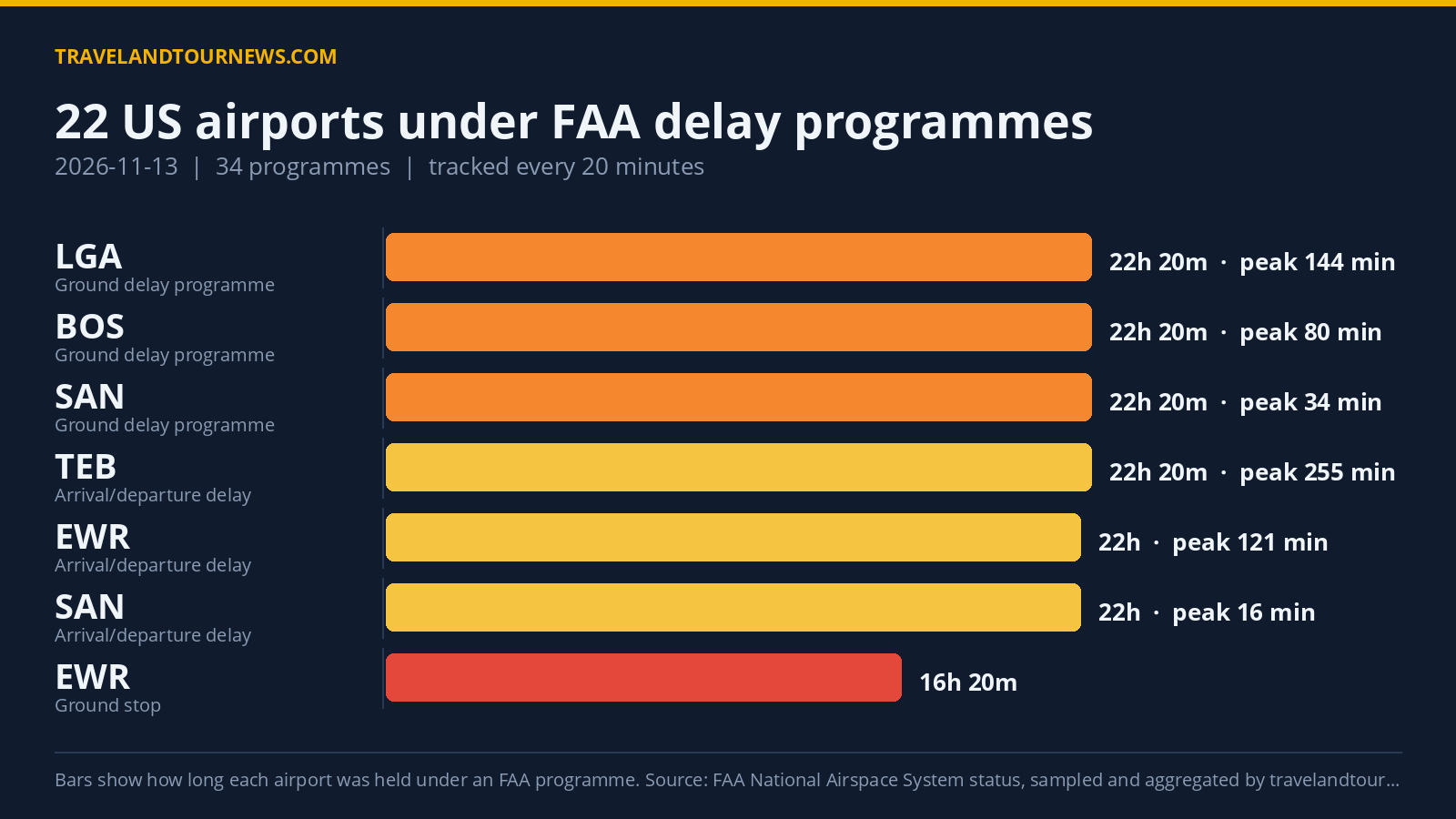
The Federal Aviation Administration (FAA) imposed ground stops at LaGuardia Airport starting at 1:27 p.m. ET and at John F. Kennedy International Airport (JFK) beginning at 2:49 p.m. ET on November 12, 2026, both initially scheduled to last until 3:45 p.m. The FAA also implemented a ground delay program at Newark Liberty International Airport beginning at 2:37 p.m. ET on the same day.
LaGuardia was subject to a simultaneous ground delay program activated at 1 p.m. ET and scheduled to continue until 11:59 p.m. ET on November 12. Flights under LaGuardia’s ground delay program averaged 63 minutes in delay. Newark’s
ground delay program caused flights to average 137 minutes delay, more than double LaGuardia’s rate. FlightAware reported 215 delays and 10 cancellations at LaGuardia as of 1:31 p.m. ET, 131 delays and 6 cancellations at Newark at 2:24 p.m. ET, and 239 delays with 24 cancellations at JFK as of 3:16 p.m. ET.
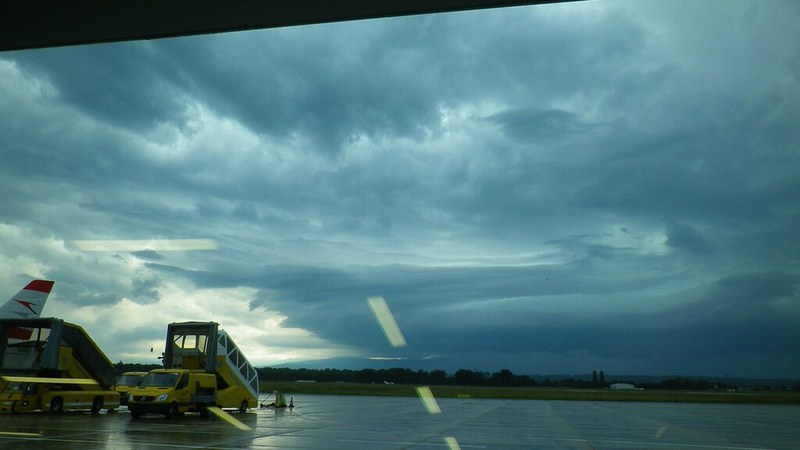
Thunderstorms and heavy rain in the New York metropolitan area generated the FAA restrictions. A flood advisory was in place until 1:45 p.m. ET for Newark and nearby areas due to the heavy rain, which caused minor flooding in low-lying zones. The National Weather Service forecasted prolonged
rainfall extending through November 13, 2026 across the region with the possibility of minor coastal flooding in some locations. The FAA said it continues to monitor weather conditions and indicated the potential for further air traffic constraints.
Ground stops hold aircraft on the ground until the FAA lifts restrictions, while ground delay programs assign scheduled departure times to control arrival rates. These traffic management measures affected the region’s three major airports, demonstrating how severe weather at congested hubs produces widespread network disruptions. LaGuardia was impacted by both a ground stop and an extended ground delay program, while Newark’s delays were
significantly longer. Such layered restrictions affect aircraft operations and require coordinated slot planning for arrivals and alternates across the region’s airspace.