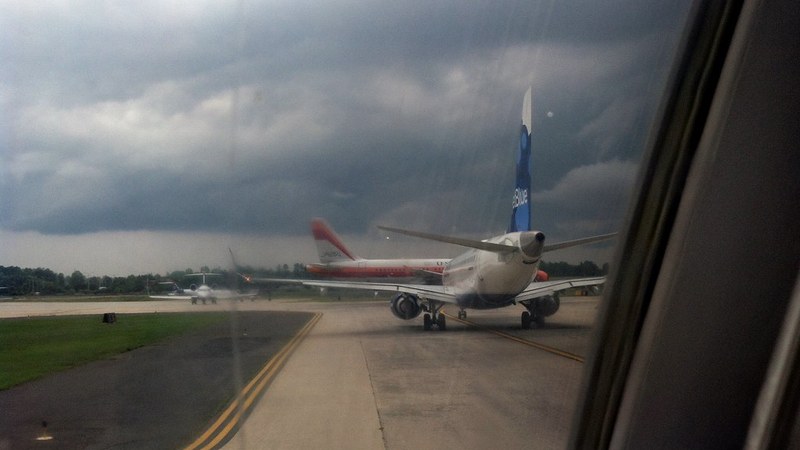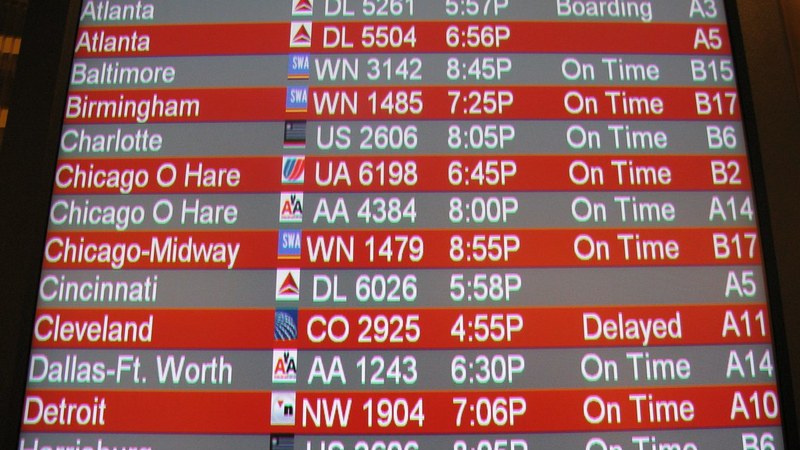
On November 12, 2026, thunderstorms across the New York metropolitan area led the Federal Aviation Administration (FAA) to impose ground stops at LaGuardia and John F. Kennedy International airports and activate a ground delay program at Newark Liberty International Airport. The ground stop at LaGuardia started at 1:27 p.m. Eastern Time and overlapped with a ground delay program that began at 1 p.m. and extends until 11:59 p.m. Flights arriving at LaGuardia under the delay program are experiencing an average delay of 63 minutes. Newark’s ground delay program started at 2:37 p.m., with flights facing an average arrival delay of
137 minutes. At JFK, the FAA implemented a ground stop starting at 2:49 p.m., initially expected to end by 3:45 p.m., but with a 30% to 60% chance of extension.
FlightAware reported that as of the afternoon time snapshots, LaGuardia had 215 delayed flights and 10 cancellations around 1:31 p.m. Newark showed 131 delays and six cancellations by 2:24 p.m., while JFK recorded 239 delays and 24 cancellations near 3:16 p.m. These figures represent the evolving operational impact of the weather-related restrictions.
The National Weather Service issued a flood advisory for Newark and surrounding areas, effective until 1:45 p.m., citing
minor flooding in low-lying locations. The advisory did not extend to Queens where LaGuardia is located. Additionally, the weather service forecast prolonged rainfall and minor coastal flooding across the New York metropolitan area through Friday. The FAA continues to monitor the northeast weather situation and has indicated the possibility of further air traffic restrictions as the storm system progresses.
The FAA uses ground stops and ground delay programs to regulate air traffic differently. Ground stops prevent affected flights from departing until restrictions are lifted, effectively holding them at their airports. Ground delay programs assign specific departure times for flights to
manage arrival rates and maintain safe air traffic flow. Both mechanisms can extend effects beyond the immediate region, impacting flights originating outside the New York metropolitan area.
The confluence of overlapping restrictions is evident: LaGuardia operates under both a ground stop and a ground delay program concurrently, while Newark’s average arrival delays exceed twice those at LaGuardia. The FAA noted a 30% to 60% probability that the ground stops at LaGuardia and JFK will be extended beyond their initial 3:45 p.m. end time. Continuous monitoring remains active as the FAA adapts to changing conditions.
This series of weather-induced flow control
measures highlights the vulnerability of heavily congested air hubs like New York’s airports to thunderstorms and heavy rainfall. Such disruptions cascade through the broader flight network, affecting schedules and operations well beyond local boundaries.