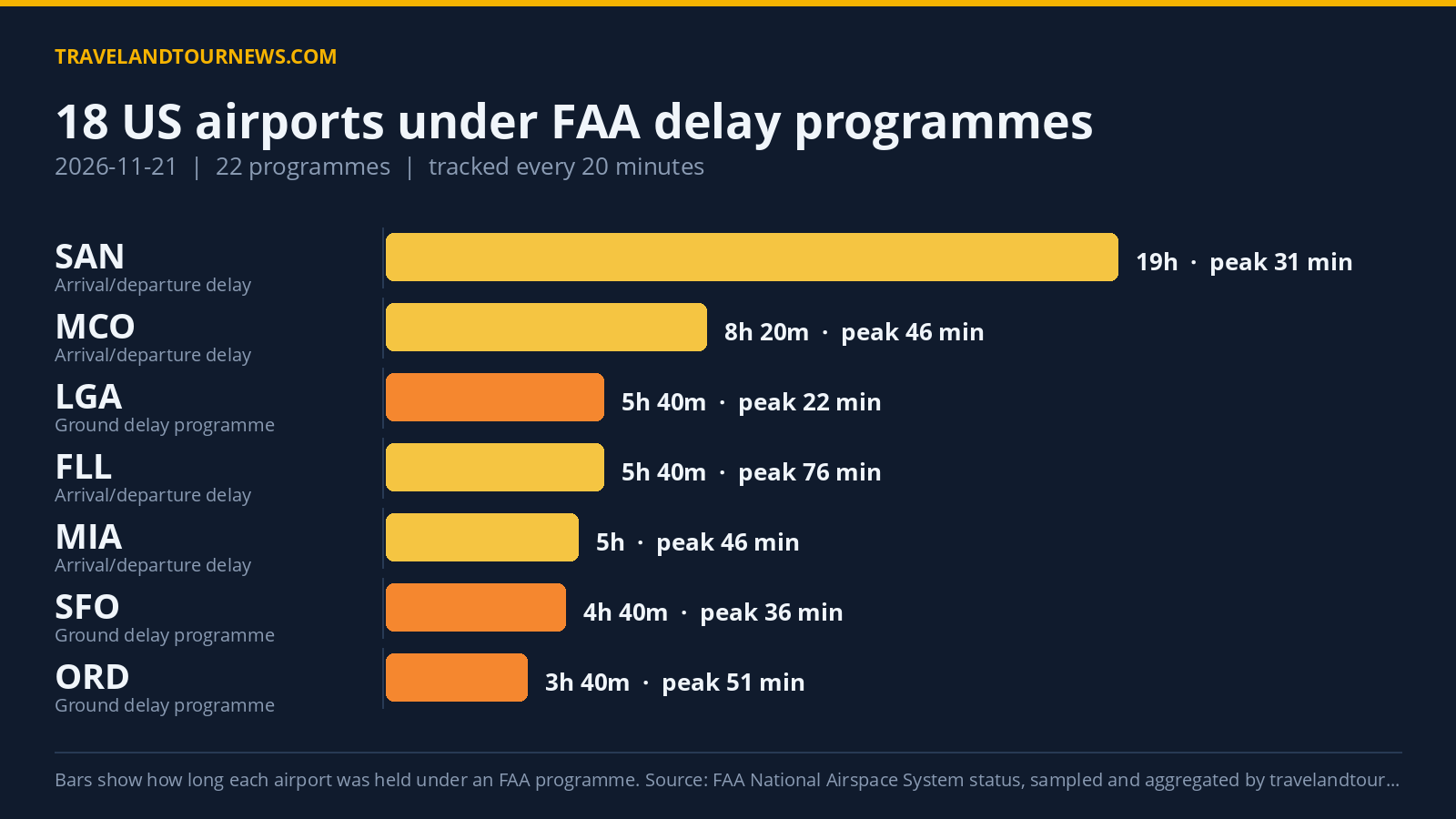
The Federal Aviation Administration (FAA) issued a ground stop at San Francisco International Airport on November 19, 2026, halting departing flights for over four hours due to severe wind and weather amid storm conditions impacting the Bay Area.
San Francisco received 1.85 inches of rain downtown on November 19, 2026, nearly reaching the daily rainfall record of 2.24 inches set in 1918. Flooding occurred in several locations, including southbound Interstate 280 near Geneva Avenue, further disrupting transportation around the airport.
Ground stops are a tool used by the FAA to hold departures when adverse conditions make it unsafe or unworkable
to maintain normal flight sequencing. At congested airports like San Francisco, the disruption caused by such stops often extends beyond the suspension itself due to aircraft queuing and crew duty time regulations.
During the ground stop, departing flights experienced average delays of 3 hours and 6 minutes. The FAA assessed the possibility of extending the ground stop as medium, depending on evolving weather conditions and operational factors.
Hollywood Burbank Airport Experiences ATC Zero Events
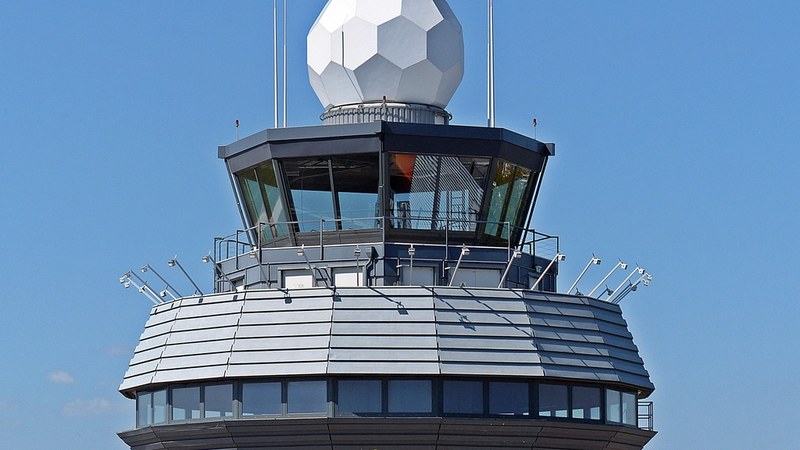
On the evening of November 19, the control tower at Hollywood Burbank Airport declared ‘ATC Zero’ status twice, causing pilots from Southwest Airlines and Alaska Airlines to self-coordinate flight operations over the Common
Traffic Advisory Frequency (CTAF) for approximately 30 minutes each time. The FAA has not disclosed the reasons behind these temporary control tower outages.
Official Responses and Ongoing Investigations
The FAA confirmed the ground stop at San Francisco was imposed due to dangerous wind and weather conditions brought on by the storms in the Bay Area. Senator Tammy Duckworth stated she will not support the FAA’s $50 billion modernization funding request without a detailed spending plan and a complete account of the communications equipment failure that triggered a nationwide ground stop on November 13, 2026.
Thirteen Democratic senators, led by Senator Maria Cantwell, requested the FAA
to pause replacing thousands of routers until the investigation into the November 13 nationwide ground stop is concluded. The prior incident was the longest U.S. ground stop in 25 years, disrupting over 15,000 flights nationwide.
Broader Air Traffic Disruptions and Infrastructure Challenges
The ground stop at San Francisco follows a series of significant air traffic disruptions attributed to aging infrastructure and staffing shortages within the FAA. The November 13 nationwide ground stop was caused by communications equipment failures at multiple Air Route Traffic Control Centers, highlighting systemic issues affecting U.S. airspace operations.
Traveler Impact and Extended Flight Disruptions
Passengers at San Francisco International Airport face continuing delays and cancellations following the lifting of
the FAA ground stop. Business aviation operators departing from the airport may experience late departures or need to divert due to lack of alternate hubs, as noted in the FAA’s analysis.
Etihad Airways announced an extension of cancellations for all passenger and cargo flights between Abu Dhabi and the Saudi Arabian cities Riyadh and Dammam until November 19, 2026. The airline’s flights between Abu Dhabi and Jeddah remain scheduled.