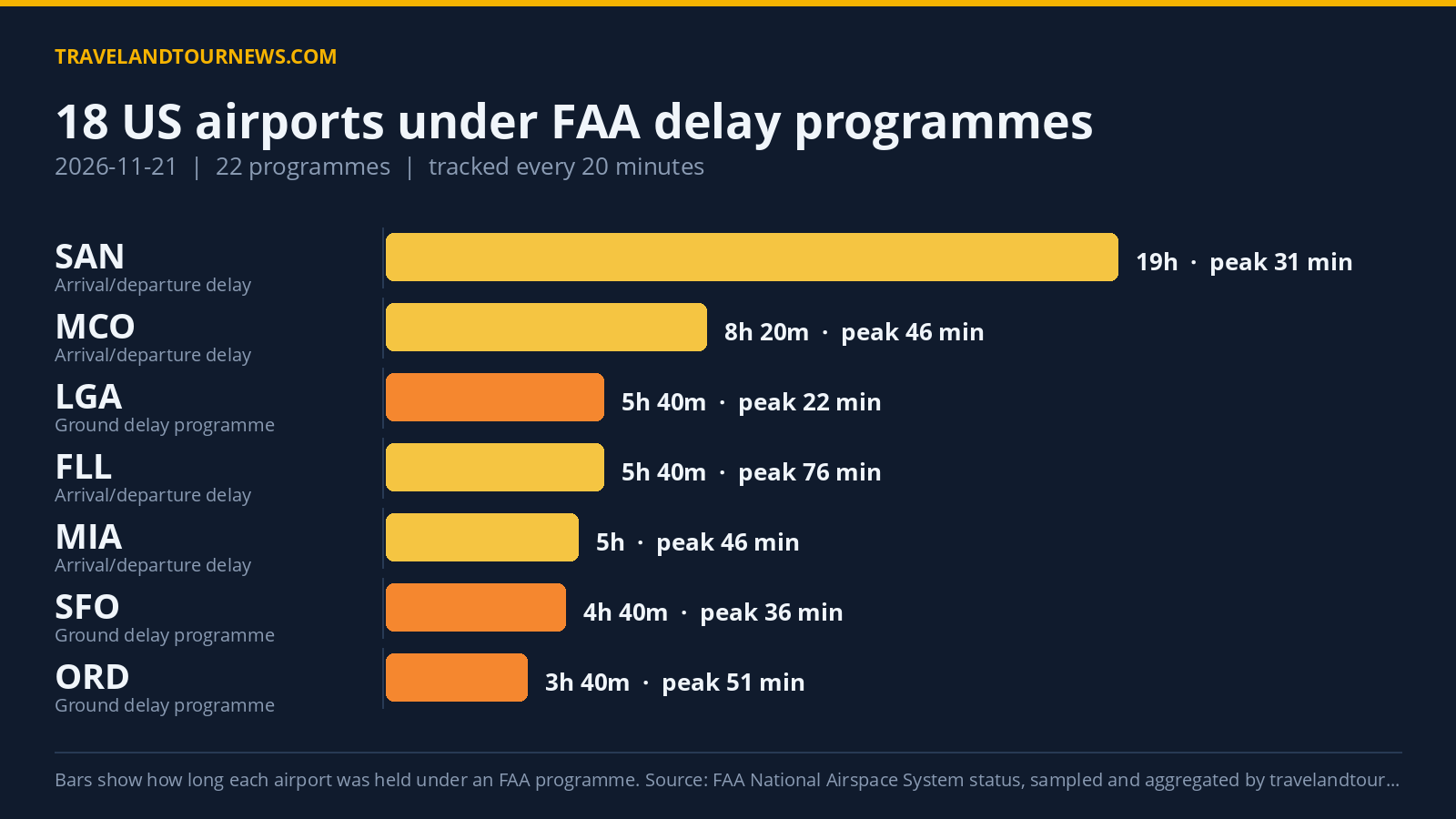
The Federal Aviation Administration (FAA) imposed a ground stop at San Francisco International Airport (SFO) on November 19, 2026, halting all departing flights due to severe wind and storm conditions. Departing flights faced average delays of 3 hours and 6 minutes during the several-hour-long stop, established to manage hazardous weather affecting the Bay Area.
San Francisco recorded 1.85 inches of rain downtown on the same day, nearing the 1918 daily record of 2.24 inches. The heavy rainfall caused significant flooding including on southbound Interstate 280 near Geneva Avenue. Local authorities grappled with these impacts while FAA suspended departures for safety
and operational reasons.
The ground stop extended flight disruptions beyond its lifting time because of the backlog of queued departures and crew duty time restrictions. Operators faced displaced aircraft and scheduling complications, which prolonged delays at the busy, single-runway constrained airport. Business aviation operators without hub support, such as those flying charter or fractional flights, had to delay departures or divert flights to alternative Bay Area airports.
Control Tower Outages at Hollywood Burbank Airport
On the evening of November 19, the control tower at Hollywood Burbank Airport experienced at least two “ATC Zero” outages, each lasting approximately 30 minutes. During these periods, pilots for Southwest Airlines and
Alaska Airlines self-coordinated takeoffs and landings over Common Traffic Advisory Frequency (CTAF) as the FAA did not provide an explanation for the disruptions.
FAA and Lawmakers Respond to Air Traffic Control Challenges
The FAA stated the San Francisco ground stop was directly linked to the wind and storm conditions affecting the region and noted a medium likelihood that the stop might be extended. Meanwhile, Senator Tammy Duckworth declared she will withhold support for the FAA’s $50 billion modernization funding request until a full spending plan and comprehensive account of previous equipment failures, including the nationwide ground stop on November 13, 2026, are provided.
The November 13 nationwide FAA ground
stop lasted more than four hours and impacted over 15,000 flights, marking the longest U.S. ground stop since the events of 2001. In the aftermath, Elon Musk suggested that Starlink terminals could provide solutions for U.S. air traffic control outages although details on their preventative role remain uncertain.
Context of Recent FAA Ground Stops and Safety Ratings
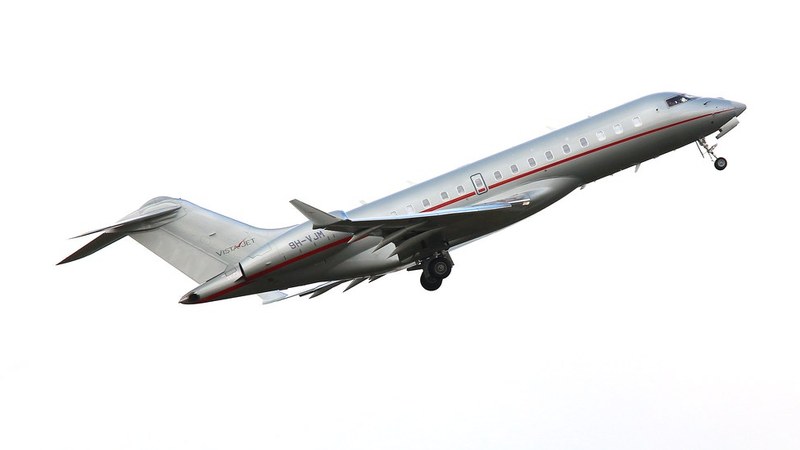
Vista America, the operating partner for VistaJet and XO, reconfirmed its highest safety certifications on November 19, 2026, receiving IS-BAO Stage 3, Wyvern Wingman PRO, and ARGUS Platinum Elite ratings. This reaffirmation of safety standards comes amid increasing scrutiny of FAA infrastructure following recent operational disruptions.
These weather-related and equipment failures contribute
to ongoing operational challenges at congested airports like San Francisco International. The FAA’s ground stop procedures illustrate the difficulty of safely sequencing departures under stormy conditions, especially at single-runway facilities where recovery from delays is protracted due to aircraft and crew availability constraints.