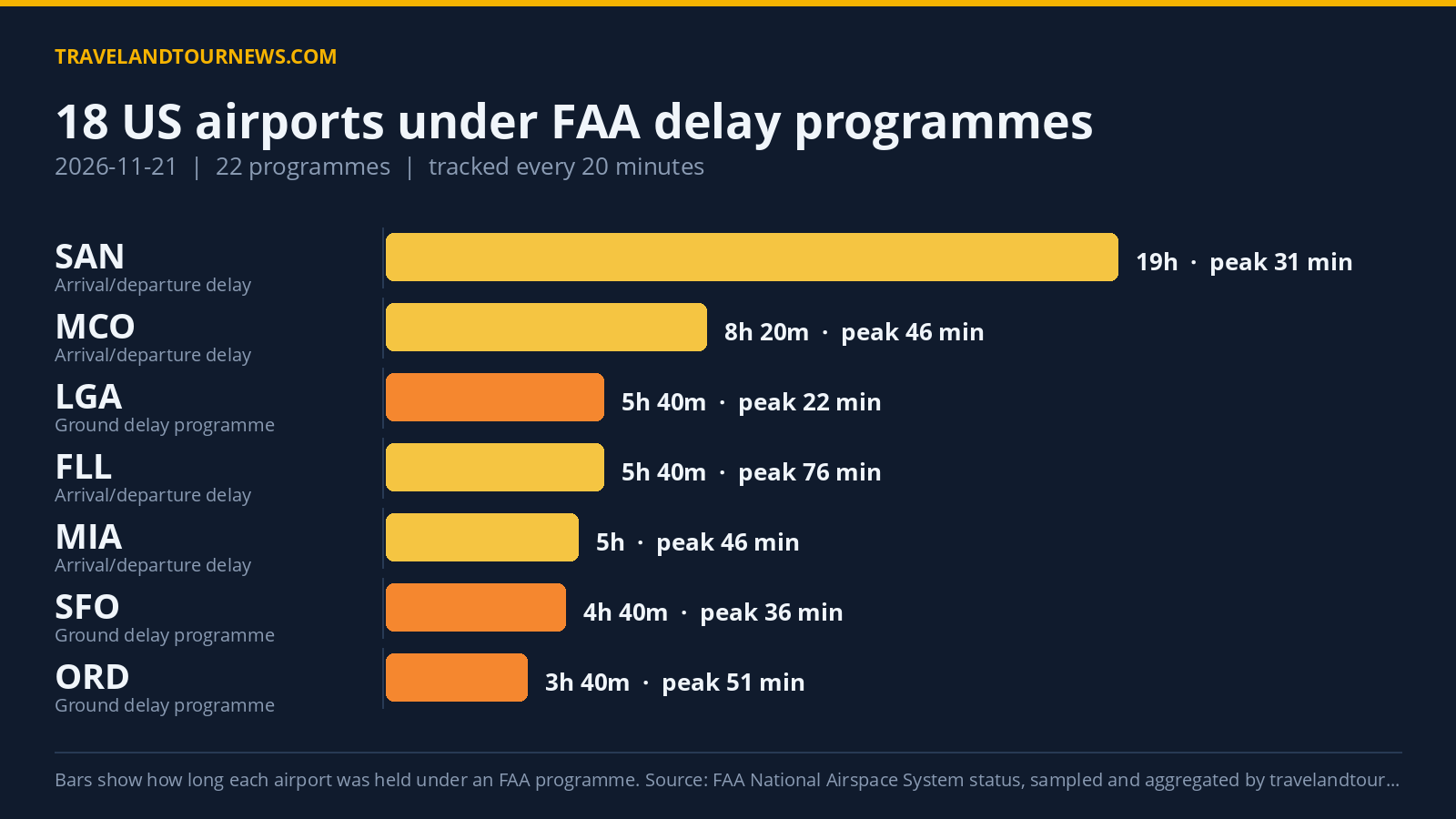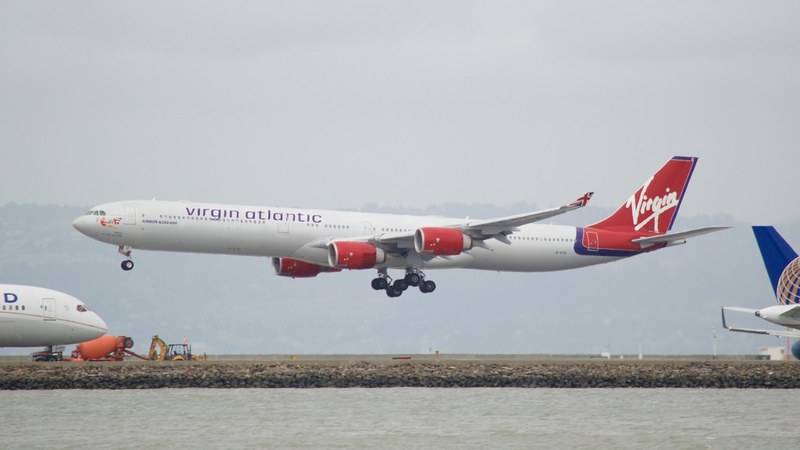
The Federal Aviation Administration (FAA) imposed a ground stop at San Francisco International Airport on November 19, 2026, halting all departing flights for over four hours due to wind and severe weather affecting the Bay Area. Departing flights faced average delays of three hours and six minutes during the stoppage, according to FAA data.
Rainfall and Flooding Impact Bay Area Infrastructure
San Francisco experienced potentially record-breaking rainfall on November 19, with 1.85 inches measured in downtown downtown, approaching the daily record of 2.24 inches set in 1918. Major flooding occurred in several locations, including southbound Interstate 280 near Geneva Avenue, disrupting both roadways and airport-related infrastructure.
Flight Cancellations and Operational Disruptions Extend Into Weekend
Following
the ground stop lift, flight operations at San Francisco International Airport continued to experience delays caused by the backlog of queued departures, displaced aircraft, and crew duty-hour restrictions. Flight cancellations stemming from these disruptions persisted into the weekend. JetBlue Airways announced it would cancel remaining flights scheduled for November 19 as well as some on November 20 to reposition crews and aircraft after the ground stop.
FAA Ground Stop Procedures and Broader Operational Effects
The FAA uses ground stops to hold departures at airports where weather or operational conditions render normal flight sequencing unsafe or unworkable. Such measures are common at busy single-runway constrained airports like San Francisco
International Airport, where delays often extend well beyond weather improvements. The FAA rated the chance of extending the ground stop on November 19 as “medium.” Multiple Air Route Traffic Control Centers were affected by the storm-related conditions impacting high-altitude guidance of airplanes during the event.
Official Statements and Related Safety and Funding Issues
The FAA attributed the ground stop to wind and storm weather impacting the Bay Area. Senator Tammy Duckworth publicly stated she would not support a $50 billion FAA modernization funding request without a detailed spending plan and full disclosure regarding the equipment failure behind a nationwide ground stop that occurred the previous week. On the
same day as the ground stop, Vista America confirmed it retained top safety ratings from audits including IS-BAO Stage 3, Wyvern Wingman PRO, and ARGUS Platinum Elite. Meanwhile, the control tower at Hollywood Burbank Airport went ATC Zero twice on the evening of November 19, resulting in about 30-minute periods where pilots self-coordinated operations due to the absence of air traffic control service.