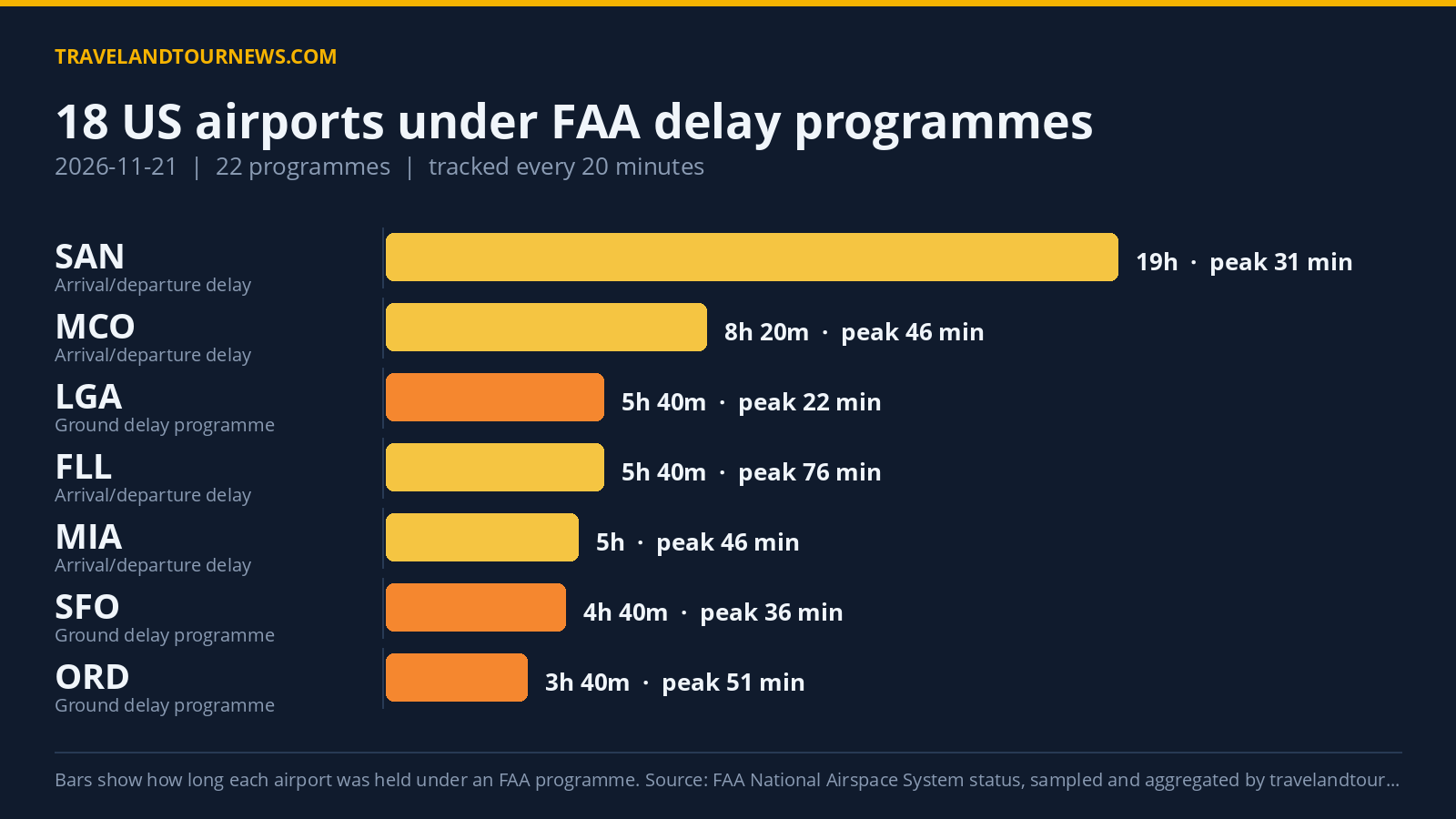
The Federal Aviation Administration (FAA) imposed a ground stop at San Francisco International Airport (SFO) on November 19, 2026, halting all departing flights due to severe wind and storm conditions battering the Bay Area. Departing flights experienced delays averaging 3 hours and 6 minutes amid the disruption. The FAA indicated there was a medium probability the ground stop could be extended.
Storm Conditions Including Near-Record Rainfall Impact Flight Operations
San Francisco received 1.85 inches of rainfall in downtown areas on November 19, just 0.39 inches shy of the 1918 daily rainfall record of 2.24 inches. Local flooding affected parts of the southbound I-280 near Geneva Avenue, exacerbating operational
challenges at the airport. These storm conditions significantly contributed to the FAA’s decision to implement the ground stop at SFO.
Ground Stop Effects Extend Beyond Weather at Congested Airport
Ground stops, used by the FAA to suspend departures when safe sequencing is compromised, impose lasting impacts at congested airports like SFO, which features single-runway capacity limitations. Even after weather improves, queued departures, aircraft displacement, and crew scheduling constraints extend delays. Airlines operating scheduled service and business aviation operators face these compounded challenges. Charter and fractional business flights, lacking hub connectivity for rebooking, often encounter late departures or must divert to alternate Bay Area airports, increasing operational costs.
Hollywood Burbank Airport Control Tower Blackouts Delay Regional Operations
On the
evening of November 18, 2026, the control tower at Hollywood Burbank Airport experienced at least two ‘ATC Zero’ outages, each lasting around 30 minutes. During these outages, which did not have a publicly confirmed cause, Southwest Airlines and Alaska Airlines pilots coordinated flights using the Common Traffic Advisory Frequency (CTAF). This disruption added operational complexities and potential delays for flights originating or arriving at Burbank.
FAA Modernization and Safety Oversight Debates Continue
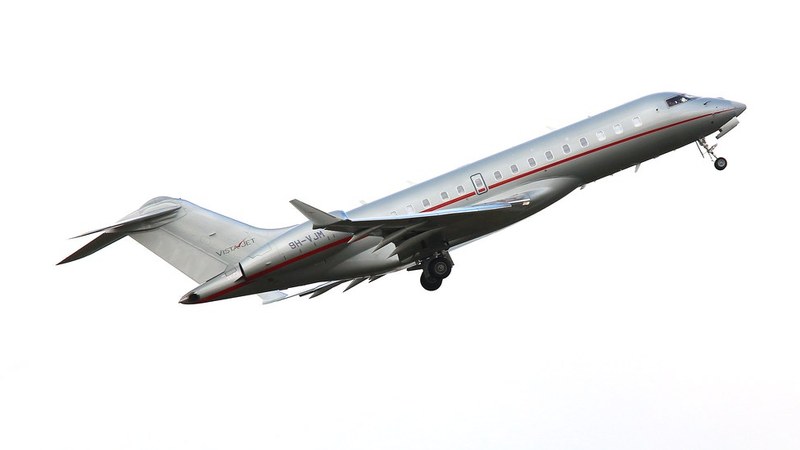
On the same day as the San Francisco ground stop, Vista America, an operating partner of VistaJet and XO, reaffirmed its top safety audit ratings, including IS-BAO Stage 3, Wyvern Wingman PRO, and ARGUS Platinum
Elite accreditations. Senator Tammy Duckworth also addressed aviation safety and funding issues, stating she would not support the FAA’s $50 billion modernization request without a clear spending plan and a detailed accounting of the equipment failure that caused last Friday’s nationwide ground stop, the longest in 25 years.