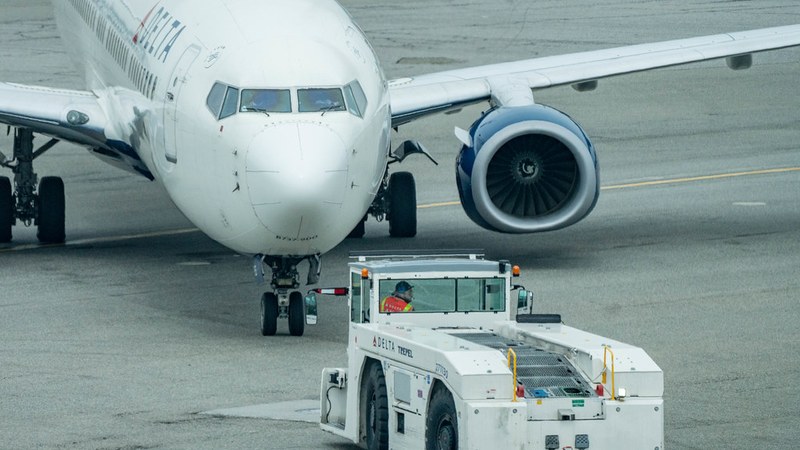
The Federal Aviation Administration issued a ground stop at Hartsfield-Jackson Atlanta International Airport on August 1, 2026, halting departures and causing more than half of Delta Air Lines’ scheduled flights from its primary hub to be canceled within hours. Hundreds of Delta flights were either canceled or significantly delayed due to the sudden FAA order, which interrupted the airline’s tightly timed operations at one of the busiest airports in the United States.
Cascading Delays Impact Delta’s Network
The ground stop caused immediate disruption to Delta’s banked scheduling system that relies on waves of arrivals and departures at Atlanta for connections across the country. As flights
could not depart, crews and aircraft were forced out of position, triggering rolling delays and cancellations at other major Delta hubs including New York, Detroit, Minneapolis, and Salt Lake City. The connected nature of Delta’s operations amplified the disruption beyond Atlanta, as downstream flights faced missed connections and timing breakdowns.
Passenger Challenges amid Overcrowding and Limited Alternatives
Travelers at Atlanta airport encountered packed concourses and long lines at customer service desks attempting to rebook disrupted itineraries. Many faced overnight delays as flights remained grounded at gates or remote stands. Re-accommodating passengers proved difficult during the peak summer travel period, with high load factors limiting available seats on
subsequent flights. Numerous passengers were forced to accept next-day departures or alternate routings to continue their journeys. Residual delays and cancellations are expected to continue after the FAA lifted the restrictions.
FAA Ground Stops and Delta’s Hub Model
FAA ground stops are a traffic-management tool used when airspace, safety, or system-capacity issues prevent normal aircraft flows, temporarily halting departures. Delta’s operational model heavily depends on its Atlanta hub, where coordinated banks of flights maximize connectivity and aircraft utilization. This approach increases efficiency in normal conditions but heightens vulnerability to disruption when air traffic restrictions occur, as evidenced by the current ground stop and previous incidents such as
the July 2024 CrowdStrike IT failure that similarly led to large-scale cancellations.
Operational Vulnerabilities at Large Hub Airports
Large hub complexes like Atlanta are susceptible to meltdown dynamics when mass flight interruptions occur simultaneously. The tightly scheduled waves require that flights, crews, and maintenance align precisely; a ground stop breaks this synchronization, forcing airlines to cancel widespread flights to recover operational balance. The cascading effect exemplified on August 1 underscores the challenges airlines face in maintaining schedule integrity amid sudden capacity constraints imposed by regulatory authorities like the FAA.