The Federal Aviation Administration (FAA) implemented a nationwide ground stop on Friday, November 13, 2026, lasting roughly four hours until just before 7:30 p.m. local time. This marks the second nationwide FAA ground stop since the September 11, 2001 attacks and the first since January 2023.
Flight Cancellations and Delays at Chicago Airports
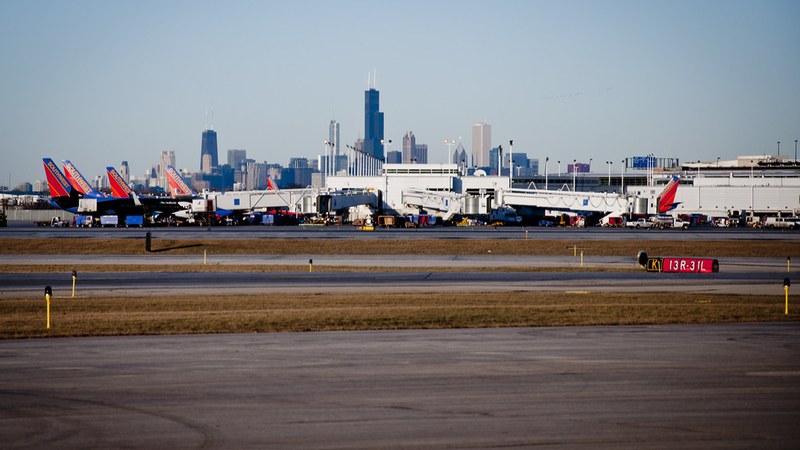
The ground stop caused major disruptions at Chicago’s two busiest airports. As of 1:43 p.m. on Saturday, November 14, Chicago O’Hare International Airport recorded 605 canceled flights, while Chicago Midway International Airport saw 72 cancellations. Average delays at O’Hare were 28 minutes, with delays at Midway averaging 23 minutes in the afternoon and rising
to 65 minutes late Saturday night. At least three flights for Sunday morning at Midway were canceled.
Faulty Aging FAA Systems Caused Ground Stop
The FAA attributed the ground stop to a failure in its aging communications equipment during an attempted upgrade. Transportation Secretary Sean Duffy confirmed that FAA systems did not perform adequately but denied a cyberattack as the cause while not ruling it out entirely. Homeland Security officials also stated they do not believe a cyberattack was involved. The FAA has acknowledged the instability and obsolescence of radar and communications technology, calling for increased funding.
Traveler Experiences and Disruptions
Thousands of travelers faced long waits, cancellations, and luggage delays
at both Chicago airports. One passenger, Vivian Azeredo, reported losing contact with air traffic control mid-flight and remaining on the tarmac for 6.5 hours before landing safely. Travelers encountered difficulty securing rental cars and hotel rooms near the airports due to demand. Another passenger, Gerard Hill, expressed frustration over the uncertainty caused by the FAA system failure.
Official Responses and Expert Views
Transportation Secretary Sean Duffy stated: “We don’t believe this was cyber at all. This was an FAA system that didn’t meet -didn’t meet the moment.” Dr. Sheldon Jacobson of the University of Illinois highlighted the scale of disruptions, comparing them only to those
following 9/11. Chicago’s aviation department clarified that no city-owned infrastructure was affected. Airlines have been working through Saturday to reschedule passengers and restore operations.
International Effects and College Football Impact
Mexico’s Federal Civil Aviation Agency imposed temporary air travel restrictions as a preventive measure. Air Canada canceled flights between the US and Canada, though Canada’s Civil Air Navigation Service reported no impacts on Canadian systems. Flights to Europe resumed earlier due to different systems. The disruption also prompted at least one college football game to be rescheduled: Mississippi’s 19th-ranked team’s game against Oklahoma shifted from Saturday afternoon to Sunday. The SEC, Big Ten, and Big Twelve
conferences delayed kickoff times Saturday to allow for extended team travel time.
Ongoing Recovery and Extended Delays Expected
The FAA and airlines anticipate a gradual return to normal flight operations through Sunday, with continued delays expected due to displaced crews and aircraft. Chicago Midway saw average flight delays climb to 65 minutes Saturday night, and cancellations continue into Sunday morning. Passengers remain stranded or delayed as airlines address the backlog created by the nationwide ground stop.