Denver International Airport (DEN) diverted 29 flights on Monday, August 3, 2026, as severe weather conditions disrupted air traffic. The temperature at DEN reached 102 degrees Fahrenheit, breaking a record set in 1878, before a moving cold front generated hazardous flying conditions. The Federal Aviation Administration (FAA) imposed a ground stop at the airport due to the unfolding storm and atmospheric instability.
Severe turbulence affected inbound flights, causing injuries to five passengers who required medical attention upon landing. One injured traveler was transported to a hospital in stable condition via ambulance. Passengers described the turbulence as the worst they had
ever experienced, with turbulent air intensified by mountain-related wind shear common at Denver International Airport.
Flight delays at Denver escalated rapidly due to the weather. By the end of August 3, 40% of outbound flights and 32% of inbound flights were delayed. Flight cancellations accounted for 3% of the total traffic at DEN on that day. Passengers faced extended wait times, with some experiencing multiple rescheduled flights. One traveler reported a six o’clock original departure delayed four times, ultimately waiting until midnight to depart on a replacement flight.
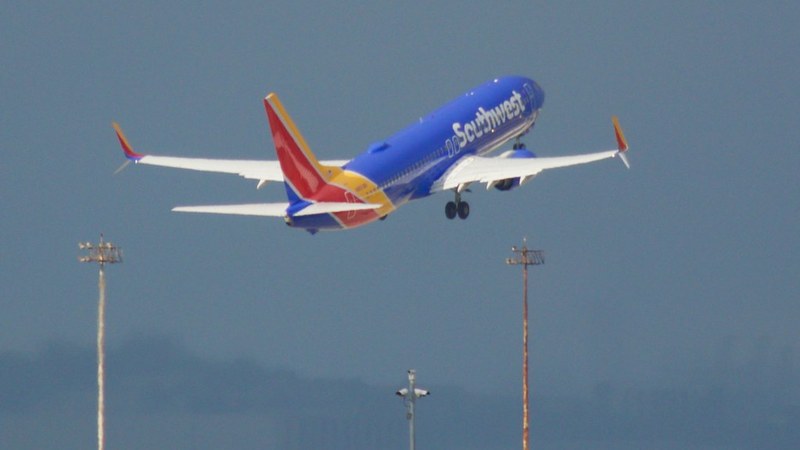
Flights operated by Southwest Airlines, United Airlines, and SkyWest Airlines were among
those diverted to nearby Colorado Springs Airport (COS). Passengers on diverted flights encountered lengthy ground delays, and some resorted to alternate transport. For example, one traveler took an Uber from COS to Denver after the assigned flight crew exceeded their allowable duty time. Several airlines coordinated repositioning flights from Colorado Springs back to Denver following diversions.
The disruption originated from a collision between a persistent heat dome and an incoming cold front over Colorado’s Front Range. This weather boundary produced wind gusts up to 40 mph and a rapid temperature drop of 50 to 60 degrees overnight, destabilizing the atmosphere.
Additionally, smoke drifting from wildfires in the Pacific Northwest degraded air quality at Denver, complicating conditions prior to the front’s arrival.
Turbulence issues are common at Denver International Airport due to complex mountain wind patterns and high-altitude shear. The turbulent air mass associated with Monday’s event migrated northeast toward the Great Lakes region and persisted over eastern New York and New England as of the morning of August 4, 2026. Temperatures at Denver on Tuesday moderated to the mid-70s to 80 degrees Fahrenheit, ending the heat advisory and improving conditions for flights in and out of the airport.