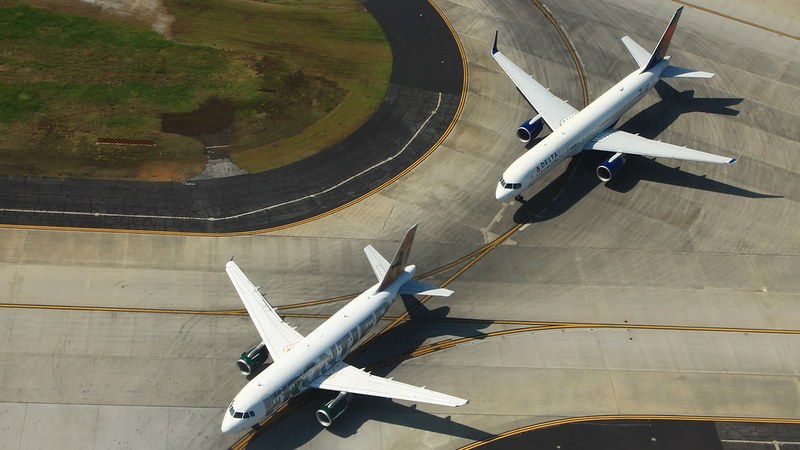
On November 22, 2026, around 3,500 Delta Air Lines flights were delayed nationwide due to a failure in the airline’s automated weight-and-balance system, heavily affecting operations at Hartsfield-Jackson Atlanta International Airport. The Federal Aviation Administration (FAA) initially imposed a ground stop on Atlanta-bound departures, which Delta later requested be converted to a ground delay program, resulting in delays of about one hour per flight.
Delays and Timing at Atlanta
Flight tracking data indicated that nearly 400 flights scheduled at Atlanta were delayed shortly after 9 a.m. local time on November 22. The FAA downgraded the ground stop to a ground delay program around 8:40 a.m.,
permitting some departures while still restricting inflow to maintain control over airport congestion.
Affected Airports Across the US
Besides Atlanta, passenger disruptions were reported at multiple other airports serviced by Delta, including Newark Liberty International Airport, LaGuardia Airport, Washington’s Reagan National and Dulles International Airports, Boston Logan International, Baltimore/Washington International, Miami International, Minneapolis-Saint Paul International, Nashville International, San Antonio International, and Birmingham-Shuttlesworth International Airport.
Cause and Background of Disruption
The delay resulted from a malfunction in Delta’s automated weight-and-balance system used to prepare aircraft for departure. The airline deployed manual workarounds to allow flights to depart safely while technicians worked on restoring automated functions. The FAA identified related issues with
telecommunications infrastructure upgrades at its El Dorado, Arkansas radio site and a router installation at Amarillo, Texas as factors contributing to recent nationwide air traffic control disruptions.
Transportation Secretary Sean Duffy traced the previous nationwide FAA ground stop on November 13, 2026, which caused over 12,500 flight cancellations, to failures during a transition from copper to fiber-optic lines and equipment faults in the router at the Amarillo facility. FAA Administrator Bryan Bedford and Delta CEO Ed Bastian discussed these incidents, with Bastian attributing them to suspected equipment faults and human error and ruling out artificial intelligence or cyberattack involvement.
Passenger Impact and Operational Adjustments
Passengers
experienced extended waiting times, especially for flights arriving at and departing from Atlanta, where ground delays added roughly one hour to scheduled times. Delta coordinated with air traffic control to implement procedures protecting gate areas and the tarmac at its Atlanta hub from congestion. Travelers were advised to arrive early to reduce the likelihood of missed flights due to delays.
An interviewed passenger traveling to Philadelphia said, “If you get here early you’ll be okay that’s what I tell people as long as you’re early you okay you’re late that’s your fault.”
Official Statements
A Delta spokesperson confirmed the use of manual
procedures, stating, “Delta teams are using manual workarounds this morning to safely get flights departed while work continues to restore automation.” The airline also emphasized its collaboration with air traffic control to “strategically enact programs to protect airport gates and tarmac areas from congestion at our Atlanta hub.”
Delta CEO Ed Bastian remarked, “To our customers who have been impacted, know that Delta is here for you. Thank you for your patience and understanding as we work to fully recover our operation.” Transport Secretary Sean Duffy highlighted infrastructure upgrades as the key triggers behind recent FAA system issues.
Travel Context and Industry Impact
The disruptions
occurred during the critical pre-Thanksgiving travel period, with Hartsfield-Jackson Atlanta International Airport expecting to process over 4 million passengers through December 1, a 5% increase from the previous year. The November 22 outage adds to recent pressures after a November 13 FAA nationwide ground stop suspended departures for over four hours and resulted in massive cancellations.
Delta continues efforts with its technical teams to restore full automation at its Atlanta hub while maintaining safe flight operations through manual procedures and close coordination with FAA officials and airport partners.