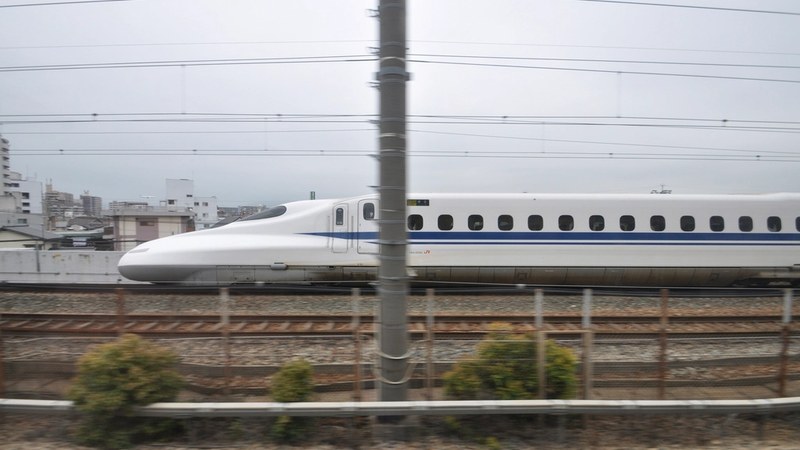
The Delhi-Mumbai bullet train project plans to link India’s two largest economic centers, Delhi and Mumbai, through a high-speed rail corridor spanning nearly 1,400 km. This initiative builds on the under-construction Mumbai-Ahmedabad high-speed rail line to create a broader network connecting key metropolitan regions.
Delhi-Ahmedabad Corridor: Proposed Route and Planning Status
The Delhi-Ahmedabad high-speed rail corridor is proposed at approximately 886 km with 15 stations across Delhi, Haryana, Rajasthan, and Gujarat. The route starts at Dwarka Sector 21 in Delhi, passes through Haryana stations Manesar and Rewari, and continues through Rajasthan stations including Behror, Jaipur, Ajmer, Bhilwara, Chittorgarh, Udaipur, and Dungarpur, before reaching Gujarat at Himmatnagar, Gandhinagar,
and Ahmedabad.
The corridor will be mostly elevated and aims to reduce the current approximate 14-hour train journey between Delhi and Ahmedabad to under four hours. The detailed project report was prepared by the National High Speed Rail Corporation Limited (NHSRCL), which finalized an alignment designed to minimize land acquisition, a process yet to begin. An NHSRCL official said, “We have chosen this alignment (along the rail line and highway) to ensure that land acquisition is minimal. In such mega projects, maximum time gets spent in acquiring privately owned land. While the alignment is final, acquiring land is yet to
begin.” Preparatory work before construction is expected to take significant time, with the project remaining in planning without sanction or execution.
Mumbai-Ahmedabad High-Speed Rail Corridor: Construction Progress and Details
The Mumbai-Ahmedabad high-speed rail corridor is India’s first dedicated bullet train project, stretching approximately 508 km with 12 stations across Maharashtra, Dadra and Nagar Haveli, and Gujarat. Designed for speeds up to 350 km/h with an operational speed of 320 km/h, the project is expected to reduce travel time on the route to about two hours.
Despite delays caused by land acquisition challenges in Maharashtra and rising costs, construction is ongoing. The government plans to open the Surat-Vapi section
by August 2027 as the first partial operation. The corridor remains the only sanctioned high-speed rail project under active development in India.
Economic Impact and Infrastructure Context
The bullet train network is intended to facilitate faster passenger movement between major economic centers, differing from existing Eastern and Western Dedicated Freight Corridors, which focus on improving goods movement between Delhi-NCR and Mumbai’s Jawaharlal Nehru Port. Combining passenger and freight infrastructure aims to enhance the overall connectivity and economic integration of western and northern India.
A connected Delhi-Ahmedabad-Mumbai high-speed rail corridor could enable same-day business travel between metropolitan hubs, improve access to jobs, education, and larger markets
along the route, and strengthen links between companies, suppliers, and services.
Official Statements and Political Considerations
An NHSRCL official emphasized that the finalized alignment along rail and highway routes is intended to minimize land acquisition delays. Yet, land acquisition has not started and preparatory activity will consume considerable time before construction can commence.
The project’s future is uncertain without sanction, financing decisions, and clearances. The Delhi-Ahmedabad corridor was not included among the seven high-speed rail corridors recently announced by the Railway Ministry, which cautioned that sanctioning depends on detailed project reports, feasibility assessments, and resource availability.
The upcoming Gujarat Legislative Assembly election in December 2027
may influence the corridor’s prioritization, since Gujarat is integral to both the Delhi-Ahmedabad proposal and the Mumbai-Ahmedabad corridor under construction. The corridor could figure prominently in political and infrastructure debates leading up to the election.
Unknowns and Future Prospects
The Delhi-Mumbai bullet train project currently lacks a project completion date, fare structure, specific construction phases, or an operational timetable. The Mumbai-Ahmedabad line is progressing but the Delhi-Ahmedabad link remains an ambition that requires government sanction, financial commitment, land acquisition, and construction to move forward.
Integrating the Delhi-Ahmedabad corridor with the existing Mumbai-Ahmedabad project is essential to form a continuous high-speed rail network connecting India’s
largest economic centers, but this depends on multiple pending decisions.