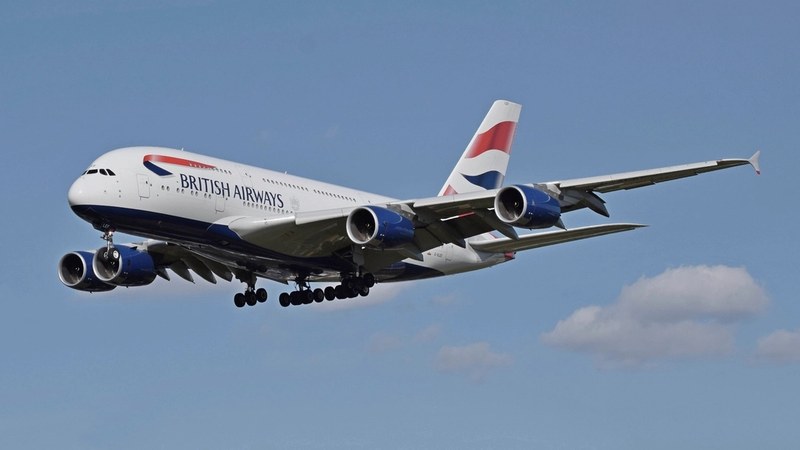
More than 10,700 U.S. flights experienced delays on July 17, 2026, caused by smoke from over 900 active wildfires burning in Canada. The smoke disrupted air traffic across the U.S. Midwest, Great Lakes, and East Coast regions, affecting visibility and prompting widespread flight delays across multiple airports and routes.
Airline Waivers and Traveler Advisories
United Airlines issued an air quality travel advisory on July 17 covering 17 airports in the U.S. and Canada, including Detroit, Toronto Pearson, Buffalo, Syracuse, Rochester, and several airports in Michigan, Wisconsin, and New York. Passengers holding tickets purchased on or before July 16 for flights on July 17 or 18
were eligible to rebook without change fees or fare differences through July 20, provided travel remains between the same city pairs and cabin class.
Delta Air Lines released a Midwest Air Quality Advisory for flights between July 16 and 18, covering cities such as Detroit, Minneapolis-St. Paul, Milwaukee, Green Bay, Grand Rapids, and Madison. Delta passengers could rebook flights at no additional cost through July 21 under the waiver.
American Airlines, facing 42 percent of its flights delayed on July 17—more than double its 2026 average of roughly 20 percent—extended waivers across 29 airports. The deadline for no-cost changes passed
on July 18, but unused ticket values can still be applied toward future travel within one year.
Travelers were advised to check the Federal Aviation Administration’s (FAA) National Airspace System status before travel, particularly when connecting through hubs like Philadelphia International, Chicago O’Hare, and Detroit, where significant delays are ongoing. The FAA implemented a ground delay program at Philadelphia International, causing over 365 delays and 12 cancellations on July 16, and more than 200 delays on July 17.
Air Quality Levels and Health Precautions
The smoke from Canadian wildfires created hazardous air quality across multiple U.S. cities. On July 19 at 6 a.m., Chicago’s Air Quality
Index (AQI) reached approximately 153, indicating unhealthy air. Detroit recorded an AQI near 600 on July 16, a record high surpassing previous peaks. Northern Minnesota reported particulate matter (PM2.5) concentrations above 600 micrograms per cubic meter on July 16 and 17, well beyond the EPA’s hazardous threshold of 500.
The National Weather Service forecasted a third wave of smoke moving into the Great Lakes region around July 19, bringing unhealthy air back to cities including Chicago, Detroit, and parts of the Northeast.
At AQI levels above 150, the Environmental Protection Agency (EPA) recommends limiting outdoor exertion for all individuals, not
just sensitive groups. When AQI levels exceed 200, outdoor physical activity should be avoided outright. N95 or KN95 masks are advised to filter PM2.5 particles effectively, while standard cloth masks do not offer sufficient protection. This guidance extends to outdoor events such as the FIFA World Cup Final at MetLife Stadium in East Rutherford, New Jersey, where current conditions were not deemed to pose a direct threat.
Political Context and Trade Disputes
On July 17, President Donald Trump threatened to add costs related to wildfire smoke pollution to tariffs on Canada, describing the expense as “incalculable” and attributing it to “Willful Negligence” in Canadian fire
management. However, legal experts note that a recent U.S. Supreme Court ruling restricts presidential authority to impose tariffs under the International Emergency Economic Powers Act. The administration currently uses a 10 percent global tariff under Section 122 of the Trade Act, set to expire July 24, 2026, and future tariffs would require justification under Section 301, which does not apply to wildfire smoke.
U.S. Trade Representative Jamieson Greer announced on July 1 that the Canada-United States-Mexico Agreement (CUSMA) will not be renewed in its current form, introducing additional uncertainty to trade relations.
Canadian officials emphasized their commitment to forest sustainability
and cooperation. Prime Minister Mark Carney stated climate change is “the responsibility of all countries, including the United States,” criticizing U.S. withdrawal from climate initiatives. Emergency Management Minister Eleanor Olszewski reported Canada has invested $12 billion in forest management and fire prevention since 2020. Canada and the U.S. maintain bilateral wildfire cooperation agreements established in 1982 and reaffirmed in 2025.
Ontario Premier Doug Ford challenged U.S. tariff threats, highlighting Canada’s assistance to the U.S. during last year’s wildfires and calling to lift softwood lumber tariffs exceeding 45 percent. Ford said, “I find it a shame the administration in the US
and Congress people are writing these letters and blaming us.”
Environmental and Air Traffic Challenges
The Canadian wildfires are linked to a record-breaking heatwave influenced by climate change. Ontario experienced temperatures 25.2°F above average on July 13, 2026, the day when fire clusters ignited. Climate Central chief meteorologist Shel Winkley noted that these temperatures would be “virtually impossible to occur on July 13 in Ontario without the influence of climate change.”
The 2026 U.S. wildfire season has burned 5,740 square miles, 31 percent above the 10-year average. Canada’s 2026 wildfire season has reached 134 percent of its 10-year average by mid-July.
The FAA reported that
smoke reduces visibility more significantly than storm-related weather, complicating air traffic control operations and resulting in greater flight delays. Philadelphia International Airport implemented a ground delay program due to these conditions, highlighting the challenges of navigating airspace amid dense smoke.
The Trump administration has also moved to close U.S. government wildfire research labs, including the Pacific Wildland Fire Sciences Lab in Seattle, which produces critical data for smoke and fire behavior monitoring.
Official Statements on Wildfire Response
Prime Minister Mark Carney addressed climate change responsibility saying, it is “the responsibility of all countries, including the United States,” noting America’s withdrawal from international climate efforts.
Emergency
Management Minister Eleanor Olszewski confirmed Canada has invested $12 billion in forest sustainability and fire prevention since 2020 and maintains wildfire cooperation agreements with the U.S.
Ontario Premier Doug Ford said, “I find it a shame the administration in the US and Congress people are writing these letters and blaming us,” and stressed Canada’s past wildfire support to the U.S. while condemning tariff threats.
U.S. President Donald Trump stated that wildfire smoke costs “must of necessity be added to the TARIFFS Canada is currently paying,” although no legal pathway to enforce this exists following recent court rulings.