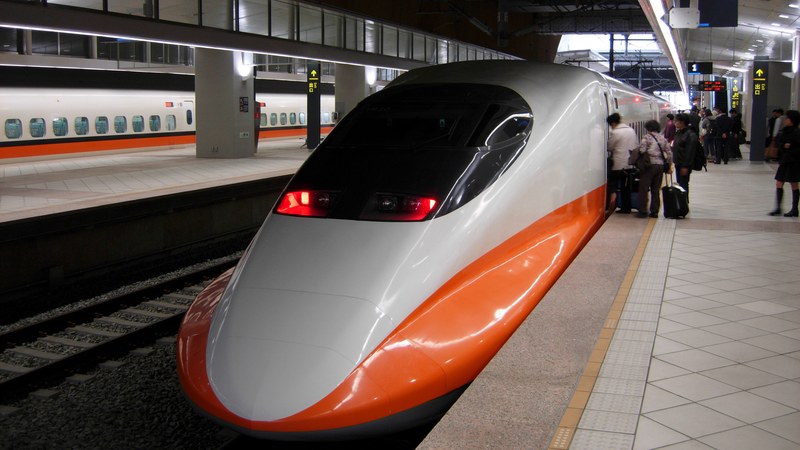
The California High-Speed Rail Authority spent approximately $600,000 of taxpayer money on questionable travel reimbursements for consultants between June 2024 and April 2026, according to a report by the project’s Office of the Inspector General.
Inspector General Findings on Consultant Travel
The Inspector General investigated travel expenses submitted by four consulting firms: KPMG, Nossaman LLP, AECOM-Fluor Joint Venture, and SYSTRA/TYPSA Joint Venture. These payments included instances of premium or first-class airfare without proper documentation, rideshare trips to gyms, nightclubs, escape rooms, a cigar lounge in Washington, D.C., and a sushi restaurant in Denver. Notably, the Authority reimbursed over $118,000 in international travel costs for SYSTRA/TYPSA despite
contracts prohibiting such expenses.
The report highlighted one luxury rideshare trip in downtown Sacramento costing nearly $40 for traveling just one mile. Another KPMG consultant billed multiple comfort Uber rides on a single trip, including transport from home to the airport, from the airport to the Authority’s office, and onward to a steakhouse in Folsom, over 25 miles away.
Financial and Contractual Compliance Issues
Overall, the Authority paid more than $2 million in travel costs for the four firms during the nearly two-year period. Inspector General Benjamin Belnap reviewed over half of these expenses and found $81,000 were not allowable under state travel rules while
$543,400 violated the firms’ state contracts. Additionally, $680,500 of the reimbursed costs lacked the Authority’s required prior approval.
The report criticized the Authority’s failure to ensure travel expenses were necessary, cost-effective, contract-compliant, or aligned with state regulations. Documentation such as receipts was often not requested or provided, undermining proper oversight.
The Inspector General noted a contract manager responsible for Nossaman LLP approved non-compliant expenses under direction from the acting chief counsel and the Authority’s CEO Ian Choudri, despite the CEO lacking authority to override contract requirements.
Authority and Government Responses
A spokesperson for the California High-Speed Rail Authority expressed appreciation for the Inspector General’s
oversight, committing to strengthen internal controls, enforce more rigorous documentation and approval procedures, and recover improper costs. The Authority aims to implement these corrective measures by March 2027.
Anthony Martinez, spokesperson for Governor Gavin Newsom, stated the independent Inspector General office exemplifies California’s dedication to transparency and accountability.
Assembly Republican Minority Leader Alexandra Macedo, representing Kern County where construction is ongoing, condemned the travel spending as wasteful and demanded full reimbursement and accountability before Governor Newsom leaves office. She criticized the Authority’s plan to partially address the issue next year as insufficient.
State Senator Dave Cortese, chair of the Senate
Transportation Committee, declared zero tolerance for unauthorized travel expenses and plans to formally request reimbursement for questioned costs. He also pledged to hold responsible any staff complicit in the overspending.
State Senator Tony Strickland, vice chair of the Senate Transportation Committee, called the $600,000 in questionable travel expenses unacceptable amid California families’ economic struggles. He urged redirecting funds from the delayed, overbudget rail project to meet urgent state needs.
Project Context and Oversight Plans
California voters initially approved the high-speed rail project to link Los Angeles and San Francisco. Construction currently focuses on the Central Valley segment between Merced and Bakersfield, expected to finish within
the next decade at a projected cost of $36 billion. The full project cost now ranges between $126 billion and $231 billion, with original completion dates pushed from 2020 to around 2040.
The Inspector General’s office warned lawmakers that funding for the project could be depleted by December 2027 if current trends continue.
The Authority and its Board of Directors have commenced new oversight efforts to correct internal financial control weaknesses and to foster greater compliance with state laws.
As part of corrective steps, the Authority plans to update travel policies, standardize travel request procedures, and pursue reimbursement of improperly
charged expenses from the consultants. The Inspector General will review progress on these actions by March 2027.
Belnap summarized the problem stating, “The broader pattern in both instances is that the Authority has not developed sufficient controls, and reinforced a culture, that ensures compliance with state laws and regulations. To build trust with its stakeholders and the broader public, the Authority—with oversight provided by its Board of Directors—needs reverse this broader pattern.”