At least seven flights across Europe received bomb threats on November 3, 2026, leading to temporary closures and security procedures at several airports. Authorities also searched an Israel-bound cruise ship named Crown Iris in Syros, Greece, without discovering any explosive devices.
Flight Disruptions and Diversions
A LOT Polish Airlines flight from London to Warsaw was diverted to Modlin Airport near Warsaw after a bomb threat, where it underwent a security search with no device found. Meanwhile, an SAS flight from Copenhagen landed at Warsaw Chopin Airport as scheduled with no incident. In Sofia, two flights—one from Milan/Bergamo operated by Wizz Air with 176 passengers,
and another from Dublin operated by Ryanair carrying 186 passengers—received bomb threats but landed safely and were cleared after inspections.
The day prior, on November 2, a Wizz Air flight from London to Sofia was redirected to Budapest Airport following a bomb threat, confirmed by Hungary’s Defence Minister Romulusz Ruszin-Szendi. Separately, a Ryanair flight from Manchester to Murcia Airport in Spain faced a bomb alert causing a temporary cordon, but no explosives were found and airport operations resumed normally.
Airport Operations and Security Responses
Warsaw Chopin Airport briefly closed for bomb threat-related inspections before reopening and continuing operations. At Rome Fiumicino Airport, two Ryanair flights
originating from Lisbon and Dublin were searched following bomb threat alerts. The Dublin flight was escorted by the Italian Air Force until landing, but both planes were cleared with no devices detected. Despite these extensive security measures, airport operations in Rome continued as usual.
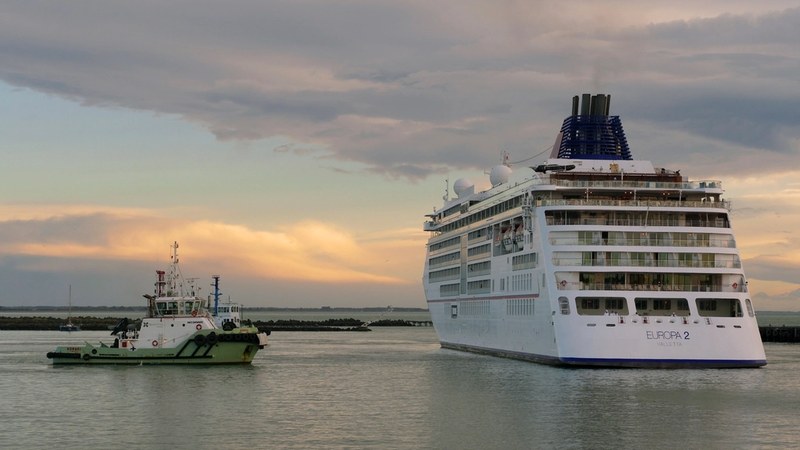
In Greece, the Crown Iris cruise ship was inspected by explosives detection dogs and divers after a threat indicated a bomb was attached to the hull. Initial searches found no explosives, with further checks planned before the ship resumes its journey.
Official Statements
Bulgaria’s Transport Ministry confirmed bomb threats reached flights to Sofia from Milan/Bergamo and Dublin and
that both flights landed safely without finding any explosive devices. Hungarian Defence Minister Romulusz Ruszin-Szendi tweeted about the earlier diversion of the Wizz Air flight to Budapest. Rome’s airport operator ADR stated that the Ryanair flights searched at Fiumicino Airport did not impact airport operations beyond the security alerts.
Analysis and Context
Rhys Jones, Analysis Output Manager at aviation risk advisory firm Osprey Flight Solutions, described the occurrence of seven bomb threats in one day as exceptional. He noted, “The lack of clear target state, airline, or route indicates that general disruption to aviation operations is the aim.” Eric Schouten, head of aviation
security group Dyami, linked the threats to a pattern of hybrid disruptive attacks in Europe, including recent hacking incidents targeting supermarkets’ refrigeration systems. He said, “From railways to the food infrastructure that you see happening with the fridges being hacked and all kinds of other operations, it does fit the narrative of Russian state actors who want to disturb Europe.” European officials have previously attributed similar hybrid sabotage campaigns to Russia and Iran, though both countries deny involvement.