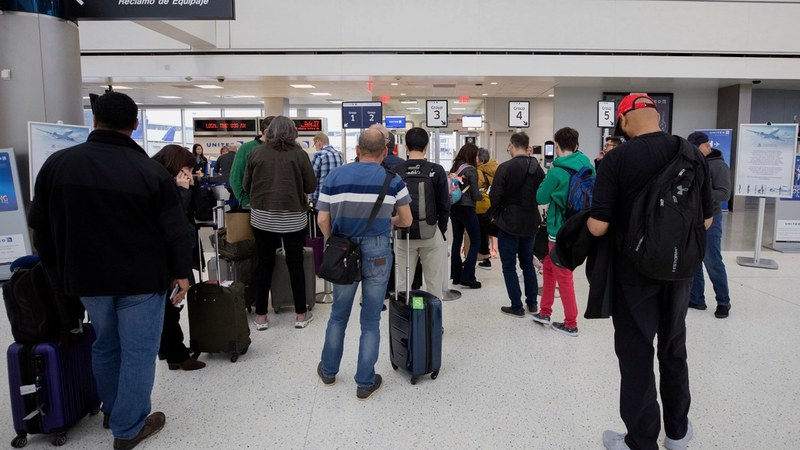
American Airlines and its regional carriers experienced a nationwide ground stop beginning around 6:30 p.m. Eastern Time on Tuesday, July 28, 2026, triggered by an IT failure affecting operational systems. The Federal Aviation Administration (FAA) issued the ground stop covering all airports and facilities handling American Airlines operations across the United States, including major hubs like Charlotte Douglas International Airport and Dallas Fort Worth International Airport. The FAA lifted the ground stop at approximately 7:18 p.m. Eastern Time after the airline confirmed system connectivity was restored.
Flight Delays and Cancellations Reach Significant Levels
FlightAware data showed approximately 1,100 American Airlines flights were delayed during the outage, representing
about 30% of the airline’s flights scheduled that day. Additionally, 221 flights were canceled, equivalent to 6% of daily operations. Flights already in the air continued to their destinations, but departures were held on the ground until systems were back online. Despite ending the ground stop after 45 minutes, delays persisted as the airline worked to recover normal scheduling across its network.
Cause and Official Response to the IT Systems Failure
American Airlines attributed the disruption to a technology issue that briefly affected connectivity for several operational systems. An airline spokesperson stated, “A technology issue briefly impacted connectivity for some of our systems on Tuesday evening. Connectivity has been
fully restored. We apologize to our customers for the inconvenience. We appreciate the efforts of our team to bring our systems back online so quickly and take care of our customers.” The issue affected software systems crucial for flight scheduling, crew coordination, and passenger communications rather than aircraft safety systems.
Airports Impacted by the Outage
The outage affected American Airlines operations nationwide, impacting several prominent airports. In addition to Charlotte Douglas International Airport—the largest hub mentioned in FAA advisories—airports such as Dallas Fort Worth International Airport, Chicago O’Hare International Airport, Los Angeles International Airport, Fort Lauderdale–Hollywood International Airport, Louis Armstrong New Orleans International Airport, Nashville
International Airport, Ronald Reagan Washington National Airport, and Phoenix Sky Harbor International Airport were among those facing delays and operational disruptions. The incident overlapped with weather-related issues including thunderstorms on the US East Coast, compounding travel complications.
Passenger Impact and Industry Expert Commentary
Travelers faced delays and cancellations due to the FAA-imposed ground stop and the IT connectivity failure. Flights on the ground were held pending resolution, while departures gradually resumed after system restoration. Eric Napoli, Chief Legal Officer at AirHelp, explained, “IT issues aren’t unusual in the airline industry because airlines rely on highly complex technology systems to manage nearly every part of the travel
experience, from flight scheduling and crew coordination to passenger communications and booking systems. When one of these systems experiences an issue, the impact can quickly spread across an airline’s network and create delays or cancellations.”
The outage became a trending topic on social media, where users noted the airline industry’s dependency on digital infrastructure. While the FAA ground stop duration was less than an hour, the resulting flight delays and cancellations were significant across American Airlines’ network.