Delta Air Lines’ automated aircraft weight and balance calculation system failed on the morning of November 22, 2026, disrupting flight operations at its Atlanta hub and across its U.S. network. This outage caused widespread delays and cancellations during the peak pre-Thanksgiving travel period.
FAA Ground Delay Program Limits Atlanta Arrivals
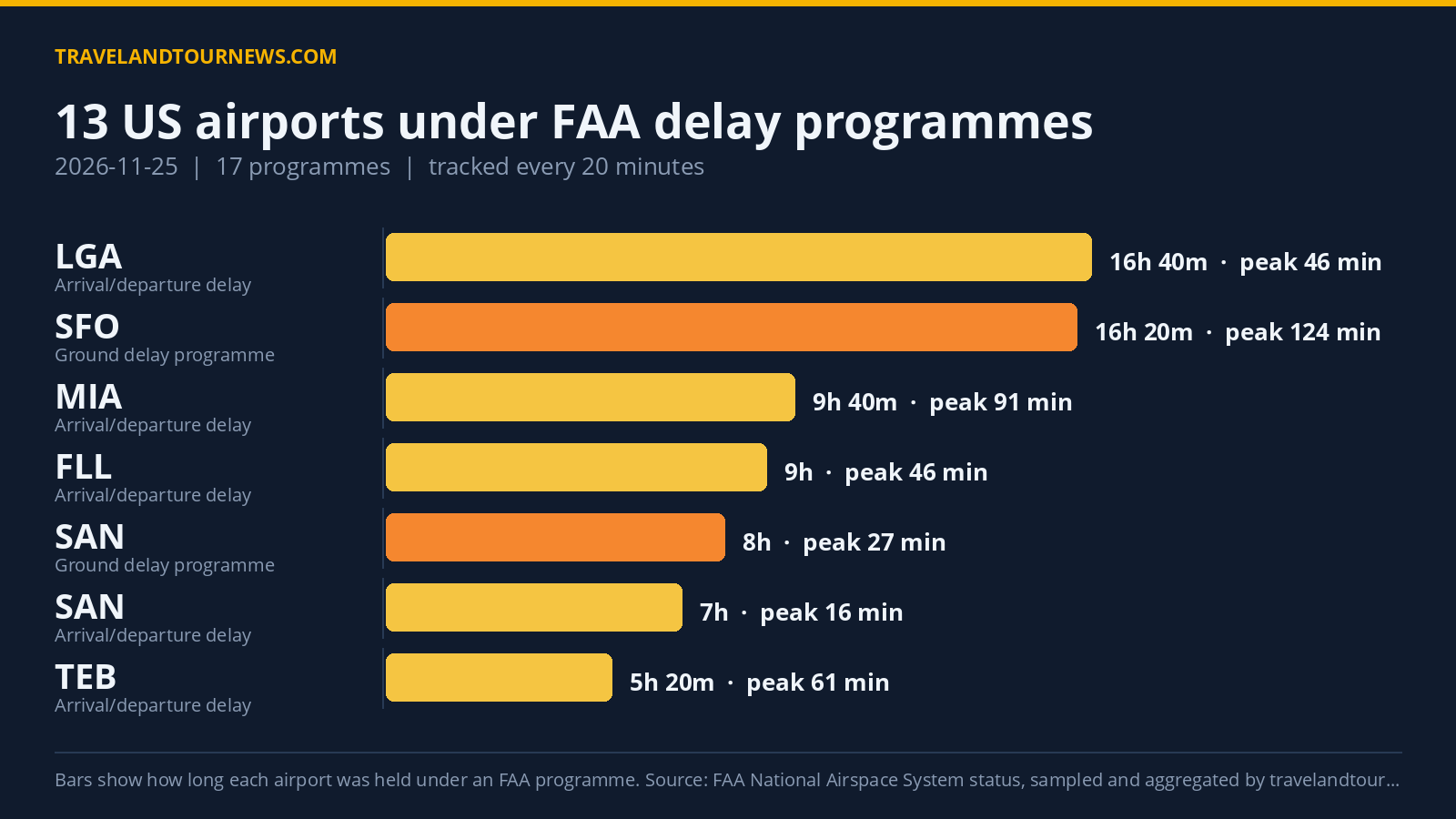
To manage gate and tarmac congestion at Hartsfield-Jackson Atlanta International Airport, the Federal Aviation Administration implemented a ground delay program on November 22. This program capped the number of inbound flights from the contiguous United States to Atlanta, imposing average additional waits close to an hour on affected arrivals during the delay period.
Delays and Cancellations Across Atlanta, Northeast, and Beyond
Flight tracking data from
FlightAware showed more than 1,100 delayed flights and several dozen cancellations at Atlanta on November 22, with Delta Air Lines and its Delta Connection regional affiliate responsible for most disruptions. Delta operated approximately 5,000 flights—mainline and Delta Connection—nationwide that day. About 70% of Delta’s delays and cancellations at Atlanta were tied to the automated weight and balance system failure, while the remainder stemmed from weather and air traffic control restrictions primarily in the Northeast.
Outside Atlanta, airports including New York LaGuardia, Newark, Washington Reagan National, Washington Dulles, Boston, Baltimore/Washington International, Miami, Minneapolis-Saint Paul, Nashville, San Antonio, and Birmingham also saw
delays attributed to the outage.
Manual Procedures Cause Extended Departure and Arrival Delays
During the outage, Delta reverted to manual calculation methods for weight and balance verification required before takeoff. This slower process increased departure turnaround times, resulting in long waits at gates and taxiways. Consequently, some arriving flights encountered unavailable gates, forcing them to hold on taxiways. The cascading effect led to some cancellations when crew duty limitations were reached.
System Restoration and Ongoing Operational Disruptions
Delta restored the automated weight and balance system later on November 22, enabling a phased return toward scheduled flight operations. Despite restoration, residual delays and operational irregularities persisted into the evening of November 22 and extended into
November 23 as aircraft and crew rotations were realigned to recover from disruptions.
Customer Support Measures Amid Disruptions
Delta provided rebooking on the next available flights for passengers facing significant delays or cancellations. The airline also offered hotel accommodations and meal vouchers according to policy, particularly for overnight disruptions or missed connections at hub airports. Passengers with canceled flights who chose not to travel were offered refunds to their original form of payment.
Safety Assurances and FAA Oversight
Throughout the outage, Delta implemented manual safety checks as a standard contingency when automation fails. Both Delta and the FAA confirmed no safety incidents occurred related to the system failure. The FAA
identified the issue as a carrier-specific problem affecting Delta’s system but not impacting federal air traffic control operations, and no enforcement actions have been indicated.
Context of Recent Technology-Related Disruptions
The Delta outage followed an FAA nationwide ground stop earlier in November caused by a communications equipment upgrade issue affecting all major U.S. airlines. United Airlines also reported a weight and balance system outage earlier in November, leading to temporary ground delays. These recent events highlight vulnerabilities in airline and regulatory operational digital infrastructures during critical travel periods.
Delta Travel Advisory for Thanksgiving Period
Delta advised passengers traveling during the Thanksgiving period to monitor flight status through the airline’s mobile app
or website. Travelers were urged to allow extra time for airport processes including check-in, security screening, and boarding due to increased congestion and potential residual delays at major airports.