The Federal Aviation Administration issued a ground stop at Chicago O’Hare International Airport (ORD) on Tuesday, November 24, 2026, beginning at 3:06 p.m. CST. The stoppage was caused by an equipment failure that disrupted the tracking of aircraft and airport vehicles on the surface. The FAA lifted the ground stop at 4:02 p.m. CST but continued to manage arrivals through a ground delay program affecting all flights scheduled to arrive at ORD between 4 p.m. and midnight CST.
Flight Delays and Arrival Management at O’Hare
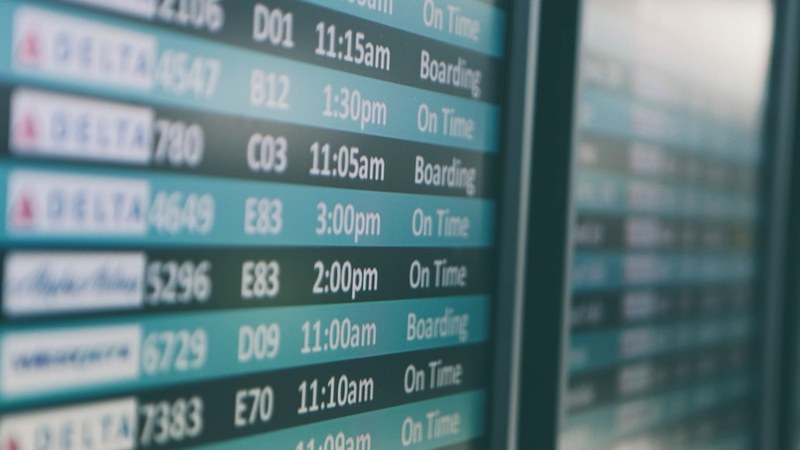
By 5 p.m. Eastern Time on the day of the outage, FlightAware data reported 245 delayed flights and one cancellation at O’Hare.
The FAA’s ground delay program rescheduled affected flights’ departure times at their origin airports to keep arrivals at O’Hare manageable while repairs proceeded. Nationwide, there were 3,306 delays and 71 cancellations within, into, or out of the U.S. at the same time. The FAA confirmed the outage was limited to O’Hare and did not affect other airports or FAA systems.
Thanksgiving Travel Peak and Weather Factors
The equipment outage coincided with the FAA’s forecast of more than 417,000 flights across the U.S. over a nine-day Thanksgiving period starting Tuesday. More than 52,000 flights were expected on Tuesday alone. AAA projected 5.96 million domestic air travelers during
this holiday window, a slight decline compared to the previous year. Weather challenges included low cloud ceilings on the West Coast, thunderstorms in Florida and the Gulf Coast, rain in the Southeast and Mid-Atlantic regions on Wednesday, and rain with wind in the Northeast on Thanksgiving Day, all adding potential strain to the holiday travel flow.
Recent Disruptions at O’Hare and Other Airports
O’Hare experienced a separate ground stop on Monday, November 23, from 10:40 a.m. to about 12:15 p.m. CST due to staffing shortages at the Chicago Terminal Radar Approach Control. Tuesday marked the third straight day with a U.S. airport ground stop following a Delta
Air Lines automation failure on Sunday that affected flights to Atlanta. Earlier in the month, a November 13 telecommunications failure halted flights nationwide for over four hours and caused 12,000 cancellations, marking one of the worst disruptions since 9/11.
FAA and Government Response to Air Traffic Challenges
FAA Administrator Bryan Bedford stated that controllers and safety professionals are working continuously amid rising demand and highlighted the urgent need to modernize the air traffic control infrastructure. Transportation Secretary Sean Duffy emphasized that safety remains the administration’s top priority. Duffy noted the deployment of a Tiger Team and implementation of a congestion-prediction platform to help limit delays and cancellations during
the holiday period. He spent Tuesday visiting controllers, pilots, and flight attendants at New York’s JFK and Newark airports to assess ongoing operations.
Industry Context and Travel Implications
The FAA said the O’Hare outage affected only equipment used for tracking aircraft and ground vehicles on the airport surface and did not disrupt broader FAA systems. The ground delay program applied after the ground stop means travelers scheduled to arrive at O’Hare Tuesday evening faced later departure times from their origin airports. The FAA encouraged passengers to monitor real-time airport conditions online. The travel period, expected to be the busiest Thanksgiving week in 16 years, has
been challenged by infrastructure issues, staffing constraints, and adverse weather across key U.S. regions.