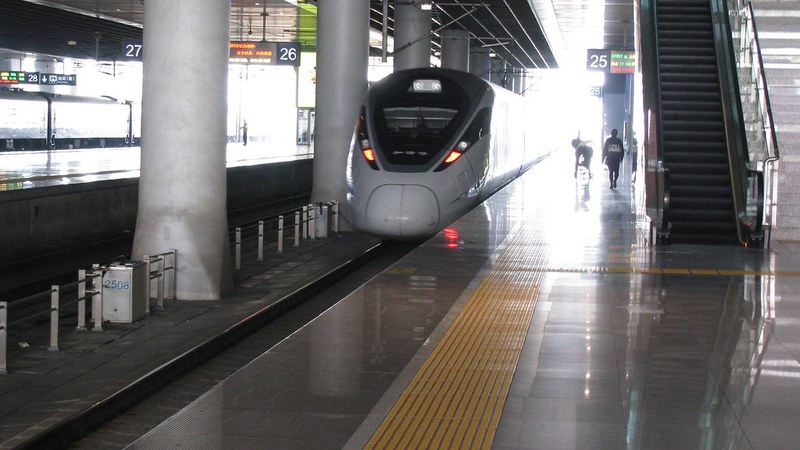
India’s proposed Delhi-Mumbai bullet train project aims to connect two of the country’s largest economic hubs by reducing travel time drastically along the nearly 1,400 km route. While currently at the planning stage, the project envisions cutting current rail travel of 15 hours 40 minutes to under six hours, highlighting its role as a critical economic link.
Delhi-Ahmedabad Bullet Train Corridor Details and Planning Status
The proposed Delhi-Ahmedabad high-speed rail corridor is designed to stretch approximately 886 km, linking Delhi, Haryana, Rajasthan, and Gujarat with 15 stations, including Dwarka Sector 21 in Delhi, IMT Manesar and Rewari in Haryana, Jaipur and Ajmer in Rajasthan, and Gandhinagar and Ahmedabad
in Gujarat. The corridor is planned as an elevated rail line, intended to reduce current journey times from about 14 hours to under four hours. Despite a detailed project report prepared by National High Speed Rail Corporation Limited (NHSRCL), the project remains in the planning phase without formal sanction or construction progress and is expected to take shape only in the latter half of the decade.
Mumbai-Ahmedabad High-Speed Rail Corridor Progress
In contrast, the Mumbai-Ahmedabad high-speed rail corridor, covering 508 km across Maharashtra, Dadra and Nagar Haveli, and Gujarat, is under active construction. Funded with Japanese technical and financial assistance, the corridor is designed for
speeds up to 350 km/h, operating at 320 km/h, with expected journey times around two hours. The government announced the first service on the Surat-Vapi section is anticipated to begin in August 2027, despite delays and increased costs arising from land acquisition challenges.
Alignment Choices and Land Acquisition Strategy
The Delhi-Ahmedabad corridor alignment follows existing rail and highway lines such as the Dwarka Expressway, Delhi-Jaipur railway line, and KMP Expressway. NHSRCL officials state this approach aims to minimize private land acquisition, a major cause of delays in mega projects. According to an NHSRCL official, “We have chosen this alignment (along the rail line and highway) to
ensure that land acquisition is minimal. In such mega projects, maximum time gets spent in acquiring privately owned land. While the alignment is final, acquiring land is yet to begin.”
Economic Importance of Connecting Major Cities
Connecting Delhi, a national government and corporate hub, with Gujarat’s industrial belt and Mumbai’s financial centre could foster easier business travel, broaden access to skilled workers, and strengthen economic integration. High-speed rail would complement existing infrastructure like the Golden Quadrilateral highway and dedicated freight corridors by providing fast, frequent passenger services between key regional markets, enabling same-day travel that is currently impractical with journey times exceeding 14 hours on some
routes.
The Delhi-Ahmedabad-Mumbai high-speed rail network remains fragmented until the Delhi-Ahmedabad corridor is sanctioned and under construction, preventing through-services. The Railway Ministry emphasizes that project sanction depends on completed detailed project reports, technical and economic feasibility studies, and resource availability.
Government Announcements and Political Context
Budget 2026-27 announced seven new high-speed rail corridors as “growth connectors,” focusing on regional connectivity and shifting travel from road and air to rail. However, the Delhi-Ahmedabad corridor was not included in these announcements. Political attention may increase ahead of the Gujarat Legislative Assembly elections scheduled for December 2027, given Gujarat’s central location to both the Mumbai-Ahmedabad and proposed Delhi-Ahmedabad
lines. The corridor’s advancement requires government approvals on project sanction, financing, land acquisition, and construction clearances.
Impact on Travelers from Reduced Journey Times
The Delhi-Mumbai bullet train project promises to transform passenger travel by reducing journey time from 15 hours 40 minutes on the fastest regular trains to under six hours. Similarly, the proposed Delhi-Ahmedabad corridor aims to cut travel from about 14 hours to less than four hours. Faster, reliable, and frequent service would improve connectivity between major commercial centers in western and northern India, benefiting commuters, business travelers, and economic activity across connected regions.