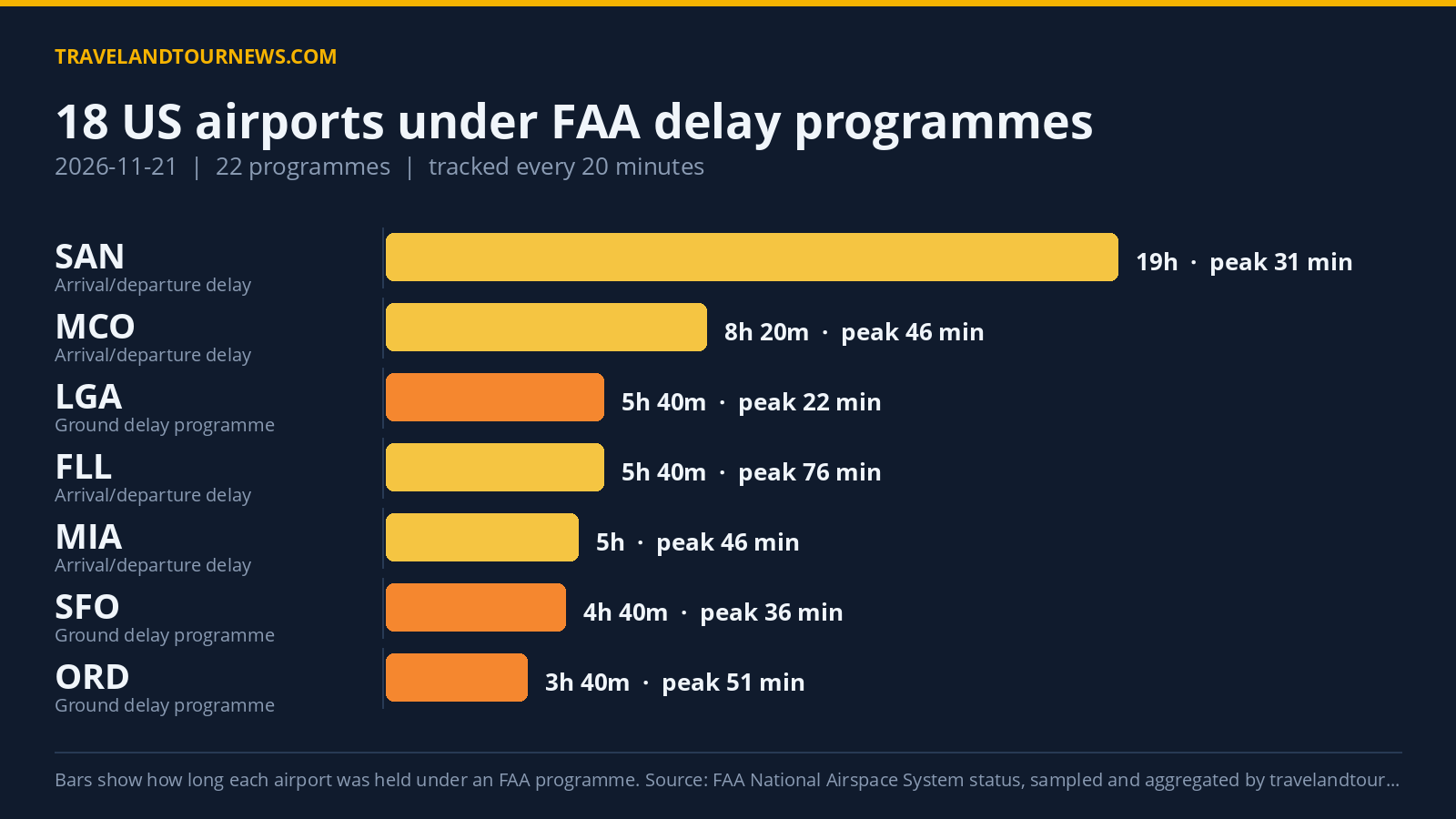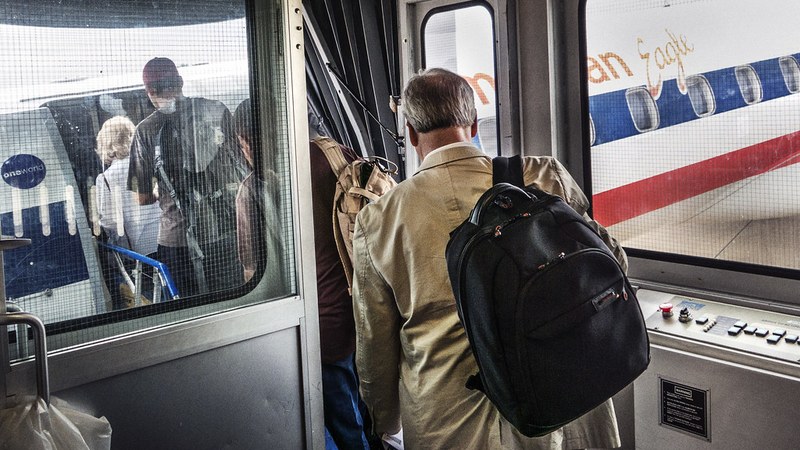
The Federal Aviation Administration (FAA) issued a ground stop at San Francisco International Airport on November 20, 2026, halting all departing flights for over four hours due to storms impacting the Bay Area. Departing flights encountered average delays of 3 hours and 6 minutes during the halt, which was attributed to high winds and adverse weather conditions by the FAA.
Storm Conditions and Regional Impact
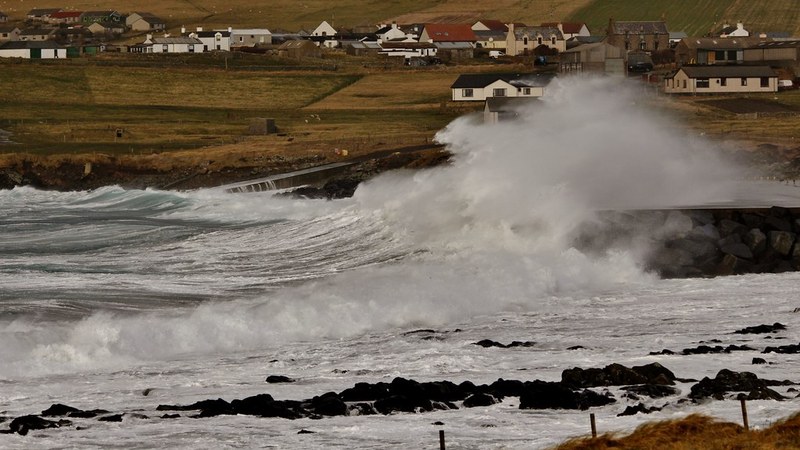
The storm that prompted the ground stop brought heavy rainfall, with downtown San Francisco recording 1.85 inches of rain on November 18, 2026, approaching but not surpassing the daily record of 2.24 inches set in 1918. The weather system caused
flooding in several locations, including on southbound Interstate 280 near Geneva Avenue, creating hazardous conditions in the Bay Area.
Operational Effects of the Ground Stop
The FAA employs ground stops at congested, single-runway airports like San Francisco International to manage traffic when weather or other factors disrupt normal departure sequencing. Such stops extend delays beyond their official duration due to backlogs of queued departures, displaced aircraft, and crew duty time limitations. In the business aviation sector, which lacks airline hubs for rebooking, these stops often result in late departures or diversions to alternative airports, imposing additional costs on operators.
The FAA classified the probability of extending
the ground stop as ‘medium,’ indicating a substantial possibility that the disruption could last longer depending on evolving weather conditions and operational capacity.
Related Air Traffic Control Disruptions
In related regional incidents, Hollywood Burbank Airport experienced multiple control tower outages labeled ‘ATC Zero’ on November 18, 2026. These outages forced pilots from Southwest Airlines and Alaska Airlines to manage flight coordination independently over the Common Traffic Advisory Frequency (CTAF) for approximately 30 minutes each time, creating operational challenges for affected flights.
Vista America, the operating partner for VistaJet and XO, reaffirmed its IS-BAO Stage 3, Wyvern Wingman PRO, and ARGUS Platinum Elite safety ratings on
November 19, 2026, maintaining its standing in aviation safety amid recent operational challenges.
Official Statements and Industry Context
The FAA attributed the San Francisco ground stop to storm-related wind and weather conditions disrupting safe flight operations. The agency noted a ‘medium’ chance of extending the stop as the situation remained dynamic. U.S. Transportation Secretary Sean Duffy emphasized the urgent need for extensive modernization of the FAA’s air traffic control infrastructure, stating on November 17, 2026, that $50 billion is required to upgrade systems that continue to experience failures. Secretary Duffy warned, “It’s going to continue to fail.”
Senator Tammy Duckworth expressed reluctance to support FAA
modernization funding without a detailed spending plan that addresses recent equipment failures contributing to disruptions, including last week’s nationwide ground stop that affected over 15,000 flights.
Elon Musk suggested that Starlink satellite terminals might offer solutions to some air traffic control outages, although the specifics of this potential application remain unclear.
Disruption Overview and Uncertainties
The FAA ground stop at San Francisco International Airport on November 20, 2026, led to widespread departure delays averaging over three hours and caused cascading effects on air travel schedules through the day. While the precise number of flights delayed or canceled has not been disclosed publicly, the disruption
mirrored recent operational challenges faced by the FAA, including a nationwide ground stop on November 13, 2026, that lasted over four hours and delayed more than 15,000 flights.
Details on the final lifting time of the ground stop and the full scope of airline impacts remain unavailable, leaving operators and passengers adjusting as recovery efforts continue.