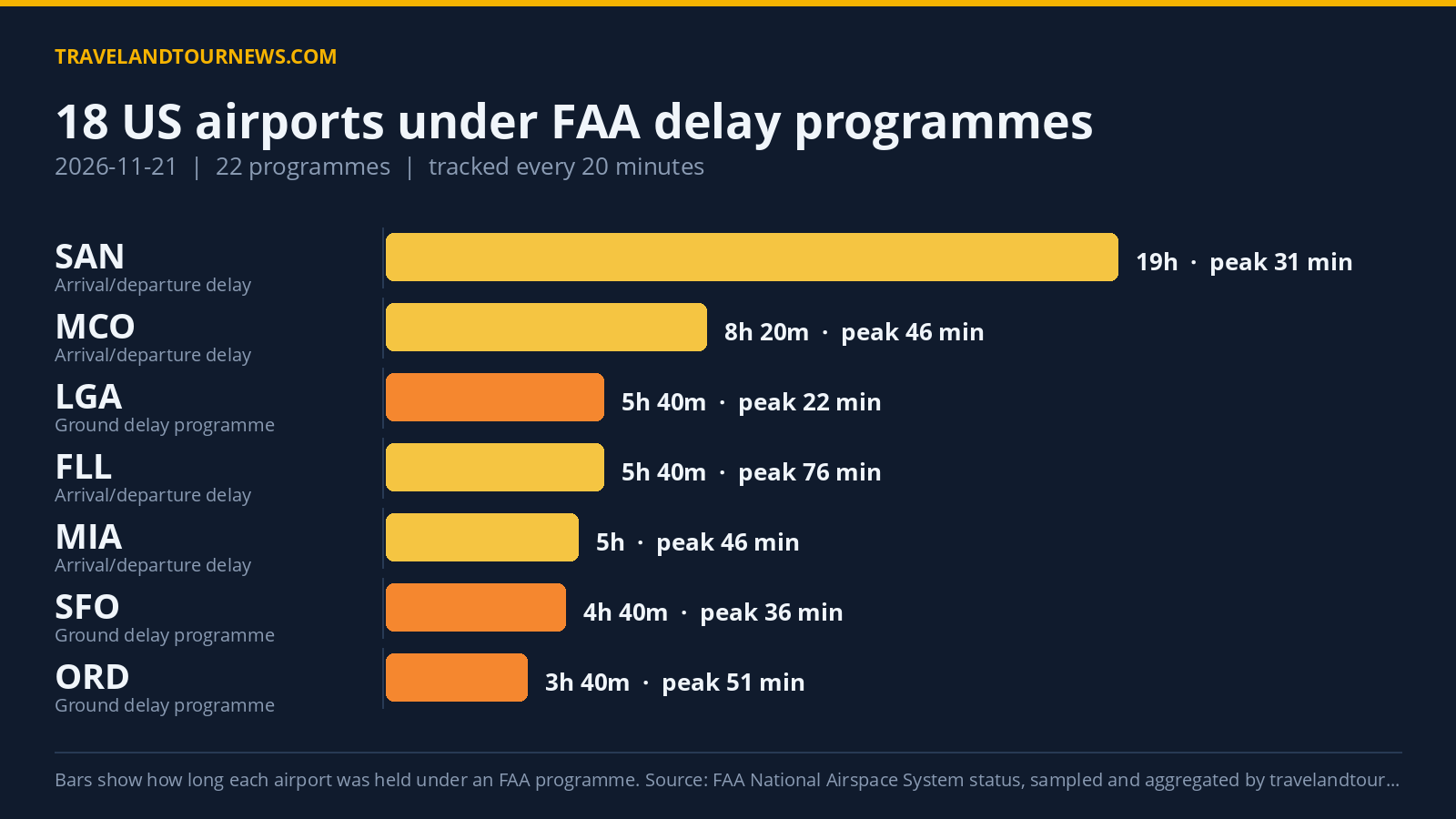
The Federal Aviation Administration (FAA) imposed a ground stop at San Francisco International Airport on November 18, 2026, halting departing flights due to high winds and severe weather from storms impacting the Bay Area. Departing flights faced average delays of 3 hours and 6 minutes during the ground stop, which at the time carried a “medium” risk of extension, according to the FAA.
San Francisco experienced heavy rainfall on November 18, with 1.85 inches recorded downtown, edging close to the daily record of 2.24 inches set in 1918. The storm produced flooding in several locations across the city, including major
water accumulation on southbound Interstate 280 near Geneva Avenue, further complicating transportation and airport access.
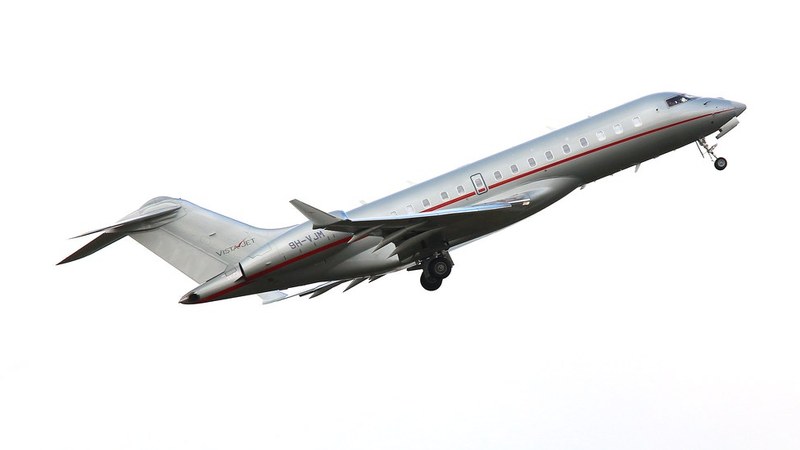
Although the FAA lifted the ground stop later in the day, operational delays persisted due to the backlog of queued departures. The weather disruption also affected business aviation; charter and fractional operators, such as VistaJet and XO clients served by Vista America, faced late departures or had to divert since they lack the option to rebook through hubs. Vista America announced on November 19 that it maintained top safety ratings from IS-BAO Stage 3, Wyvern Wingman PRO, and ARGUS Platinum Elite audits despite the operational
challenges.
Hollywood Burbank Airport experienced separate issues on the evening of November 18 as its control tower declared ‘ATC Zero’ status twice, each lasting about 30 minutes. During these intervals, pilots for Southwest Airlines and Alaska Airlines self-coordinated using the Common Traffic Advisory Frequency (CTAF) due to air traffic controller outages. Meanwhile, Senator Tammy Duckworth publicly stated her refusal to support a $50 billion FAA modernization funding request without a detailed spending plan and full disclosure on the cause of the nationwide FAA ground stop from November 13, noting concerns over accountability.
Airport ground stops at busy facilities like San
Francisco International create delays and rerouting costs affecting all scheduled operators. These stops do not end immediately when weather conditions improve, as accumulated queued departures, displaced aircraft, and crew duty restrictions extend disruptions. The FAA holds exclusive authority over ground stop issuance and extensions, controlling the flow of departing aircraft to maintain safety and operational order during adverse conditions.