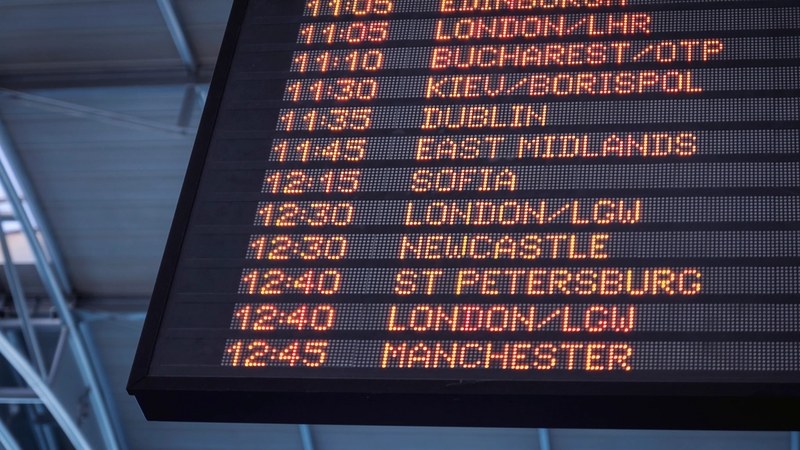
More than 2,400 flights were cancelled and around 8,800 delayed across US airports on Sunday, November 15, 2026, continuing a travel disruption that followed a nationwide FAA ground stop on Friday. The five-hour ground stop, announced at 15:54 EST on November 13, was the longest in the US since the 9/11 attacks in 2001. JetBlue recorded the highest cancellation rate on Sunday with 28% of its flights cancelled, followed by American Airlines at about 17%. United Airlines, Southwest, and Delta Airlines experienced between 3% and 5% cancellations.
Router Replacement at FAA Facility Causes System Overload
The disruption began after FAA contractor L3Harris installed a new router at a
Federal Aviation Administration facility in El Dorado, Arkansas. This installation triggered data overload issues on other routers, including a recently replaced router in Amarillo, Texas. The Amarillo router erroneously broadcast, overloading communication networks across multiple air traffic control centers. To contain the fault, the FAA disabled the functionalities of the originating routers and about 60 similar routers nationwide.
Aging Technology and Staffing Shortages Challenge US Air Traffic Control
Investigations revealed that the routers involved were originally purchased in 2001 and had been considered outdated by 2006. The FAA has noted ongoing issues with aging infrastructure and a shortage of several thousand air traffic controllers, impairing system resilience. In response, US
Secretary of Transportation Sean Duffy called for a $50 billion investment to modernize the air traffic control system, an increase from the $30 billion previously sought. This request follows $12.5 billion approved by Congress last year. President Donald Trump publicly urged Congress via social media to approve the full funding at once to overhaul the system comprehensively.
Travel Disruption at Major US Airports On Sunday
The travel disruption affected departures and arrivals at key US airports including Newark, John F. Kennedy (JFK), and LaGuardia in New York. Passengers experienced long delays, with many stranded in planes on tarmacs or in terminals. Travel schedules remained severely disrupted on Sunday
following even worse conditions on Saturday, which saw more than 6,400 cancellations and over 8,000 delays. The disruptions also affected international flights to and from Europe and the UK.
Official Statements on FAA Response and Future Outlook
US Secretary of Transportation Sean Duffy emphasized safety as the FAA’s priority during the incident and indicated normal flight operations are expected to return by Monday, November 16. Duffy stated that the exact root cause of the failure remains unidentified but ruled out sabotage or cyberattack. He described the worker who installed the router as a “good American patriot” and veteran, dismissing any suspicion of deliberate wrongdoing. President Trump called the
current air traffic control system “RIDICULOUS” due to its age, noting much of the system is 50 years old and advocating for a full, immediate upgrade rather than incremental progress.
Systemic Infrastructure Challenges Exposure Following Disruption
The FAA’s network failure has exposed vulnerabilities in the US air traffic control system caused by outdated hardware, equipment challenges, and workforce shortages. Though maintenance on routers has been conducted thousands of times previously without incident, this latest failure has highlighted the critical need for comprehensive modernization and enhanced funding. The ongoing investigation continues as the FAA works to determine all underlying factors contributing to the communication breakdown.