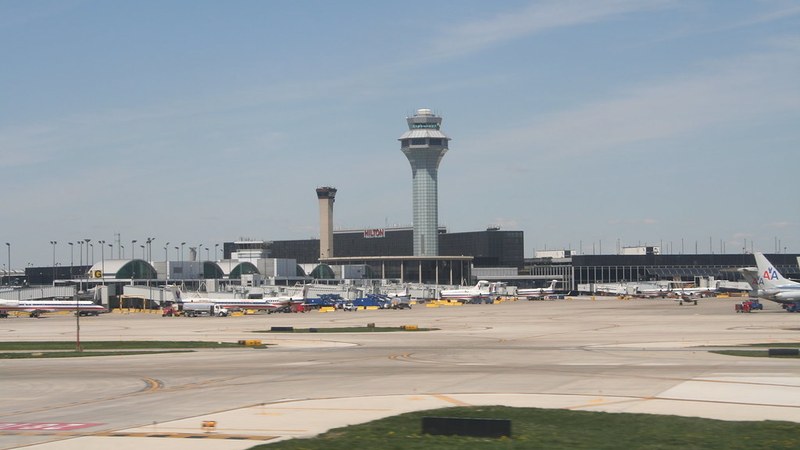
The Federal Aviation Administration (FAA) imposed a rare nationwide ground stop on November 13, 2026, impacting all U.S. airports due to telecommunications failures at regional air traffic control centers. The halt in departures was lifted around 7:30 p.m. Central Time but caused extensive flight disruptions nationwide, particularly at Chicago’s O’Hare and Midway airports.
Flight Delays and Cancellations Surge at Chicago Airports
As of 9:30 p.m. on November 13, 2026, nearly 900 flights were delayed across Chicago O’Hare International Airport and Chicago Midway International Airport, with more than 800 flights canceled, most cancellations occurring at O’Hare. The Chicago Department of Aviation reported that delays and cancellations remained substantial even
after the ground stop was lifted, reflecting the scale of the disruption.
Passenger Conditions Worsen Amid Chaos at O’Hare
Passengers stranded at O’Hare experienced lengthy waits and confusion, particularly in Terminal 3, where crowds gathered at the gates with limited information. Traveler Shawntell Sharrock described the scene as “chaos,” noting a lack of consistent updates from airport staff. Reports also highlighted empty security lines despite large passenger buildups near boarding gates.
United and American Airlines Initiate Recovery Efforts
United Airlines resumed some planned Friday night flights, acknowledging a significant number of cancellations and offering a travel waiver allowing customers to adjust weekend travel plans amid ongoing disruptions. American Airlines concentrated on operating as many
remaining flights as possible Friday evening, prioritizing service to non-hub cities and international routes to facilitate recovery in the coming days. Both airlines warned of residual delays and cancellations into November 14, 2026.
Officials Cite Telecommunications Outage, Rule Out Cyberattack
The Department of Homeland Security confirmed the cause of the ground stop was a telecommunications outage affecting all Air Route Traffic Control Centers. Secretary Markwayne Mullin stated there was no evidence of a nefarious cyberattack. The FAA described the ground stop as implemented “due to extraordinary circumstances and for reasons of safety.” Investigations are considering whether the FAA’s recently deployed artificial intelligence system for air traffic management
has any role, though the system only provides remote recommendations and is based outside the regional centers near Washington, D.C.
FAA Infrastructure and Modernization Efforts Under Scrutiny
The communication failure highlights lingering vulnerabilities in the FAA’s aging air traffic control infrastructure. Last year, Congress approved $12.5 billion for modernization efforts, including replacing archaic copper wiring with fiber optic cables and updating radar and radio systems. Transportation Secretary Sean Duffy emphasized the need for an additional $30 billion in funding to complete upgrades. Previous communication outages, notably one in September 2026 affecting the Northeast, caused hundreds of flight delays, underscoring ongoing challenges in the air traffic control network.