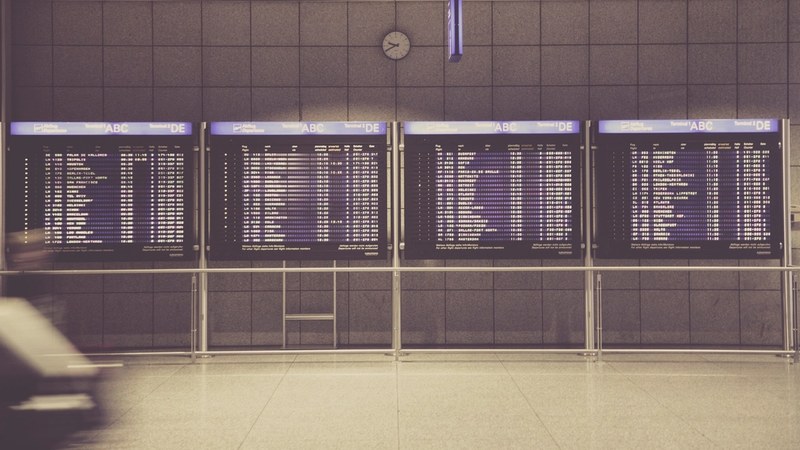
The Federal Aviation Administration (FAA) issued ground stops at LaGuardia Airport and John F. Kennedy International Airport (JFK) in New York City on November 12, 2026, due to severe thunderstorms affecting the metropolitan area. At LaGuardia, the ground stop began at 1:27 p.m. Eastern Time (ET) and was initially expected to last until 3:45 p.m. ET, with a 30% to 60% chance of extension. Simultaneously, the airport operated under a ground delay program from 1 p.m. ET to 11:59 p.m. ET, managing arrivals with departures averaging a 63-minute delay.
John F. Kennedy Airport’s ground stop commenced at 2:49 p.m. ET,
also scheduled to end at 3:45 p.m. ET and subject to potential prolongation indicated by the 30% to 60% probability. Newark Liberty International Airport in neighboring Newark, New Jersey, activated a ground delay program starting at 2:37 p.m. ET, with arriving flights experiencing an average delay of 137 minutes due to the weather conditions.
Flight Delays, Cancellations, and Weather Advisory
As of 1:31 p.m. ET, LaGuardia reported 215 delayed flights and 10 cancellations. Newark logged 131 delayed flights and six cancellations by 2:24 p.m. ET. JFK recorded 239 delays and 24 cancellations at 3:16 p.m. ET. These figures reflect snapshots taken in the afternoon and are
subject to change as conditions evolve.
A flood advisory was active until 1:45 p.m. ET for Newark and surrounding areas because of heavy rainfall causing minor flooding, excluding Queens, where LaGuardia is located. The National Weather Service forecasted extended rainfall across the New York metropolitan region continuing into the next day, with potential for minor coastal flooding at some locations.
FAA Traffic Flow Control Measures and Their Effects
The FAA implements ground stops to hold departing flights on the ground until restrictions lift, and ground delay programs to meter departures to match manageable arrival rates. These flow-control tools aim to mitigate congestion by controlling aircraft flow into affected
airports.
Ground stops and delay programs at LaGuardia, JFK, and Newark demonstrate how severe weather at heavily trafficked hubs leads to cascading delays in the wider air traffic network, including flights departing airports distant from New York. LaGuardia simultaneously operated a ground stop and an overnight ground delay program, while Newark’s average delay time of 137 minutes exceeded LaGuardia’s by more than double. These layered restrictions require operators and passengers to anticipate extended disruptions.
Passenger Impact and Delay Durations
The layered FAA restrictions on November 12 led to significant delays for passengers across all three airports. Flights arriving at Newark were delayed by an average
of 137 minutes, while those at LaGuardia experienced average delays of 63 minutes during the ground delay program.
With 215 delays and 10 cancellations at LaGuardia, 131 delays and six cancellations at Newark, and 239 delays and 24 cancellations at JFK reported in afternoon data points, hundreds of flights were disrupted. The ground stops and delay programs coupled with weather-related flooding created a complex environment for air traffic management and traveler movement throughout the New York metropolitan area on that day.