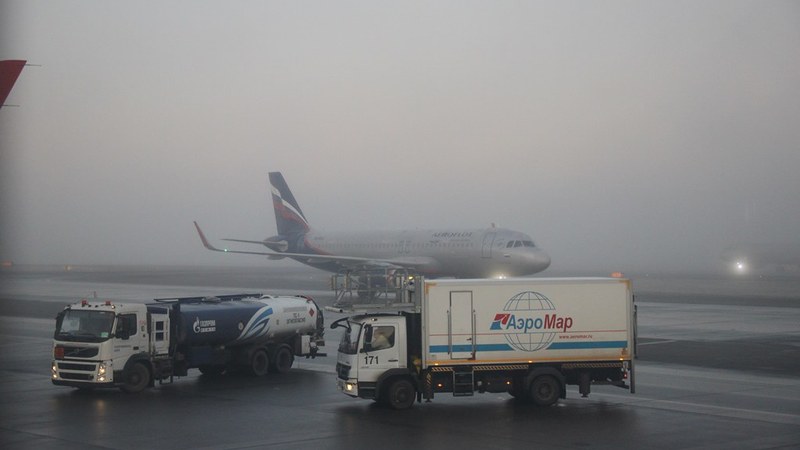
San Francisco International Airport experienced multiple Federal Aviation Administration (FAA) ground stops on November 9, 2026, as dense fog and low clouds limited visibility and disrupted flight operations. By approximately 10:30 a.m. Pacific Time, 187 flights were delayed and three cancellations were recorded. The first ground stop began shortly before 8 a.m. and lasted until around 9:15 a.m., with additional ground stops following later in the morning.
Weather Conditions Affecting Operations
The San Francisco Chronicle reported visibility at the airport dropped to roughly 0.13 miles around 8 a.m. Pacific Time. The National Weather Service issued a dense fog advisory for San Francisco and the
bay shoreline, warning of visibility as low as a quarter mile. Low cloud ceilings and dense fog reduced surface visibility and affected aircraft approach and departure procedures throughout the morning.
FAA Traffic Management Responses
To manage air traffic under low-visibility conditions, the FAA implemented ground delay programs and temporary ground stops, restricting departures from other U.S. airports bound for San Francisco. After lifting the initial major ground stop around 9:15 a.m., the FAA imposed another ground stop near 10:28 a.m., followed by a further restriction shortly before noon. These measures limited airport arrival capacity and mandated increased spacing between aircraft due to the low
ceilings.
Local Airport Vulnerability and Passenger Impact
Situated beside San Francisco Bay, the airport is prone to coastal fog and low cloud cover that reduce operational capacity. Delays affected arriving flights with averages near 63 minutes for some aircraft. Passengers flying to San Francisco from other U.S. airports faced delays regardless of conditions at their origin airports because of the FAA’s hold orders. Travel schedules for connecting flights through San Francisco were also subject to disruption.
FAA Confirmation and Passenger Guidance
The FAA confirmed the use of ground stops and ground delay programs on November 9, 2026, in response to low visibility conditions that constrained airport operations. These traffic management initiatives
are intended to regulate arrival flow and maintain safety. Travelers were affected by flight delays and cancellations across arrivals and departures at the airport during the morning operations period.