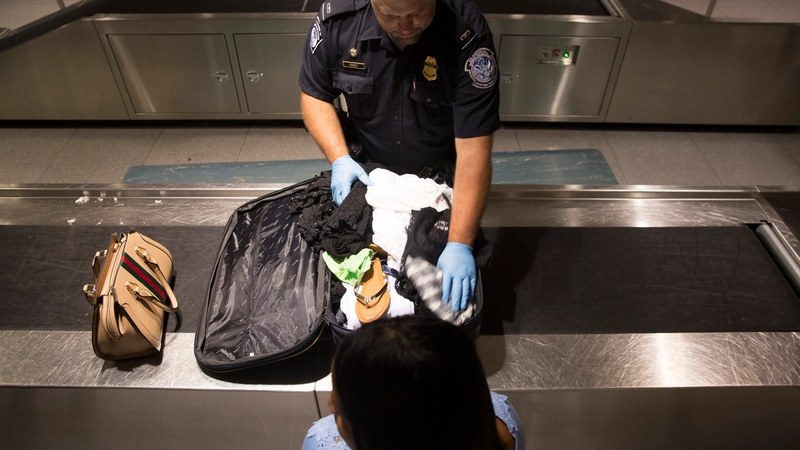
At least 18 passenger flights were disrupted on November 6, 2026, across nine European countries due to bomb threat alerts, causing delays, diversions and cancellations. These incidents affected flights involving Bulgaria, the Czech Republic, France, Italy, Hungary, Cyprus, Romania, the United Kingdom and Portugal.
Prague Václav Havel Airport experienced nine flight threats, including arrivals from Denmark, Spain and the UK, and departures to the Netherlands, Cyprus, Romania, Italy, and the UK. The airport reported limited operational impact despite the threats, and inspections found no explosives.
A Tarom flight from Prague to Bucharest landed safely; Romanian authorities later classified the threat
as a hoax. A Wizz Air flight from Prague to Rome was diverted to Venice Airport, where passengers were evacuated for inspection before operations resumed without finding explosives. French authorities confirmed four separate bomb threats on flights over French territory, with inspections conducted at Paris Orly Airport.
Hungarian Security Measures and Bulgarian Flight Incidents
On November 6, the Hungarian Ministry of Defence deployed Gripen fighter jets to escort three civilian aircraft within NATO airspace: an Airbus A321 from Brussels to Sofia, and two flights departing Prague to Cyprus and Bucharest. The escorts took place between 9:48 a.m. and 10:33 a.m. Bulgarian officials confirmed two bomb threats involving
flights arriving in Sofia from Brussels and London Stansted Airport, both of which landed safely and were inspected without explosives being found.
Earlier on November 5, the Bulgarian Air Force had escorted three Ryanair flights bound for Sofia, two of which landed in the capital, while one was diverted to Plovdiv. Inspections of those aircraft revealed no suspicious items, though passengers experienced delays and rebookings due to security procedures.
Threats and Inspections in Portugal, Denmark, and France
Portuguese police inspected a Ryanair flight scheduled from Lisbon to Rome after a bomb threat was reported while the plane was still approaching Lisbon. No explosives were found, but subsequent flights
using the same aircraft faced potential delays due to security protocols. Danish police conducted inspections at Copenhagen Airport on November 6 and the preceding day, finding no explosives. Airport operations continued normally despite the security presence.
French Prime Minister Sébastien Lecornu’s office confirmed four bomb threats on November 6 against aircraft flying over France. All affected planes landed safely at Paris Orly Airport for inspection. On November 5, a similar situation occurred when an Aer Lingus A320 was diverted to Évreux military air base in France following a bomb threat, requiring military escort and inspections.
Wider Context and Official Responses
These incidents on November 6
followed a week of multiple bomb threats affecting at least 35 flights between November 2 and 5, 2026, involving airlines such as Ryanair, Wizz Air, LOT Polish Airlines, easyJet, Aegean Airlines, Finnair, and Aer Lingus. Eurocontrol data indicated 26,709 flights were scheduled across Europe on November 6, with the 18 affected representing about 0.067% of daily traffic.
European Commissioner Apostolos Tzitzikostas confirmed activation of an EU-level aviation security information-sharing framework to coordinate responses. Authorities emphasize no confirmed link between separate threats or responsible parties, though the events are viewed as attempts at hybrid aggression and psychological warfare by several government
officials. Irish Prime Minister Micheál Martin prioritized public safety amid the situation, while Spain’s Foreign Minister José Manuel Albares and Italy’s Prime Minister Giorgia Meloni raised concerns about possible broader threats, including recent cyberattacks.
Security authorities continue investigations without attributing responsibility. The Russian ultranationalist group Male State denied involvement through a statement by its founder Vladislav Pozdnyakov. Media organizations including RTÉ in Dublin and several Irish outlets were evacuated due to threats, and British broadcaster Sky received a security alert but maintained broadcasts.