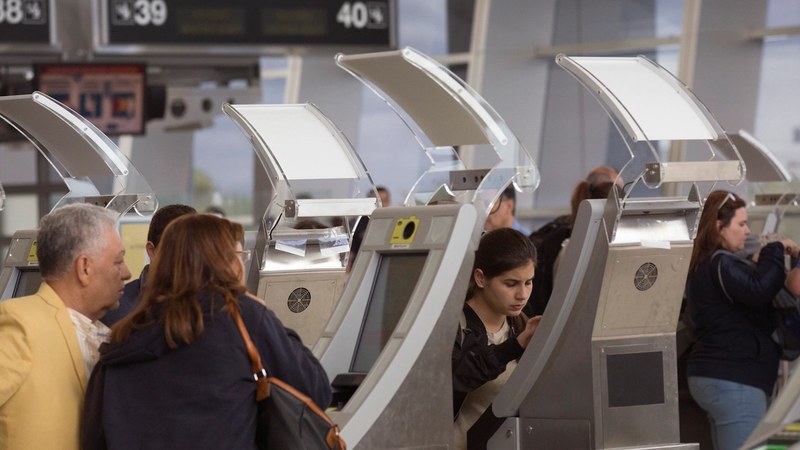
On October 28, 2026, Hong Kong International Airport became one of the first two organisations worldwide to receive the International Air Transport Association (IATA) One ID digital identity certification. The airport’s implementation of biometric identification technology was formally recognised in this landmark event coordinated by the global air transport body.
Certification Domains and Biometric Technology at Hong Kong International Airport
The certification awarded to Hong Kong International Airport covers three key domains: Contactless Travel, Biometric Handling, and Privacy, Consent and Governance. The airport uses advanced facial recognition to facilitate passenger processing and identity verification, allowing travellers to pass through security and immigration checkpoints without repeatedly showing passports or boarding passes.
Since the launch of the Flight Token system in 2021, over 93 million passengers have used this biometric-enabled service at Hong Kong International Airport. The system enables more than 80% of departing passengers to clear critical checkpoints seamlessly by leveraging self-service facial recognition technology.
Officials Highlight Regulatory Challenges and Commitment to Innovation
IATA senior vice-president for operations, safety and security Nick Careen acknowledged that government regulations and data privacy requirements have slowed broader adoption of facial recognition technologies. He noted that national differences in identity check rules remain the biggest barrier to establishing cross-border biometric processes.
Airport Authority Hong Kong CEO Vivian Cheung Kar-fay said the certification confirms
the airport’s dedication to innovation and compliance with IATA’s global standards. Cheung emphasized that the recognition offers a trusted platform for expanding Flight Token integration with other airlines, airports, and government agencies beyond Hong Kong.
Regulatory and Privacy Context of Biometric Digital Identity
Nick Careen stated, “Until governments truly unlock the legislation and regulations required, not only around data privacy, but also around identification checks and the requirement for that to be done physically … we are going to have a slow adoption rate, unfortunately.” He added that the pace of change has been below expectations.
Francis Fong Po-kiu, honorary president of the Hong Kong Information Technology Federation,
commented that public caution about biometric data sharing is natural given security expectations at international borders. He praised the IATA One ID framework for using decentralised digital identity and encrypted tokens, which prevent airports from storing original biometric images and thus enhance privacy protections.
Implications for International Travel and Expansion Plans
The certification is a significant step toward establishing interoperable and seamless digital travel practices globally. Air New Zealand, the other early recipient of IATA One ID certification, was recognised for digitalisation of admissibility. It conducted a trial with Hong Kong International Airport to test cross-border use of digital identity, reducing the need to repeatedly show travel
documents.
Hong Kong International Airport plans to extend its Flight Token system beyond its current borders, involving additional international airlines, airports, and government authorities to broaden digital identity recognition.
Key Quotes from Industry Leaders
Nick Careen said, “If the US decides that they don’t want to get involved and they don’t want to participate, that’s fine. It would be unfortunate, but it’s fine.” He also emphasised the system’s transparency and passenger control over data sharing throughout the travel journey.
Vivian Cheung Kar-fay stated, “This certification affirms our commitment to enhancing the passenger experience through innovation and demonstrates that HKIA’s digital identity and biometric processes meet
IATA’s global standards.” Francis Fong added, “IATA’s explanation makes total technical sense,” underscoring the privacy advantages of the One ID system.