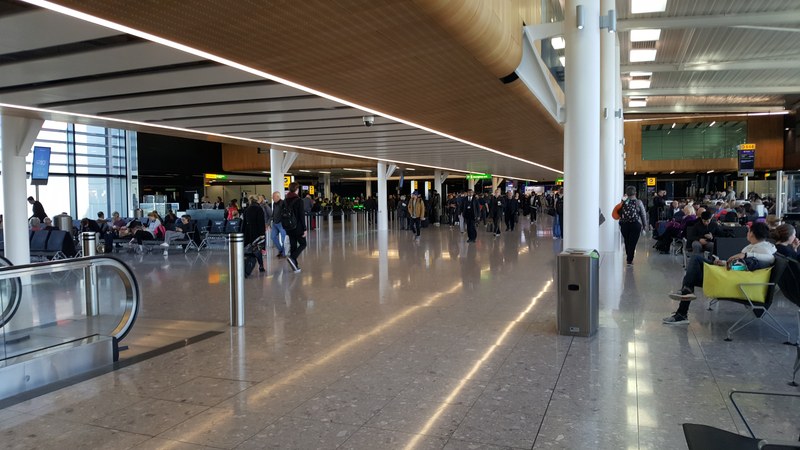
All flights at London Heathrow and Gatwick airports were cancelled on October 25, 2026, due to Storm Boelo, which unleashed wind gusts up to 85 mph, heavy rainfall, and flooding risks across the UK. These conditions forced airports to halt all operations for safety reasons, impacting over 100 flights nationwide.
Severe Weather Warnings and Flood Alerts Across the UK
The UK Met Office issued amber wind warnings for northern England, Scotland, and Northern Ireland, citing gusts exceeding 80 mph in exposed coastal areas. The Environment Agency issued 66 flood alerts and 10 flood warnings across England, while the Scottish Environment Protection Agency raised 34 flood warnings and 11 alerts
affecting transport infrastructure.
Wind gusts recorded between October 23 and 25 reached 76 mph at St Mary’s Airport in the Isles of Scilly, 74 mph at Aberporth in South Wales, and 71 mph at Culdrose in Cornwall. A yellow wind warning zone covering southern England remained active until 9 p.m. on October 25.
Flight, Rail, and Road Transport Disrupted Across Key UK Locations
Beyond Heathrow and Gatwick, more than 1,500 flights experienced delays at UK airports including Manchester, Edinburgh, Glasgow, and Dublin. Leeds Bradford Airport also reported delays and cancellations. The disruption extended to rail services, with Network Rail Scotland reporting flooding on tracks, fallen trees, imposed speed restrictions, and
section closures.
Avanti West Coast advised passengers to avoid travel north of Preston on October 25, while TransPennine Express urged customers to restrict travel to essential journeys only over the weekend. Road closures in Scotland occurred due to fallen trees, downed cables, and storm damage, further restricting passenger movement.
Passenger Impact and Official Advisories
With all flights cancelled at Heathrow and Gatwick, passengers were advised not to travel to these airports without first confirming flight status to avoid unnecessary disruptions. Rail operators cautioned against nonessential travel north of Preston. The combined transport disruptions have led to missed connections, extended journey times, and uncertain schedules.
Public
events also faced cancellations due to the hazardous weather, including London’s annual Diwali festival and the Trafalgar Square celebrations, both cancelled by Greater London authorities because of unsafe gale and rain conditions.
Named Entities Reporting Severe Impact and Advisories
Heathrow Airport bore the most significant disruption in London, with a comprehensive shutdown of its short-haul network amid the flight cancellations. Gatwick Airport cancelled all flights and warned of hazardous high winds. The Met Office issued multiple amber wind warnings, highlighting gusts over 80 mph in northern coastal regions.
The Environment Agency’s 66 flood alerts and 10 warnings across England, alongside Scotland’s 34 flood warnings and 11 alerts
by the Scottish Environment Protection Agency, emphasized widespread flood risks affecting transport. Network Rail Scotland posted images of flooded tracks and storm damage, contributing to rail interruptions.
Back-to-Back Storms Strain UK Transport and Utilities
Storm Boelo followed closely on the heels of Storm Austen, which had severely affected southwest England days earlier. The consecutive storms have compounded transport, utility, and emergency service challenges across the UK. While Austen’s damage caused extensive power outages in the southwest, Boelo’s impact hit northern areas with renewed disruptions to air, rail, and road networks.
The combined effect of these storms continues to hamper restoration work and complicate travel conditions, with weather
warnings remaining in place across parts of the UK on October 26. Passengers and residents are urged to monitor updates issued by official authorities during this period.