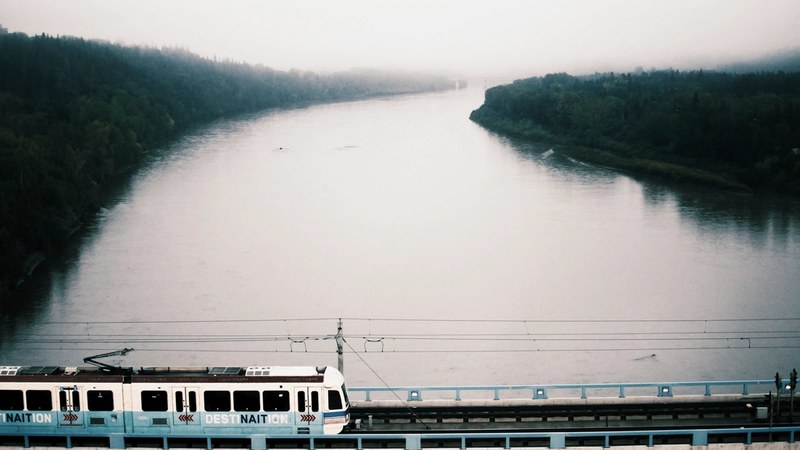
Passenger train services on the Wunderline route between Groningen in the Netherlands and Leer in Germany restarted on October 5, 2026, after nearly a decade-long interruption caused by damage to the Friesen Bridge over the River Ems. The original bridge was irreparably damaged in December 2015 when it collided with a ship, forcing a suspension of rail traffic and replacement by bus services.
The dismantling of the old bridge was completed in 2021. Reconstruction efforts culminated with the placement of the first section of the new bridge in August 2024, enabling restoration of train operations more than ten years after
the initial accident.
Friesen Bridge Replacement and Infrastructure Upgrades
The new Friesen Bridge measures 335 meters in length, making it Europe’s largest swing and lift rail bridge. Designed by Schlaich Bergermann Partner, it features a 145-meter swinging section weighing 1,800 tonnes. It supports a single railway track together with a footpath and cycle lane. Deutsche Bahn invested approximately €200 million in the replacement project.
The replacement bridge broadens the navigable passage, doubling its width to ease marine traffic along the River Ems by allowing ships to follow the current downstream through the opening instead of steering against it as was required previously.
Alongside the bridge work,
Dutch infrastructure manager ProRail and German counterpart DB InfraGO undertook upgrades on the entire 173-kilometer Wunderline corridor. These improvements included track reinforcement, signalling system modernization, and level crossing enhancements, with the trackbed strengthened to support higher operating speeds.
Resumption of Services and Operational Details
Arriva currently operates an hourly train service on weekdays along the Wunderline route; passengers normally change trains at Winschoten in the Netherlands. Direct through services between Groningen and Leer operate only during early mornings, late evenings, and weekends due to operational constraints.
The route faces delays caused by speed restrictions imposed near Hurdegaryp and the mechanical operation of the new swing bridge
for maritime traffic, which limits the times the bridge is open to rail traffic. These factors continue to affect punctuality for some journeys.
Stakeholder Involvement and Future Plans
The project involved joint investment from the Dutch Province of Groningen, the German states of Niedersachsen and Bremen, alongside the rail infrastructure managers. Construction work on the Dutch section concluded in August 2025, though the Province of Groningen expressed criticism of Niedersachsen’s slower progress in autumn that year.
Authorities and operators including ProRail, Deutsche Bahn, Groningen, Niedersachsen, and Bremen are developing plans for a direct Groningen to Bremen train service. This service would eliminate the transfer at
Leer, reducing journey time by about 15 minutes to 2 hours 11 minutes. Funding for necessary double-tracking sections on the German side remains unconfirmed.
Passenger Impact and Regional Connectivity
The return of passenger trains to the Wunderline corridor reestablishes direct rail connectivity after a disruption spanning almost a decade. While current services require train changes and are vulnerable to operational interruptions, stakeholders anticipate improved convenience and travel time with future direct routes.
Regional authorities view the improved international rail link as enhancing economic ties and promoting sustainable transport options, benefiting communities on both sides of the Dutch-German border.