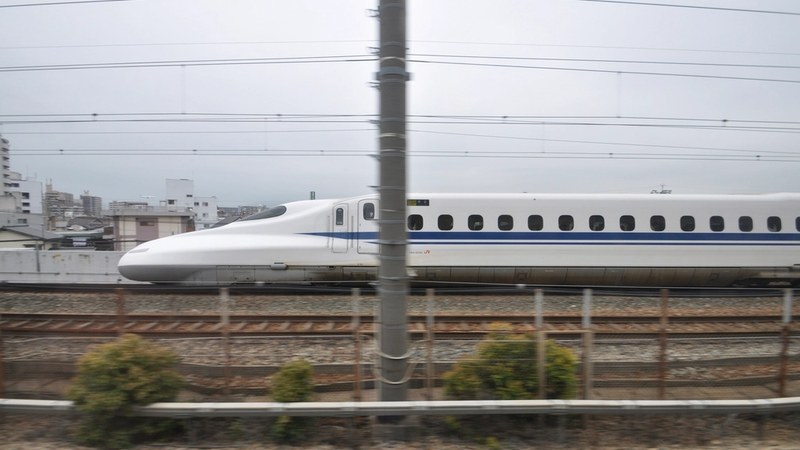
Ian Choudri, former Bechtel executive, has been leading the California High Speed Rail programme as CEO since August 2024. The project aims to establish a starter high-speed railway capable of 355 km/h speeds focused initially on the Central Valley, within the broader ‘Bay to Basin’ framework linking the Los Angeles area and the Bay Area.
Initial Operating Section and Testing Plans
The near-term objective is an Initial Operating Section (IOS) covering approximately 275 km between Bakersfield and Merced, scheduled to open by the end of 2033. Within this, a 190 km test section is planned for tracklaying before the end of 2026. The California High Speed
Rail Authority (CHSRA) has bypassed general contractor delays by directly procuring rails, ballast, and sleepers, accelerating schedule progress. Testing and commissioning of trains on this section could begin as early as 2029. A contract for three high-speed trainsets is anticipated imminently, with options for more as infrastructure expands.
Technical Standards and International Collaboration
The rail infrastructure is being constructed to UIC international specifications rather than relying on American AREMA standards, except where integration with legacy systems is necessary. This allows adoption of tested, globally proven high-speed rail technologies. European expertise is heavily involved, with German, Italian, French, and Spanish firms contributing design and construction support.
Caltrain electrification between San Jose and San Francisco, funded in part by the authority through a $714 million contribution, enables the high-speed trains to access legacy tracks at conventional speeds in this corridor.
Regulatory Framework and Federal Alignment
The Federal Railroad Administration (FRA) governs rail standards in the U.S. and has developed Tier 3 design regulations for trains operating above 125 mph. These standards support certification of high-speed rolling stock for the California project. While the FRA is part of the Department of Transportation and subject to political dynamics, its regulatory relationship with CHSRA remains cooperative. The authority is working within this framework to secure
necessary approvals for the new dedicated high-speed corridors.
Funding, Public-Private Partnerships, and Environmental Clearance
The State of California guarantees $1 billion annually toward the project through 2045, maintaining stable financing for the initial segment. The authority currently manages a $20 billion budget allocated to construction of the IOS. A Co-Development Agreement signed in July 2026 with Momentum Alliance Partners seeks to explore public-private partnerships and attract private-sector investment for long-term infrastructure finance. Environmental approvals cover 745 km of the 795 km Phase I corridor, including the entire core corridor connecting Los Angeles and the Bay Area, which reduces delays related to planning disputes. Tunneling and complex
geological conditions remain challenges, especially approaching the Los Angeles basin.
CHSRA’s strategy balances risk-sharing between public buyers and private suppliers, aiming for partnerships that mitigate inflation and cost escalation impacts. Private funding is viewed as essential to accelerate construction beyond the $1 billion annual state funding, reducing construction timelines to meet the broader ‘Bay to Basin’ target of reaching Los Angeles and San Francisco by 2039-2040.
Ian Choudri has stressed the project’s secure financial base and environmental clearances provide autonomy to progress construction. By advancing direct procurement, accelerating testing preparations, and leveraging international expertise and regulatory compliance, the California High
Speed Rail Authority aims to deliver the country’s first dedicated high-speed passenger railway with modern standards and global best practices.