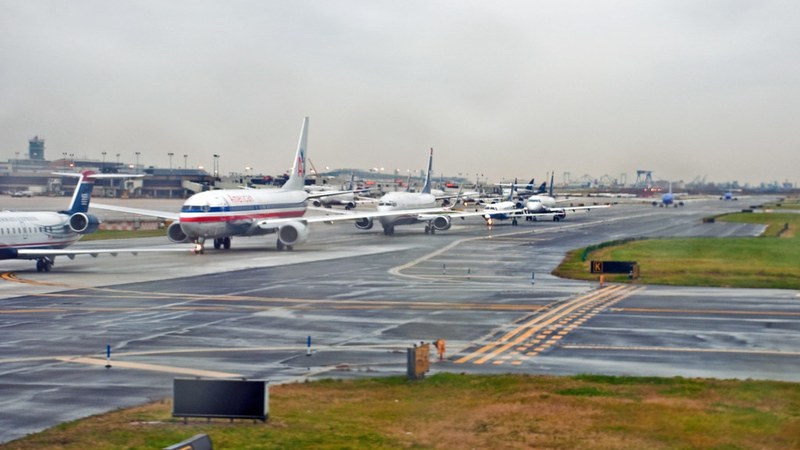
A critical air traffic control communications failure occurred in Philadelphia on September 21, 2026, prompting the Federal Aviation Administration (FAA) to enforce ground stops at Newark Liberty International Airport, Teterboro Airport, and Philadelphia International Airport starting around 10:00 local time. These ground stops temporarily halted departing aircraft bound for the affected airports in the New York metropolitan region.
The FAA later expanded restrictions to include John F. Kennedy International Airport (JFK) and LaGuardia Airport (LGA). By approximately 15:00 local time, full ground stops at JFK and LaGuardia were eased to managed ground delay programs, allowing gradual resumption of flight traffic
through controlled sequencing.
Severe operational restrictions remained in place at Newark and Teterboro airports well into the late afternoon, maintaining strict limits on arrivals and departures. The disruption caused widespread flight delays and cancellations across the affected airports, affecting operations throughout the New York metropolitan area and Northeast corridor.
During the outage, the FAA limited incoming air traffic and held planes on the ground at departure points to ensure safety. The communication failure resulted in loss of vital voice and data channels essential for managing aircraft spacing and routing in the congested airspace.
Thousands of passengers experienced travel disruptions, including
cascading flight cancellations and crew delays at JFK, LaGuardia, Newark, Philadelphia, and Teterboro airports. Travelers through the Northeast corridor faced significant delays and were advised to check flight status with airlines.
An FAA spokesperson emphasized that safety is the agency’s highest priority, stating, “These ground restrictions are essential steps to keep the skies secure while full system capabilities are restored.” Technical teams worked throughout the day to resolve the communication issues.
The incident highlighted the aging and fragile state of air traffic control infrastructure supporting one of the nation’s busiest regions, underscoring the urgent need for modernization to reliably handle
dense flight volumes.