Hotel chains are diversifying revenue streams beyond room rates, with Atour selling over 12 million pillows in the first half of 2026. Pillow and quilt sales now account for 40% of Atour’s total revenue, signaling a shift away from relying solely on lodging income.
Atour’s Retail Revenue Surge
Atour’s retail sales—mainly pillows and bedding—grew from 254 million yuan in 2022, representing 11.22% of total revenue, to 3.67 billion yuan in 2025 or 37.5%. In the first half of 2026, retail revenue reached 41% of total revenue. The Deep Sleep Memory Pillow Pro series exceeded 12 million units sold by the end of Q2 2026.
Atour’s retail revenue increased 63.2% year-on-year in the second quarter, prompting management to raise the full-year retail growth target to 40%.
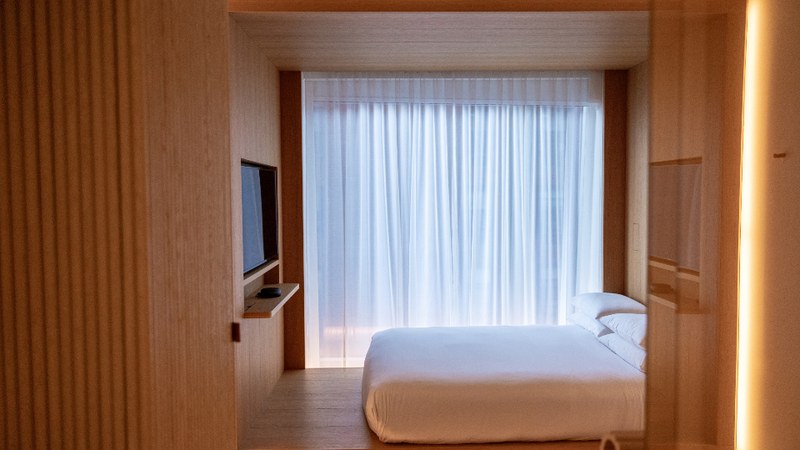
Atour leverages its hotel rooms as immersive showrooms that promote retail product sales, achieving an average room rate of 437.9 yuan in Q2 2026 with a slight 0.7% rise in RevPAR. However, mature stores open more than 18 months experienced a 3% drop in RevPAR and a 1.7% decline in average room rates year on year.
Cost Structure and Production
Atour’s pillows are produced by OEM factories in Dongguan, Guangdong, with franchisees purchasing products at 17% to 35% of retail prices. The gross
profit margin of Atour’s retail business rose from 37% in 2021 to 53.3% in Q2 2026. However, sales and marketing expenses surged 54% year on year to 606 million yuan in Q2 2026, while retail business costs increased by 70%. Competitive pressure in hotel bedding retail is mounting from brands like Huazhu, All Seasons, Orange, and Kaiyuan Group’s Lanxu.
Huazhu’s Expansion and Asset-Light Model
Huazhu opened 498 new stores in Q2 2026, nearly all franchised, with only a single self-invested store during the quarter. As of June 2026, Huazhu operated over 13,000 hotels worldwide, with 93% of rooms under management, franchising, or licensing, and merely
7% self-operated. Total revenue for the first half of 2026 reached 13.117 billion yuan, an 11.0% year-on-year increase, with net profit at 2.394 billion yuan. Management, franchising, and licensing fees generated 6.592 billion yuan, rising 22.9% year on year and comprising 50.4% of total revenue.
Occupancy, Store Closures, and Franchisee Challenges
Huazhu’s hotel occupancy rate dropped from 81.0% in Q2 2025 to 79.8% in Q2 2026, declining consecutively for six quarters despite a 12.7% year-on-year rise in available rooms. The company plans to close between 600 and 700 stores in 2026, with 176 closures in Q2, including 157 franchise stores. Directly-operated stores exhibit room rates 86
yuan higher, occupancy 3.2% higher, and RevPAR 81 yuan greater than franchise stores.
Franchisees bear the brunt of store upgrade costs, franchise fees, and mandated pillow purchases, while Huazhu’s central reservation system charges 8% per order plus additional fees, resulting in a total commission over 12%. These fees and costs create operational and financial pressure on franchisees, indicating challenges in the sustainability of Huazhu’s asset-light model.
Industry Trends in Hotel Revenue Models
Atour and Huazhu exemplify a wider industry trend where hotel chains develop new revenue streams beyond room rates. Atour has built a retail business around bedding products, while Huazhu focuses on rapid franchising under
an asset-light approach emphasizing management and licensing fees. This diversification aims to buffer lodging revenues and address competitive pressures in China’s hotel market.
Both companies rely heavily on franchise models, which shift operational costs and risk to franchisees. This approach supports expansion and new product development but signals mounting challenges for franchise owners tasked with covering increasing fees and sales targets. The hotel market’s supply growth and weak occupancy rates highlight the necessity for innovative business models to sustain profitability.