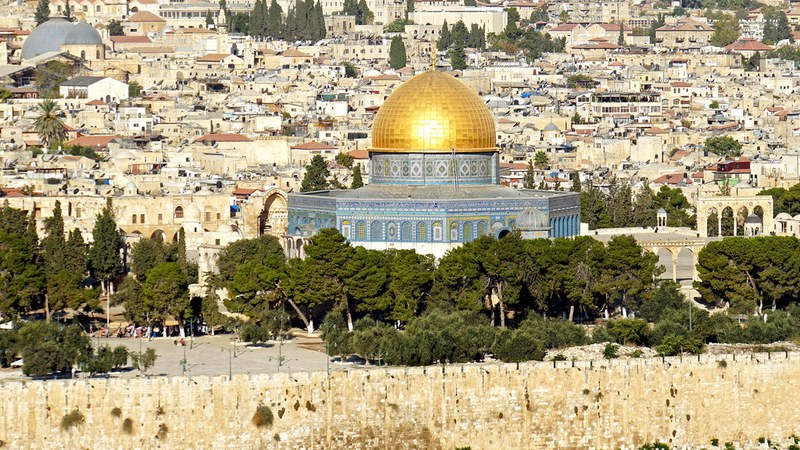
Israel’s international tourism experienced a severe decline in 2026, with about 440,000 foreign visitors recorded in the first half of the year compared to 1.3 million for the entire 2025. The number of tourists in May 2026 dropped to 64,400 from 124,000 in May 2025, although June 2026 showed some recovery with 81,900 arrivals versus 55,300 a year earlier. The drastic downturn has deeply affected Jerusalem’s Old City merchants across Jewish, Muslim, Christian, and Armenian communities, who report very weak business and describe the tourism economy as severely damaged.
EL AL Airlines Posts Strong Financial Results Amid Tourism Crisis
Contrasting the tourism slump, EL AL Israel Airlines reported robust financial
performance for the second quarter of 2026. The airline recorded a net profit of $132 million, doubling the $66 million reported in Q2 2025. Revenue grew from $777 million to $986 million despite a $55 million estimated impact from regional conflict. EL AL sustained a load factor of approximately 90% and maintained an advance booking backlog of around $1.4 billion. The airline is expanding capacity by adding Boeing 737 aircraft and returning older Boeing 777 jets to service. EL AL also signed a contract to equip its fleet with Starlink high-speed internet starting in 2027.
Tourism Ministry Launches Campaigns and Infrastructure Investments
The Israel Ministry of Tourism
has responded to the downturn by shifting marketing strategies and investing in infrastructure. Its “I AM ISRAEL” campaign, targeting North American, Jewish, and Christian travelers, was launched with an investment of NIS 20 million. The campaign highlights everyday Israeli life, culture, and food rather than traditional tourism icons. Additionally, the Ministry and Israeli authorities invested NIS 25 million to renovate the Qasr al-Yahud baptism site on the Jordan River, an important Christian pilgrimage destination. The Ministry also supports domestic tourism, which currently accounts for 84% of hotel overnight stays from January to April 2026.
Officials Highlight Need for International Flight Capacity
Michael Izhakov, Director-General of the Israel
Ministry of Tourism, emphasized the critical link between airline operations and tourism recovery, stating, “When there are no flights, there is no tourism.” He noted ongoing government communication with airlines and transportation authorities to encourage the return of air connectivity and to support domestic tourism expansion. Israel’s Tourism Recovery Forum, which includes government officials, airlines, hotels, tour operators, academics, and U.S. Ambassador Mike Huckabee, focuses on rebuilding international air service and restoring visitor confidence, particularly from the United States, which accounted for 36% of foreign arrivals in the first half of 2026.
Tourism Paradox: Growing EL AL Market Share versus Declining Visitor Numbers
EL AL’s strong financial results partly reflect reduced
competition as many international carriers suspended flights to Israel amid regional conflicts and negative global perceptions. While EL AL remains operational and expands fleet capabilities, merchants in Jerusalem’s Old City experience crippling losses due to fewer international visitors. Hotels have seen 5.1 million overnight stays from January to April 2026, but this is primarily driven by resilient domestic tourism amid the international visitor decline. Industry leaders underline that restoring international flight capacity is essential for full recovery.
Tourism Community in Jerusalem Feels the Impact Across Religions
Merchants from Jerusalem’s Old City, representing Jewish, Muslim, Christian, and Armenian communities, rely on tourism as a shared economic ecosystem. Shopkeepers report dramatically
reduced customer flows since October 2023, describing the current period as the worst in decades despite enduring previous wars, intifadas, terrorism, and the COVID-19 pandemic. The absence of international visitors threatens multiple livelihoods simultaneously, underscoring the interdependence of religious and ethnic groups linked by tourism.
Despite challenges, ordinary life in Israel continues, with cafes and restaurants operating and local families maintaining routines. An anonymous tourism leader who has lived in Israel for 20 years reflected, “I feel betrayed by the country I moved to 20 years ago. What is happening now is terrifying — and we keep going day after
day,” illustrating the coexistence of normalcy and crisis.
Global Perceptions and Marketing Challenges
Years of regional conflict and a devastating recent war have significantly altered international perceptions of Israel, reducing traveler confidence and demand. Limited international flights and high ticket prices further deter foreign visitors. The Israeli Ministry of Tourism faces the challenge of promoting a travel destination heavily covered by conflict news. Its current strategy focuses on highlighting daily Israeli life and culture to visitors already inclined to travel to Israel, instead of attempting to change fundamental negative perceptions. Officials acknowledge that recovering from alienation caused by ongoing conflict will be difficult and may
extend beyond advertising campaigns.