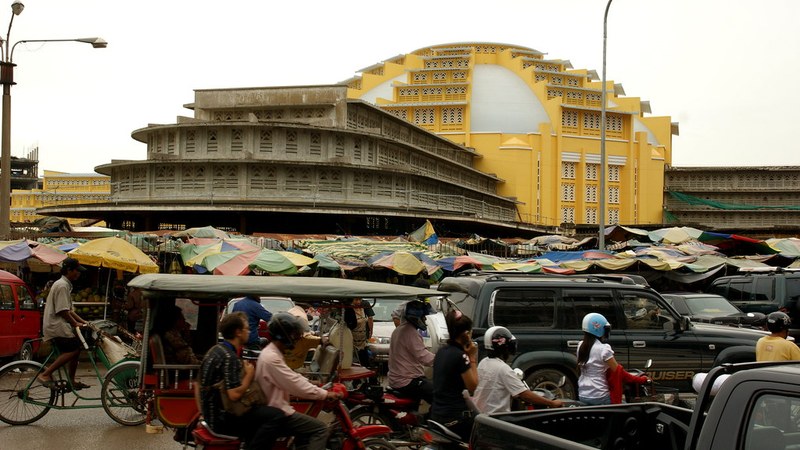
Cambodia recorded 5.57 million international tourist arrivals in 2025, a 16.9% decline from the 6.70 million visitors in 2024, marking the first contraction since the pandemic. Meanwhile, domestic trips increased 11.7% to 25.16 million, cushioning the sector as the Cambodia-Thailand land border remained closed from June 2025 amid military tensions.
Air vs Land Arrivals and Source Market Shifts
International arrivals by air in 2025 grew 19.2% to 2.86 million passengers. In contrast, land border arrivals fell 37.8% to 2.62 million, heavily impacted by a 56.8% drop at the Cambodia-Thailand border, which fell to 1.2 million arrivals. The Poipet crossing more than halved, dropping from 1.89 million to 836,070
visitors.
The shift caused Thailand, Cambodia’s largest market in 2024 with over 2.1 million visitors, to fall 52.4% to 1.02 million arrivals in 2025, declining to the third position behind Vietnam and China. Vietnam became the top source market with 1.22 million visitors, down 8.8%. China ranked second, surging 41.5% to 1.20 million arrivals.
Other markets contracted with Laos arrivals down 60.7% and South Korea dropping 20.6%, influenced by consular travel warnings over scam risks. European arrivals made a modest gain of 3.2%, maintaining a 12.3% share of the market.
Airport Infrastructure and Air Travel Growth
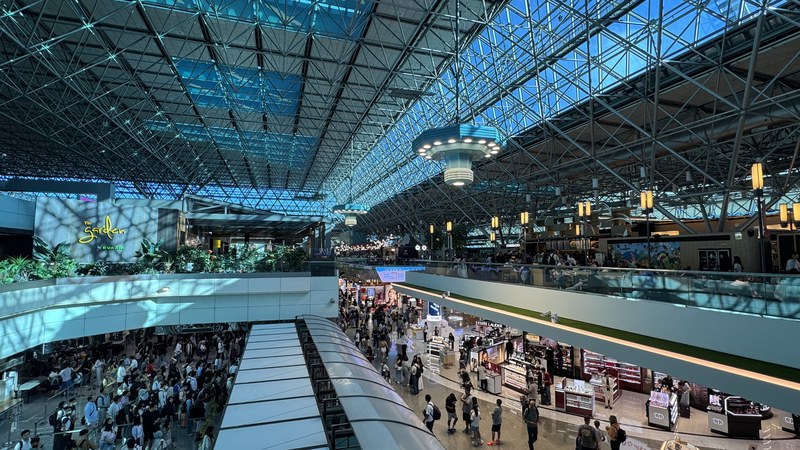
The new Techo International Airport, which replaced Phnom Penh’s old
airport, handled 2.11 million arrivals in 2025, a 20.6% increase and accounting for 38% of Cambodia’s international arrivals. Siem Reap Angkor International Airport saw a 9.3% rise to 672,031 arrivals, while Sihanoukville International Airport arrivals jumped 144.5% to 71,451.
Air travel’s contribution to total international arrivals rose sharply from 35.8% in 2024 to 51.3% in 2025, returning to near pre-pandemic levels, mitigating some impacts of the closed land border.
Domestic Tourism Expansion and Government Campaigns
Domestic travel increased significantly, with 25.16 million trips recorded in 2025, up 11.7% year-on-year. Average spending per domestic trip was $52 over an average stay of three days and two nights.
Phnom Penh led domestic destinations with nearly 10 million visitors, followed by coastal zones with 9.4 million trips, and the Siem Reap-Angkor cultural zone at 3.5 million.
The Ministry of Tourism promoted the ‘Visit Cambodia in the Green Season’ campaign, resulting in 9.46 million domestic travelers from May to October 2025, a 64.7% increase from 2024. This targeted campaign focused on shifting tourists to destinations like Kep, Kampot, and ecotourism sites in the northeast, reducing dependency on border-affected areas. The Cambodia Tourism Board identified Kep and Kampot as under-promoted for three-day coastal cuisine packages.
Economic Impact and Tourism Sector Overview
Despite the decline in international arrivals,
total tourism receipts grew 6.6% to $3.88 billion in 2025. Tourism’s share of Cambodia’s GDP rose to 9.8% from 9.4% in 2024. The sector directly employed approximately 420,000 people, supported by 95,588 hotel and guesthouse rooms, 2,301 registered restaurants, and 652 licensed tour operators and travel agencies nationwide.
Hotel occupancy rates fell from 77.8% in 2024 to 59.1% in 2025, and average length of stay decreased from 7.1 to 6.2 days, reflecting reduced international visitor volumes and adjustments in travel patterns.
2026 Border Crisis and Continuing Tourism Decline
Following a ceasefire on December 27, 2025, the Cambodia-Thailand land border remained closed as of April 2026. International arrivals
from January to May 2026 declined 47.8% year-on-year to 1.54 million visitors, with Siem Reap Angkor arrivals falling 31.9%. International tourism receipts dropped 31.5% to $1.4 billion in the first half of 2026 due to 1.8 million arrivals compared to 3.4 million arrivals in the same period of 2025.
Removing Thailand from arrival statistics still showed a 30% decline, indicating broader erosion of international confidence amid military tensions and negative media related to scam compounds.
Domestic tourism strengthened further in 2026, with over 6 million trips in Q1 up 58% year-on-year, and 20.3 million trips recorded from January to May,
a 54.2% increase. The government extended the ‘Visit Cambodia in the Green Season’ campaign and added accommodation and dining discounts up to 50% in Siem Reap from August. An anti-scam law passed in April and a visa-free scheme for Chinese visitors operated from June 15 to October 15, 2026.
Prime Minister Hun Manet stated in June 2026 that reopening the Thai border was not under discussion. The ASEAN+3 Macroeconomic Research Office (AMRO) forecast continued pressure on tourism and cross-border travel due to border closures, 4.5% inflation, and rising transportation costs until a political resolution is reached.