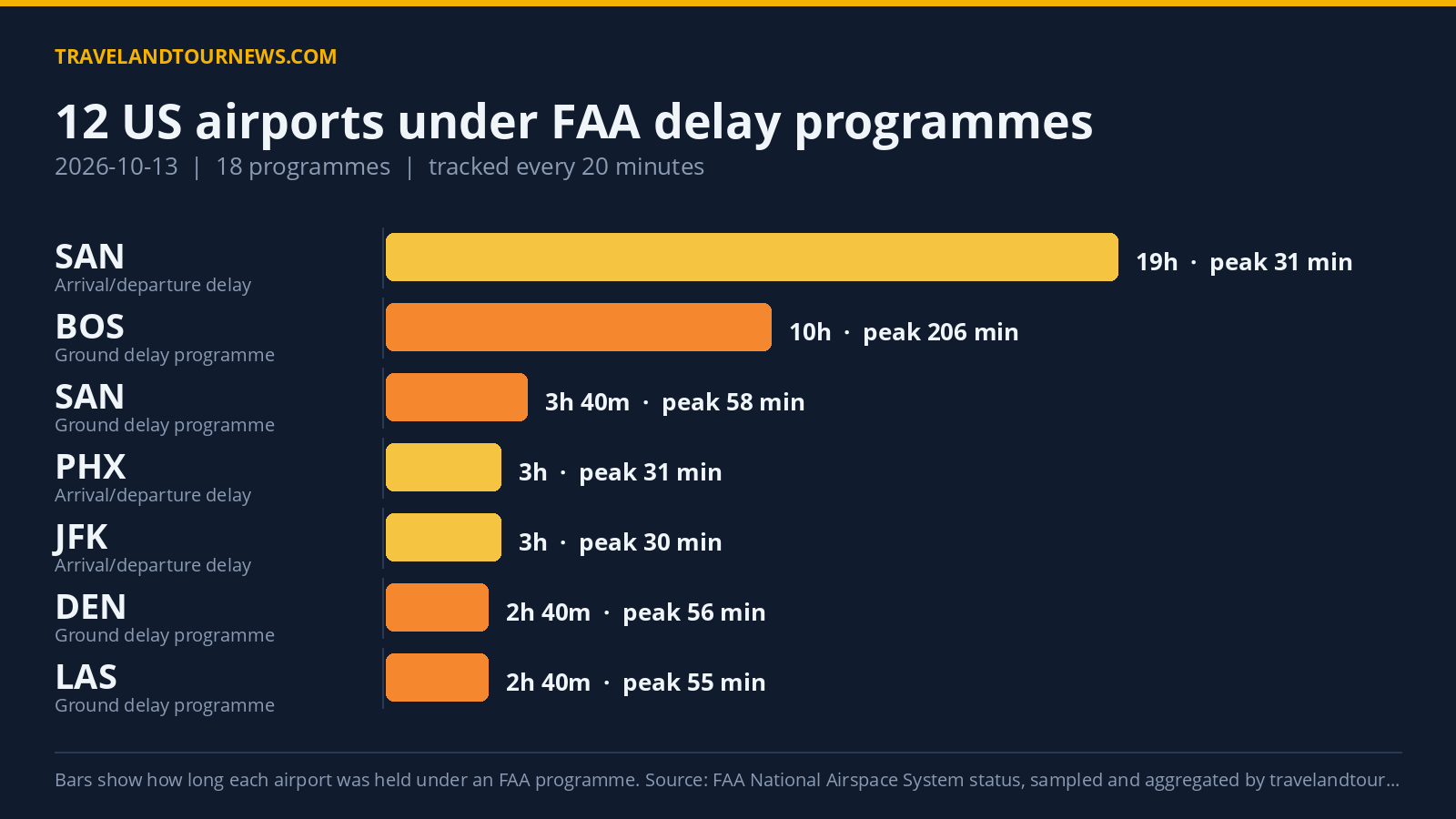
Denver International Airport experienced a ground stop imposed by the Federal Aviation Administration (FAA) on August 3, 2026, due to severe thunderstorms. Temperatures at the airport hit a record 102 degrees Fahrenheit before a cold front arrived, generating wind gusts up to 40 mph and rapid overnight temperature drops of 50 to 60 degrees. Smoke drifting from wildfires in the Pacific Northwest further degraded air quality in the Denver area, prompting poor air quality advisories.
FAA Ground Stop and Flight Diversions
The FAA issued a ground stop around 6 PM local time at Denver International Airport (DEN), resulting in 29 flights being diverted to Colorado Springs
Airport (COS). Airlines affected by the flight diversions included Southwest Airlines, United Airlines, and SkyWest Airlines. Passengers on diverted flights faced disruptions including repositioning flights; there was a steady stream of aircraft moving from COS back to DEN after conditions improved.
Passenger Injuries and Turbulence
Severe turbulence affected inbound flights as the cold front pushed in, causing injuries to five passengers who required ambulance transport after landing at Denver International Airport. Some travelers described the turbulence as the worst experienced, with at least one flight diverting to Hayden, Colorado. Flight crews made safety announcements during flights to help calm passengers amid the intense turbulence.
Delays, Cancellations, and Travel Disruptions
By the end of Monday night, 40% of outbound flights from Denver were delayed, and 32% of inbound flights faced delays. Approximately 3% of total flights were canceled due to the adverse weather. Passengers reported missed connecting flights and multiple delays, with some flights postponed until midnight. Many used alternative transportation such as Uber to reach Denver from diversion airports.
Causes of Severe Weather and Typical Turbulence in Denver
A record-breaking heat wave raised temperatures above 100 degrees Fahrenheit before the sudden arrival of a cold front created unstable atmospheric conditions over Denver. High winds with gusts reaching 40 MPH and rapid temperature drops of 50 to 60 degrees
overnight contributed to unsafe flight conditions. Smoke from Pacific Northwest wildfires further reduced air quality and visibility. Denver’s proximity to mountains often causes wind shear and turbulence, conditions intensified during this severe weather event.