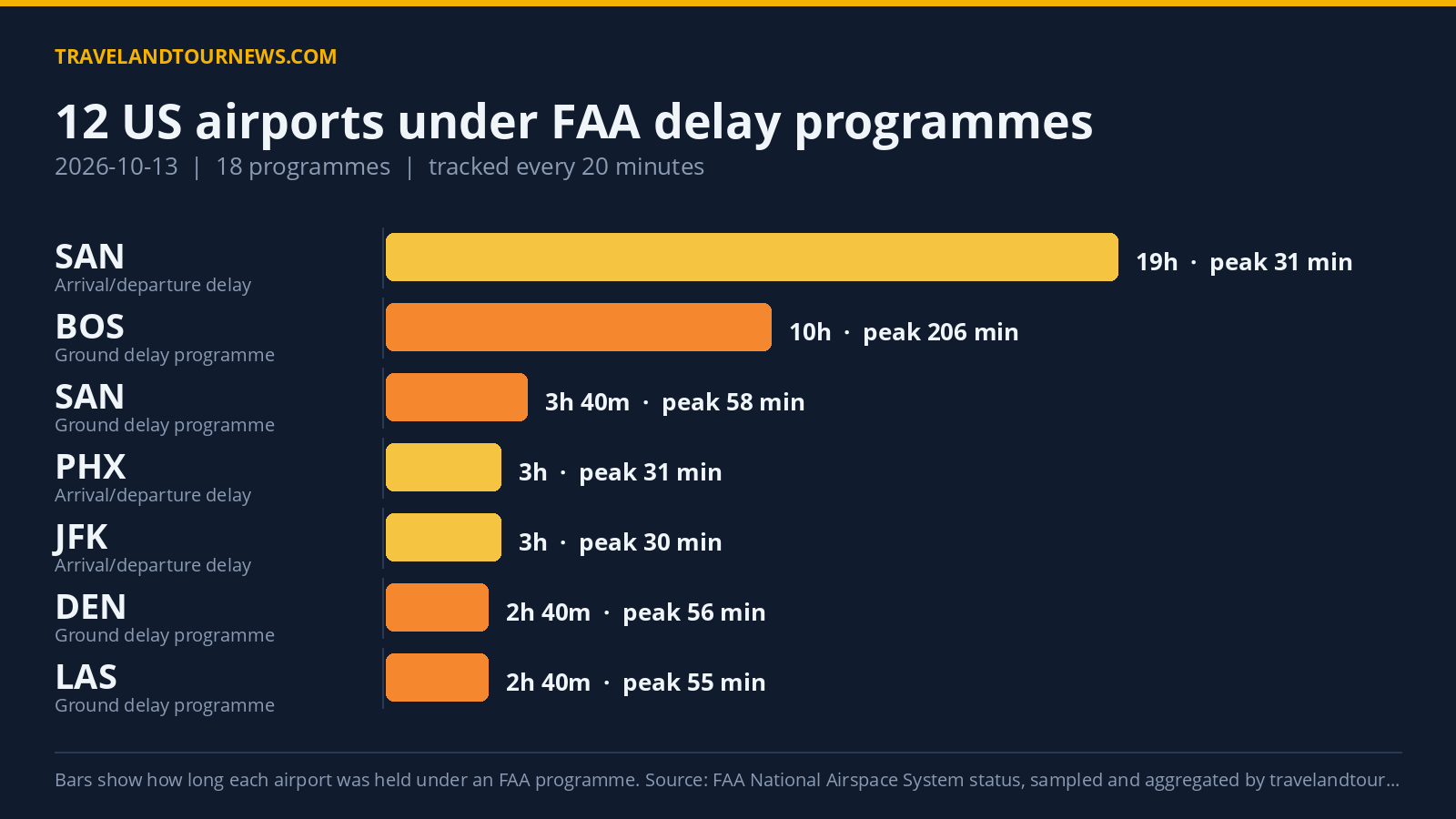
On August 3, 2026, Denver International Airport (DEN) experienced severe weather including thunderstorms and wind gusts up to 40 mph, prompting an FAA-issued ground stop. Temperatures peaked at 102 degrees Fahrenheit before a cold front caused rapid cooling and unstable atmospheric conditions that disrupted flight operations.
Flight Diversions and FAA Ground Stop
The FAA ground stop at Denver International resulted in the diversion of 29 flights, primarily redirected to Colorado Springs Airport (COS). The affected flights included operations from Southwest Airlines, United Airlines, and regional carrier SkyWest. Additional diversion to Hayden Airport was also reported by passengers.
Following the ground stop, a stream of aircraft repositioned
from COS back to DEN, with reports noting around eight flights returning consecutively. The exact length of the ground stop period is unclear, but it caused significant scheduling interruptions on the evening of August 3.
Severe Turbulence and Passenger Injuries
Flights inbound to Denver encountered severe turbulence attributed to the collision of hot and cold air masses combined with mountain wind shear. Passengers described the conditions as some of the worst experienced, including inflight turbulence that forced ambulances to pick up five injured travelers upon landing. One patient was transported to a hospital in stable condition. Flight crews managed several emergencies related to turbulence-induced injuries
during these operations.
Some passengers reported prolonged delays in the air and post-landing, including situations where crew duty time was exhausted, causing travelers to seek alternative ground transportation such as Uber. A passenger on Reddit described diverting to Hayden Airport after severe turbulence made landing at DEN unsafe.
Delays, Cancellations, and Airline Impact
Overall, about 40% of outbound flights from Denver International were delayed on August 3 due to the high winds and ground stop, while inbound flights experienced 32% delays. Cancellations accounted for roughly 3% of the total scheduled flights at the airport on that day. These disruptions significantly affected connecting flights, with some
travelers reporting multiple consecutive delays for rescheduled services.
The three airlines most impacted by diversion and delay were Southwest, United, and SkyWest. Passengers faced extended wait times as flight schedules adjusted throughout the night and into the following morning.
Weather Causes and Regional Conditions
The severe weather that affected Denver originated from the clash of an intense heat wave and an advancing cold front. Before the cold front arrived, a heat advisory was in effect along the I-25 corridor, with Denver International reaching a record high temperature of 102 degrees Fahrenheit—surpassing a previous 1878 record. As the cold front moved through, winds gusted up to
40 mph and temperatures dropped by 50–60 degrees overnight, creating highly unstable atmospheric conditions conducive to turbulence and flight disruption.
Smoke drifting from Pacific Northwest wildfires worsened air quality around Denver before the front’s arrival. This combination of factors increased the volatility of weather patterns in the region, particularly over Denver’s mountainous terrain, which is known for frequent wind shear and unstable air.
Post-Event Weather and Turbulence Patterns
By August 4, cooler temperatures between 75 and 80 degrees Fahrenheit replaced the heat wave. Heat advisories along the I-25 corridor were lifted following the cold front’s passage, leading to the weakest summer morning temperatures Denver had
seen since June 20. Although some gusty winds and wildfire haze persisted, the severe weather effects were receding.
Turbulent air masses shifted northeast toward the Great Lakes and then to eastern New York and New England by the morning of August 4. Improved conditions over Denver International allowed operations to gradually return to normal.