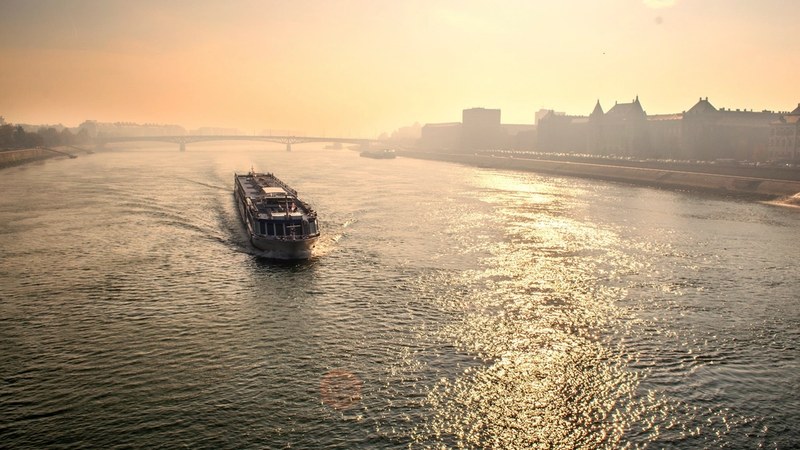
European river cruise lines are contending with record-low water levels in the Danube and Rhine Rivers during summer 2026, forcing operational adjustments including ship swaps, itinerary changes, and skipped ports. The drought and heatwave across Europe have reduced water depths to near historic lows, disrupting normal docking and sailing schedules.
Low Water Impacts Cruise Routing and Docking
Water levels on the Danube near Budapest have approached the lowest since 1996, while levels in Romania are also at historic lows. The Rhine River’s depth fell to 53 centimeters near Frankfurt the week before August 8, 2026. These conditions have constrained cruise ships’ ability to dock at scheduled ports,
leading lines such as Uniworld, Viking, TravelMarvel, Avalon, AmaWaterways, Scenic, and Tauck to modify embarkation points, reroute sailings, or substitute bus transfers.
Passenger Experiences on Altered Danube Itineraries
Uniworld’s SS Emilie faced low water restrictions on its Vienna to Nuremberg Danube route. Passengers disembarked at Vilshofen rather than continuing to Deggendorf, Regensburg, and Nuremberg, which were missed stops. Linz was added as an alternate port. Excursions originally scheduled as sailing stops were replaced by bus tours to the Bavarian Forest and Regensburg, with €30 compensation for lunches as passengers traveled full-day by bus instead of returning to the ship.
Passengers returning home from Nuremberg disembarked a
day early and were accommodated in local hotels with €50 provided for dinner and arranged airport transfers. Chris Gray Faust, Cruise Critic’s executive editor and a passenger on the SS Emilie, commented that while one day of bus excursions was manageable, multiple consecutive bus trips without alternative onboard activities were less than ideal.
Viking Implements Ship Swaps on the Rhine
Viking addressed low water on the Rhine River between Amsterdam and Basel through strategic ship swaps. Guests stayed 24 hours aboard a vessel in Koblenz before transferring by bus for five hours to Strasbourg to board a sister ship continuing the itinerary. Viking captains continuously monitor water
depths and use sister ships positioned in opposite river directions to minimize disruptions. This method allows passengers and luggage to transfer to identical staterooms, preserving as much of the original itinerary as possible.
Other Operators and Operational Adjustments
Additional river cruise brands managing similar disruptions on the Danube include Avalon, AmaWaterways, Scenic, Tauck, and TravelMarvel. Some cruises have started from alternate ports located as far as 60 miles from intended embarkation points, requiring bus transfers for city excursions. Riviera Travel deploys head office staff on affected sailings to assist onboard teams and guests. The company emphasizes that cancellations remain a last option and credits crew
efforts and guest flexibility for maintaining positive feedback.
Industry Responses and Traveler Guidance
Uniworld stated it coordinates closely with local authorities and regional partners to adapt operations while maintaining service quality. Travelmarvel managing director Paul Melinis advises travelers to maintain close communication with cruise operators or agents due to possible itinerary changes, underscoring that extreme weather and variable river conditions have long been industry challenges.
Travel insurance specialists recommend cruise-specific policies that cover disruptions caused by low water levels. Jacqueline Mondelli, chief marketing officer for Squaremouth, explained that such plans provide greater protection than standard travel insurance by covering losses tied to insufficient river depth.
Historic Low Water Levels and Climate Impacts
Water levels on European rivers fluctuate seasonally, with typically lower levels in summer and higher in spring. The 2026 drought, however, has intensified these variations, with the Danube near Budapest at levels close to the 2018 record lows and the Rhine at its shallowest near Frankfurt in decades. This prolonged heatwave has created unprecedented operational challenges for river cruise lines, requiring ongoing adaptations to preserve itineraries and passenger experiences.