On August 2, 2026, the US air travel network experienced 5,418 flight delays and 576 cancellations across multiple airports. These disruptions severely affected domestic flight operations nationwide.
Severe thunderstorms caused repeated delays and cancellations of arrivals and departures at primary hubs throughout the day. Concurrently, a WestJet cabin crew strike triggered 495 cancellations, mainly impacting transborder routes between Canada and the United States.
Florida saw the highest concentration of delays, with Orlando Airport reporting 446 delayed flights, Fort Lauderdale 250, and Tampa 224. In the Northeast, capacity reductions increased cancellations with LaGuardia Airport logging 122 cancellations and John F. Kennedy
International Airport 101 cancellations. Hartsfield-Jackson Atlanta Airport also encountered heavy congestion, while Reagan National Airport recorded 88 cancellations due to storm fronts.
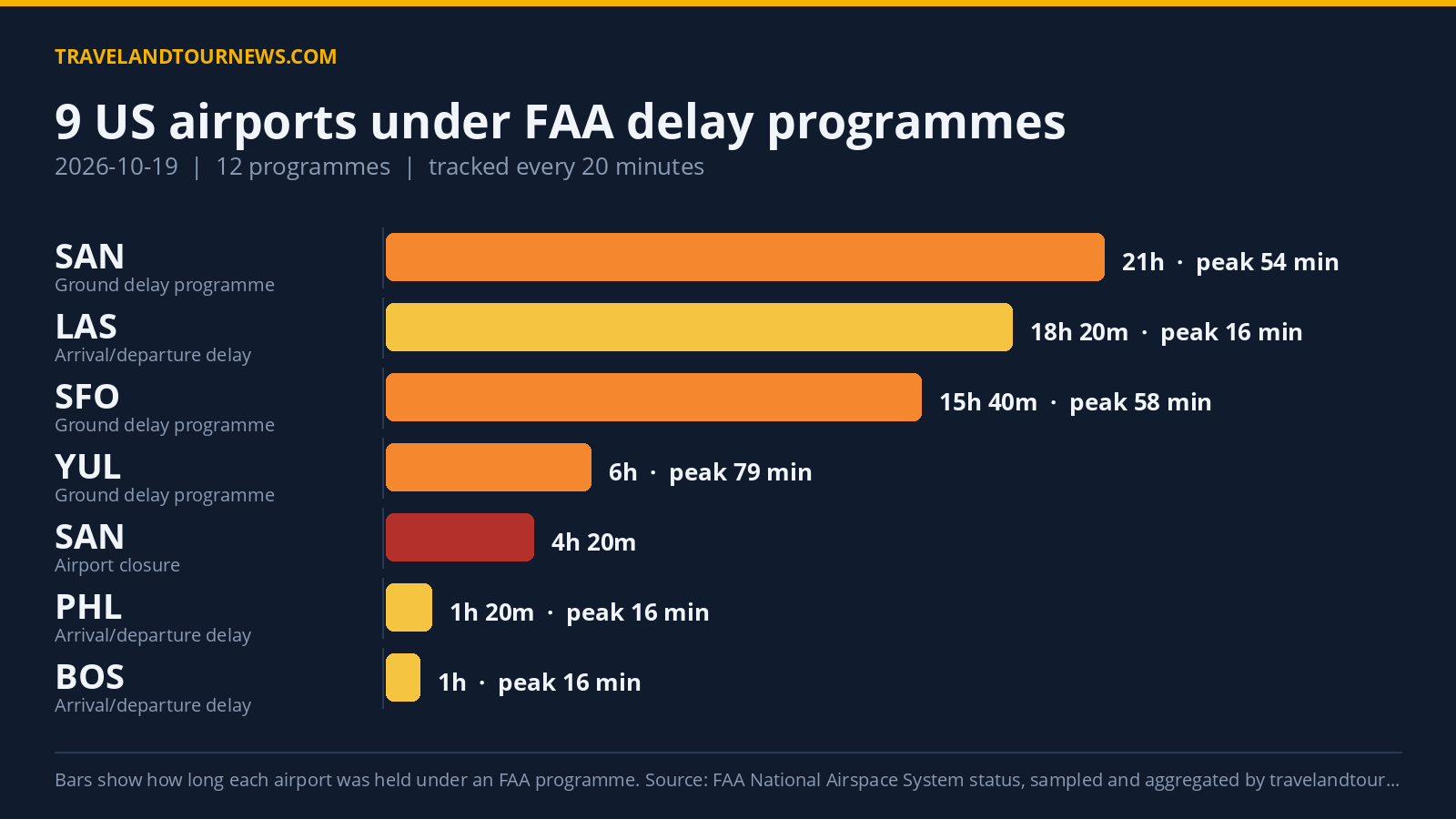
The Federal Aviation Administration (FAA) implemented Ground Delay Programs at affected airports to control air traffic flow amid reduced capacity caused by weather conditions and operational disruptions. These measures contributed to schedule resets and prolonged recovery cycles across the network.
Travelers faced prolonged delays and cancellations during peak summer travel, highlighting the need for airlines to maintain more reserve flight crews and optimize aircraft rotations for quicker schedule recovery. Airport operators were required to increase staffing at gate
lines and baggage drop zones to manage high passenger volumes during check-in periods effectively.
The combination of severe weather and a labor strike exposed limited spare capacity across summer flight schedules. Capacity drops at key hubs such as LaGuardia and Atlanta caused delays to cascade rapidly to secondary terminals, amplifying network-wide disruption. Effective slot management at airports and by airlines is critical to maintaining passenger trust and supporting ongoing travel demand.