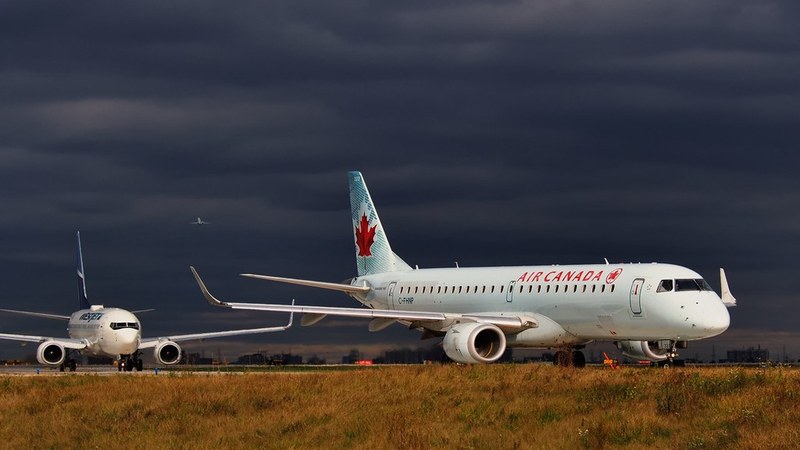
WestJet Airlines canceled 76 flights on July 31, 2026, amid escalating labour tensions with its flight attendants represented by Canadian Union of Public Employees Local 8125 (CUPE 8125). The union issued a 72-hour strike notice on July 30, with a potential strike set to begin at 2 a.m. Eastern Standard Time on Sunday, August 2, 2026. In response, WestJet issued a 72-hour lockout notice effective the same date.
Contract Negotiations Stall Over Ground Pay Dispute
The dispute centers on unpaid ground time compensation. Approximately 4,400 WestJet flight attendants seek expanded pay for ground hours, a benefit that Air Canada flight attendants secured in a four-year deal last
summer. WestJet opposes expanded ground pay, citing its North American standard credit hour pay system that bundles flight time, ground duties, delays, and other work into a single rate. CUPE 8125 reports flight attendants work around 35 unpaid ground hours monthly.
Operational Measures and Flexible Booking Policies
As a precaution, WestJet began parking Boeing 737 aircraft to mitigate risks of planes and crews being stranded overseas if strike action occurs. The airline offered flexible change and cancel policies for bookings made between July 30 and August 4, covering the period of potential labor disruption. These measures aim to reduce customer impact amid uncertainty.
Travelers Face Schedule Volatility and Flight Changes
Travelers on WestJet
are experiencing disruptions with at least 76 flights canceled on July 31. Vancouver resident Michael Murphy voiced concern over guests traveling from Dublin for his wedding on August 6, as airline rebooking options on earlier flights do not suit many guests with fixed personal and work commitments. Murphy stated, “It’s not as easy just to move the flight forward.”
Statements From Union, Management, and Experts
CUPE Local 8125 president Alia Hussain emphasized ongoing negotiations to reach a fair agreement without striking, saying, “The strike notice does not mean flight attendants want to go on strike. We will continue to bargain around the clock until this is
resolved.” WestJet Group CEO Alexis Von Hoensbroech expressed regret over the lockout notice, remarking that the decision was not made lightly and lamenting the inconvenience to guests.
Labour studies professors Stephanie Ross of McMaster University and Steven Tufts of York University highlighted that 72-hour strike and lockout notices usually pressure both parties toward serious negotiations. A spokesperson for federal Jobs Minister Patty Hajdu urged the airline and union to reach a deal at the bargaining table, citing Canadian uncertainty.
Aviation management expert John Gradek noted that early flight cancellations are aimed at preventing aircraft and crews from being stranded overseas,
stating, “Rather than have them stranded overseas, they’d rather not have a flight go in the first place.”
Industry Context on Labour Agreements
WestJet is Canada’s second-largest airline, and its cabin crew compensation system differs from Air Canada’s, which recently secured wage increases and partial ground pay. WestJet’s credit hour system consolidates pay for all duty time, contrasting with CUPE’s demand for ground pay similar to Air Canada’s 2025 agreement that introduced incremental pay for ground hours.