On July 28, 2026, the Federal Aviation Administration (FAA) implemented a nationwide ground stop on all American Airlines flights across the United States shortly after 7 p.m. Eastern Daylight Time (EDT) due to an information-technology (IT) outage affecting some of the airline’s systems.
The FAA’s Air Traffic Control System Command Center lifted the nationwide ground stop at 8:10 p.m. EDT, allowing American Airlines to resume departures. Flight tracking data confirmed flights such as AA100 from New York John F. Kennedy International Airport (JFK) to London Heathrow Airport (LHR) at 7:24 p.m., and AA1069 from Pittsburgh International Airport (PIT) to Miami
International Airport (MIA) at 7:47 p.m. had departed after the resumption.
Nationwide Ground Stop Scope and Procedure
The ground stop issued by the FAA applied to all American Airlines flights nationwide, holding them at their departure points until the IT connectivity issue was addressed. This traffic-management tool does not affect aircraft already airborne but temporarily prevents further takeoffs from entering the system. Details on whether regional affiliates or specific operators were exempt from the restriction were not released by the reporting cutoff.
Residual Ground Stops at Charlotte and Miami Airports
After the nationwide ground stop was lifted, the FAA maintained American-specific ground stops at two airports: Charlotte Douglas International Airport (CLT) and Miami International
Airport (MIA). The restriction at CLT covered both American mainline and subsidiary operations, while the stop at MIA applied only to American mainline flights. The FAA categorized these ground stops as “Other / Carrier Request.” The reasons for these residual stops were not clarified by the FAA and no confirmed connection to the IT outage was established.
Concurrent Weather-Related Ground Stops in Northeast and Mid-Atlantic
Simultaneous with the American Airlines IT outage, multiple airports in the Northeast and Mid-Atlantic regions experienced weather-related ground stops and delays. Airports affected included Boston Logan International Airport (BOS), Newark Liberty International Airport (EWR), Philadelphia International Airport (PHL), Baltimore/Washington International Airport (BWI), Ronald
Reagan Washington National Airport (DCA), New York LaGuardia Airport (LGA), and JFK among others. Thunderstorms were cited as the cause in some of these locations, further complicating airline operations during the evening.
American Airlines’ Official Statements and Traveler Impact
American Airlines acknowledged the IT issue with a statement reading: “A technology issue briefly impacted connectivity for some of our systems on Tuesday evening.” The airline confirmed that connectivity was fully restored and that flights had resumed departing. They apologized to customers for the inconvenience and thanked their teams for restoring systems promptly.
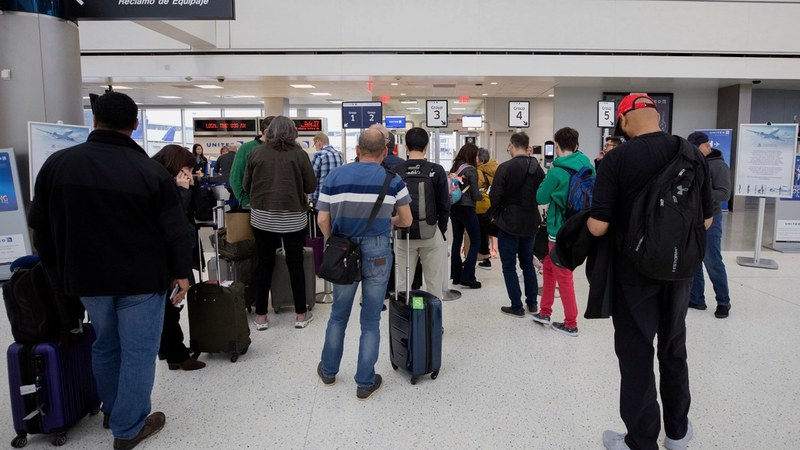
Passengers experienced delays and cancellations as flights were held at gates during the nationwide stop,
followed by queued departures and gate congestion after the lift. The airline advised travelers, especially those flying through Charlotte, Miami, and airports affected by weather delays, to monitor the American Airlines flight status tool or app for updates.
Precise details on the number of delayed or canceled flights due to the IT outage were not reported. Additionally, the exact technical cause of the outage, including whether it was related to cybersecurity, a vendor, data center, or platform failure, remained undisclosed. There was no confirmed link to a separate American Airlines technical disruption on December 24, 2024.