American Airlines temporarily halted all departures nationwide on July 28, 2026, after an information-technology issue triggered a Federal Aviation Administration (FAA) nationwide ground stop. The airline paused departures across its system while working to restore connectivity for affected systems.
The FAA issued the nationwide ground stop shortly after 7 p.m. EDT, instructing American Airlines flights to hold at their departure points. By 8:10 p.m. EDT, the FAA’s Air Traffic Control System Command Center lifted the nationwide restriction, allowing the airline to resume departures.
American Airlines began restoring system connectivity and restarted flights, including AA100 departing from New York John F.
Kennedy International Airport (JFK) to London Heathrow Airport (LHR) at 7:24 p.m. EDT, and AA1069 departing from Pittsburgh International Airport (PIT) to Miami International Airport (MIA) at 7:47 p.m. EDT. Despite the restart, flights that had been held needed to progress through departure queues, and arrivals still required gate availability, causing ongoing operational challenges.
FAA Ground Stop and Residual Restrictions
The FAA’s Air Traffic Control System Command Center coordinated the ground stop with FAA facilities and industry partners to prevent additional American Airlines departures from entering the air traffic system during the IT disruption. Following the lifting of the nationwide ground stop, the FAA continued to
list American-specific ground stops at Charlotte Douglas International Airport (CLT) and Miami International Airport (MIA). The stop at Charlotte applied to American mainline and subsidiary departures, while Miami’s restriction affected only American mainline flights. Both were classified as “Other / Carrier Request.”
The FAA did not specify if these localized ground stops were lingering effects of the IT issue or responses to gate or traffic constraints. The coordination serves as a control measure to manage traffic flow while American recovers full operational capacity.
Concurrent Weather-Related Air Traffic Constraints
Alongside the American Airlines IT outage ground stop, weather-related air traffic restrictions affected multiple Northeast and Mid-Atlantic
airports on July 28, 2026. Boston Logan International Airport (BOS), Newark Liberty International Airport (EWR), and Philadelphia International Airport (PHL) operated under thunderstorm-related national delay programs. Additional departure delays and ground stops impacted Baltimore/Washington International Airport (BWI), Ronald Reagan Washington National Airport (DCA), New York JFK, New York LaGuardia Airport (LGA), and nearby general-aviation airports.
These overlapping restrictions complicated the attribution of delays exclusively to American’s IT failure. Flights across affected airports were already experiencing delays prior to the ground stop due to weather and traffic management programs.
Background on Prior American Airlines IT Disruptions
American Airlines experienced a similar nationwide technical disruption on December 24, 2024,
when a ground stop briefly halted departures. There is no confirmed connection between the December 2024 event and the July 28, 2026 outage. The airline has not disclosed any details regarding the cause or nature of Tuesday’s IT failure, including whether vendor systems, cybersecurity incidents, or hardware issues were involved.
Official Statements and Passenger Experience
American Airlines acknowledged on social media and official statements that “a technology issue briefly impacted connectivity for some of our systems on Tuesday evening,” adding, “systems are coming back online now and flights are departing again. We put a temporary ground stop in place while our teams worked to resolve
the issue. We apologize to our customers for the inconvenience.” The airline later confirmed, “Connectivity has been fully restored. We apologize to our customers for the inconvenience. We appreciate the efforts of our team to bring our systems back online so quickly and take care of our customers.”
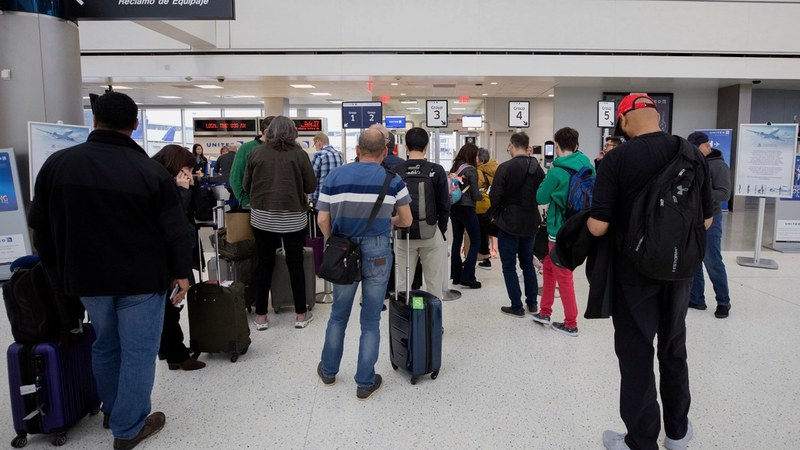
A passenger at Dallas/Fort Worth International Airport commented, “We were told maybe it was a computer problem, Either with DFW, the airport, or maybe it was an American.” Passengers reported flight delays and cancellations due to the ground stop, as departing flights faced hold times and disruption to connections.
The FAA Air
Traffic Control System Command Center was responsible for issuing and lifting the ground stop, working closely with American Airlines and industry partners to manage the operational response.
At the time of reporting, American Airlines had not detailed the specific system affected, the exact number of flights impacted, or the full duration of the ground stop beyond the timeframe between shortly after 7 p.m. and 8:10 p.m. EDT on July 28.