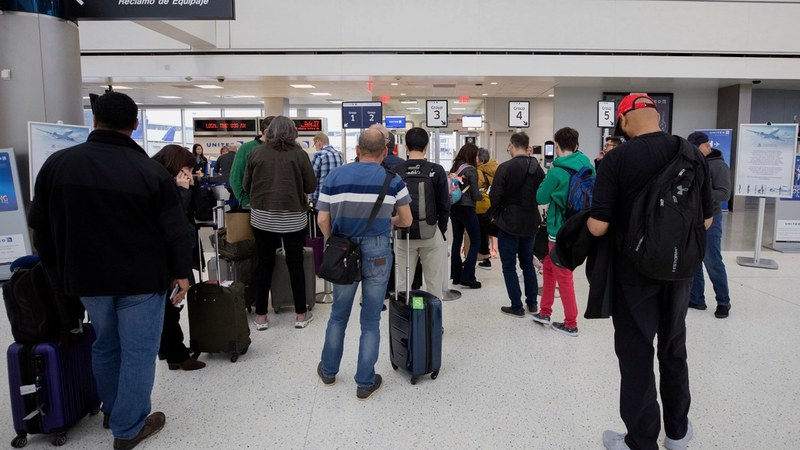
American Airlines flights nationwide paused shortly after 7 p.m. EDT on July 28, 2026, due to a company-wide information-technology outage. The Federal Aviation Administration (FAA) imposed a nationwide ground stop to prevent further American departures from entering the air traffic control system.
By 8:10 p.m. EDT, the FAA’s Air Traffic Control System Command Center had lifted the nationwide restriction, removing it from its status updates. Flight tracking data from FlightAware confirmed American Airlines flights resumed departing beginning at 7:24 p.m. EDT, indicating a partial operational restart within minutes of the ground stop’s imposition.
FAA Ground Stop and Flight Operations
The FAA implements ground stops, distinct from
aircraft airworthiness groundings, as traffic management tools to hold departures at airports during operational disruptions. For American Airlines on July 28, the ground stop prevented additional flights from beginning departures while the airline addressed its IT connectivity issues. Flights already airborne were unaffected and continued as usual.
Examples of flights departing after the ground stop was imposed include American Airlines flight AA100 from New York John F. Kennedy International Airport (JFK) to London Heathrow Airport (LHR) at 7:24 p.m. EDT, and flight AA1069 from Pittsburgh International Airport (PIT) to Miami International Airport (MIA) at 7:47 p.m. EDT.
Residual Airport-Level Restrictions
Although the nationwide
ground stop lifted by 8:10 p.m., the FAA maintained airport-level American Airlines ground stops at Charlotte Douglas International Airport (CLT) and Miami International Airport (MIA). The restriction at CLT applied to American mainline and subsidiary operations, while the stop at MIA covered mainline flights only. The FAA classified both as ‘Other / Carrier Request.’
The FAA did not specify whether these airport-level stops were residual effects of the IT outage or separate operational requests by American Airlines.
Concurrent Weather-Related Travel Restrictions
On the evening of July 28, several Northeast and Mid-Atlantic airports also experienced weather-driven ground stops and delays. Boston Logan International Airport (BOS),
Newark Liberty International Airport (EWR), and Philadelphia International Airport (PHL) were operating under weather-related FAA programs due to thunderstorms.
Other airports affected by weather-related delays included Baltimore/Washington International Airport (BWI), Ronald Reagan Washington National Airport (DCA), New York JFK, and New York LaGuardia Airport (LGA). These concurrent weather restrictions complicated the assessment of total flight disruptions attributable specifically to American Airlines’ IT outage.
American Airlines’ Response and Operational Context
American Airlines issued communications on social media stating, ‘A technology issue briefly impacted connectivity for some of our systems on Tuesday evening.’ The airline added, ‘Systems are coming back online now and flights are departing again. We
put a temporary ground stop in place while our teams worked to resolve the issue. We apologize to our customers for the inconvenience.’
As of the report cutoff, American Airlines had not disclosed detailed information on the cause of the IT outage, affected systems, or the exact number of flights delayed or canceled. The airline also has not indicated whether the disruption involved vendors or cybersecurity incidents.
American Airlines experienced another brief nationwide technical interruption and associated FAA ground stop on December 24, 2024. However, there is no evidence connecting the July 2026 outage to the 2024 event.
Passengers traveling
through American Airlines hubs, particularly Charlotte and Miami airports, were expected to face residual delays as departure queues cleared and disrupted connections were recovered following the outage.