The Federal Aviation Administration’s Air Traffic Control System Command Center issued a nationwide ground stop for all American Airlines flights on July 28, 2026, at approximately 7 p.m. Eastern Daylight Time. The stoppage, triggered by an information-technology problem within American Airlines’ systems, temporarily halted the departure of all American Airlines flights across the United States.
The ground stop was lifted shortly after 8:10 p.m. EDT the same day, allowing American Airlines flights to resume departing from various airports. Flight-tracking data confirmed departures such as AA100 from New York John F. Kennedy International Airport (JFK) to London Heathrow Airport (LHR) at
7:24 p.m., and AA1069 from Pittsburgh International Airport (PIT) to Miami International Airport (MIA) at 7:47 p.m., illustrating that some flights took off after the initial ground stop order and before it was fully lifted.
Despite the nationwide clearance to depart, the FAA maintained two separate ground stops specific to American Airlines at Charlotte Douglas International Airport (CLT) and Miami International Airport (MIA). At CLT, the stop affected both mainline and subsidiary American Airlines operations, while at MIA it applied only to mainline flights. The FAA categorized these as “Other / Carrier Request.” Concurrently, the Northeast and Mid-Atlantic experienced weather-related
air traffic restrictions at airports including Boston Logan International Airport (BOS), Newark Liberty International Airport (EWR), and Philadelphia International Airport (PHL), complicating air travel in those regions.
American Airlines said in an official statement, “A technology issue briefly impacted connectivity for some of our systems on Tuesday evening. We put a temporary ground stop in place while our teams worked to resolve the issue.” The airline also took to social media confirming it was “working as quickly as possible to get everything restored.” The FAA confirmed it issued and lifted the ground stop as part of routine traffic management measures.
American Airlines apologized for the inconvenience caused by the outage but had not provided further technical details or the number of flights affected by the reporting cutoff.
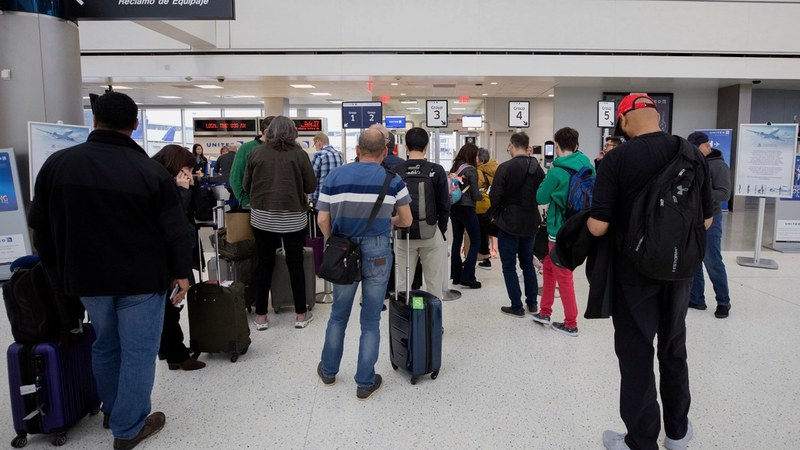
The temporary grounding caused delays for passengers whose flights were held on the ground and disrupted connecting schedules. Travelers with plans to fly through Charlotte Douglas or Miami International airports after the nationwide ground stop remained subject to the specific local restrictions issued by the FAA. Passengers traveling through airports impacted by thunderstorms in the Northeast and Mid-Atlantic regions faced additional delays associated with concurrent weather-related air traffic restrictions.
The FAA does not
recall aircraft already airborne during a ground stop, meaning flights airborne during the disruption continued to their destinations without interruption. American Airlines had encountered a similar nationwide technical interruption on December 24, 2024, but there is no evidence linking that prior event to the July 28, 2026 issue. American Airlines has not disclosed whether the July outage involved a vendor failure, cybersecurity event, or specific system malfunction.